
Dry cat food, explained by the label and the research
Dry cat food comes down to one number most owners never check: calories per cup. These guides start there, then work through protein, life stage, and portions, with the source named for every figure.
Checked against Cornell Feline Health Center, Tufts Cummings School of Veterinary Medicine, the FDA, AAFCO nutrient profiles, and AAHA guidelines.
What is dry cat food?
Dry cat food is kibble: small, dried pieces made to be all or part of a cat’s diet. What sets it apart is low water. Cornell Feline Health Center puts it at 6 to 10 percent, while the FDA says dry pet food typically runs 10 to 12 percent.

Most kibble is made by extrusion. A dough of meat, grains or legumes, fat, vitamins, and minerals is cooked under heat and pressure, pushed through a shaped die, cut, and dried. A coating of fat and flavor usually goes on last.
That low moisture is why dry food keeps for months, costs less per calorie, and can sit in a bowl between meals.
Is dry cat food called kibble?
Yes. Kibble is the everyday name for dry pet food. Labels, vets, and stores use the two words for the same thing.
Dry or wet: what actually differs
| Item | Dry food | Wet food |
|---|---|---|
| Water content | 6 to 12% | 75 to 78% |
| Calories per bite | High, so portions look small | Lower, so portions look big |
| Bowl life | Can stay out between meals | Refrigerate once opened |
| Cost per calorie | Lower | Higher |
| Water it adds to the diet | Very little | A lot |
Cornell Feline Health Center doesn’t pick a side. Cats differ: some prefer canned, some dry, some a mix, so feed what works for yours. If your cat has a urinary or kidney condition, your vet may want more water in the diet. That call is theirs.
Feeding both? The wet and dry feeding guides show how to split the calories.
How to read a dry cat food label
Every complete cat food sold in the US carries the same core panels. Four of them tell you most of what you need. Here they are on a sample bag.
Sample label, not a real product
Guaranteed analysis
- Crude protein
- min 37.0%
- Crude fat
- min 15.0%
- Crude fiber
- max 3.0%
- Moisture
- max 12.0%
- Taurine
- min 0.10%
Calorie content (calculated)
3,750 kcal/kg; 400 kcal per cup
Ingredients
Chicken, chicken meal, brown rice, pea protein, chicken fat (preserved with mixed tocopherols), dried egg, fish oil, taurine, vitamins, minerals.
Nutritional adequacy statement
Sample Kibble is formulated to meet the nutritional levels established by the AAFCO Cat Food Nutrient Profiles for adult maintenance.
The guaranteed analysis
Minimum protein and fat, maximum fiber and moisture. The FDA expects these four on every bag. They’re as-fed numbers with the water included, so they need converting before you compare foods. The protein section below shows how.
Calorie content
Your portions depend on this line. It’s given per kilogram and per cup. Two bags of the same size can feed very different amounts, so this is the number to carry into the calculator.
The ingredient list
Ingredients appear in order by weight before cooking. Fresh meat carries a lot of water, so “chicken first” says less about the finished kibble than it seems to.
The nutritional adequacy statement
The most important line on the bag. It tells you the food is complete and balanced, for which life stage, and whether that was shown by formulation or by an AAFCO feeding trial. A bag without it isn’t meant to be a complete diet.
Front-of-bag words to ignore: premium, gourmet, holistic. The FDA notes that premium and gourmet foods aren’t held to any higher nutritional standard than other complete and balanced foods, and that seals or endorsements from outside groups don’t prove adequacy.
The label guides go panel by panel, and the ingredient guides explain terms like meal, by-product, and mixed tocopherols.
How much dry food should a cat eat a day?
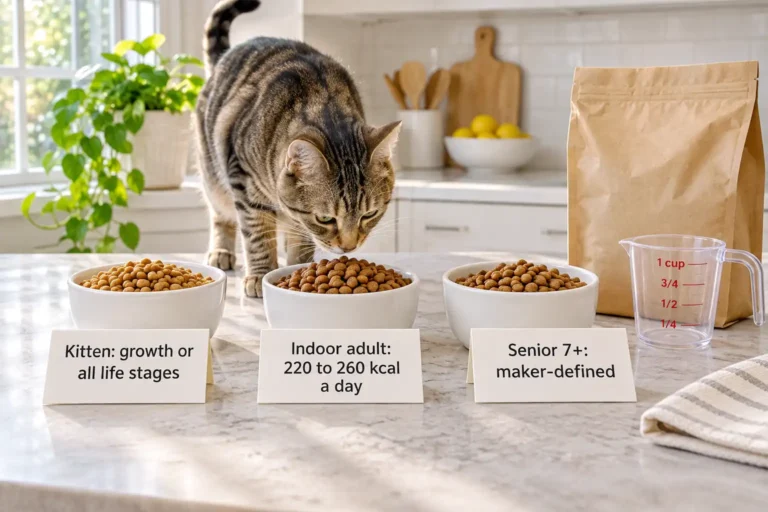
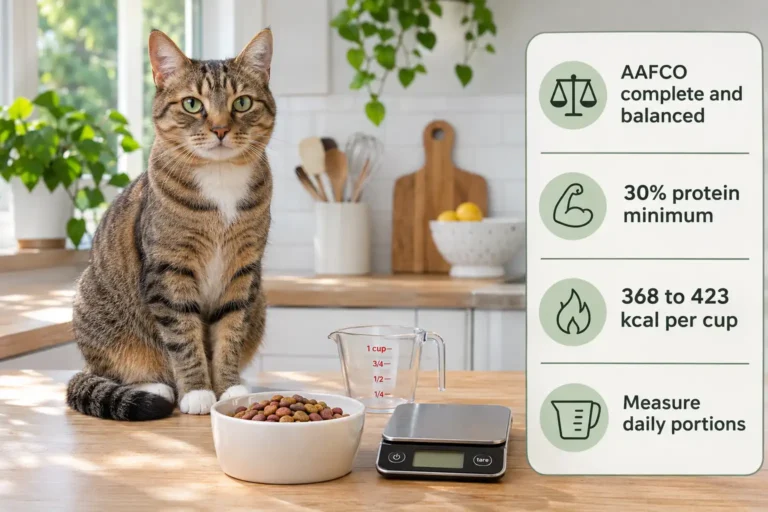
A typical 10 pound spayed or neutered adult needs about 220 to 260 calories a day. On a food with 400 kcal per cup, that’s a little over half a cup.
The feeding chart on the bag is a fair starting point. Calories are the real unit, though, because a cup of one food isn’t a cup of another. The portion guides work it through by weight and life stage.
How much dry food to feed a cat per day, step by step
- Weigh your cat. A bathroom scale works: weigh yourself holding the cat, then subtract your own weight.
- Find the kcal per cup in the calorie content panel on the bag.
- Get a daily calorie range from the calculator, or ask your vet for a target.
- Divide calories by kcal per cup. Split the total into two or more meals.
- Weigh again in two to four weeks. If the weight drifts, adjust the portion slightly and check again.
Free feeding or measured meals?
Dry food holds up in a bowl, and Cornell counts free feeding among its conveniences. Measured meals make it easier to spot a change in appetite and keep weight steady, especially in a home with more than one cat. Timed meals and automatic feeders are covered in the feeding schedule guides.
Treats count toward the total. AAHA’s guidelines keep treats to 10 percent of daily calories or less.
When to call the vet instead: a cat that stops eating needs a vet promptly, not a new food. Weight loss plans need a vet too, because cats that lose weight too fast can develop serious liver disease.
How much protein should dry cat food have?
AAFCO sets the minimum at 26 percent protein on a dry matter basis for adult cats and 30 percent for kittens. Real bags run well above that: Barn Cat lists 30 percent and Farmina N&D Ocean lists 44.
That bag number needs one adjustment before you compare it with anything. It’s an as-fed figure, so the water in the food counts too.
Protein on a dry matter basis
protein % ÷ (100 minus moisture %) × 100
Why protein matters so much for cats
Cats are obligate carnivores. They rely on nutrients found in animal tissue, including taurine, which is why so many cat food labels list it as an added ingredient. The protein guides convert real labels brand by brand.
On the label (as fed)Dry matter basis
Dry food, 12% moisture
Canned food, 78% moisture
On the label, the dry food looks like the protein winner. On a dry matter basis it comes out lower. That’s why every protein figure on this site gets converted.
What’s the difference between kitten and cat dry food?
Kitten food is made to AAFCO’s growth profile. Adult food is made to the maintenance profile, which allows lower levels of several nutrients. As the FDA explains it, a growing kitten simply has different needs than a spayed or neutered adult.
| Item | Kitten food (growth) | Adult food (maintenance) |
|---|---|---|
| Minimum protein, dry matter | 30% | 26% |
| Minimum fat, dry matter | 9% | 9% |
| Daily calories, as a multiple of resting needs | About 2 to 2.5 | About 1 to 1.4 |
| What the label says | Growth, or all life stages | Adult maintenance |
| Usually fed until | About 12 months | From adulthood on |
Nutrient minimums from the AAFCO profiles as published by the FDA and NIH. Energy multiples from AAHA and AAFP.
An “all life stages” food meets the growth profile, so it can feed a kitten. An “adult maintenance” food can’t. Most cats move to adult food around their first birthday. Some large breeds keep growing longer, so ask your vet when to switch. The kitten guides cover the change in detail.
Best rated dry kitten food: what to check first
Star ratings can’t see what matters most. Check for a growth or all life stages statement, a calorie figure, and a maker that answers the four questions below. Then let your vet track growth at each visit.
What about senior dry food?
AAFCO has only two profiles, growth and adult maintenance. A “senior” food meets the adult profile, and what makes it senior is up to the maker. Ask your vet what your older cat needs, then read the senior cat guides.
Dry food and common health needs
Many dry formulas are sold for a health goal. Here’s what each type is built to do, and where the food stops and your vet starts.
Weight
Weight control formulas usually carry fewer calories per cup. Check the number on the bag, not just the name.
Urinary health
Urinary formulas focus on mineral balance and urine pH. A cat straining in the litter box needs a vet right away, especially a male.
Digestion and hairballs
Hairball formulas add fiber to help hair pass. Sensitive stomach formulas focus on digestibility. Frequent vomiting is a vet question.
Dental health
Only foods with a Veterinary Oral Health Council seal have shown plaque or tartar control in testing.
Food allergies
Confirming a food allergy takes a strict elimination diet, run with your vet over several weeks. A new bag can’t do that alone.
These are descriptions, not diagnoses. Any change in appetite, litter box habits, or weight is worth a call to your vet.
What is the best dry cat food?
There is no single best dry cat food. The best one for your cat is complete and balanced for its life stage, comes from a maker that can show its work, and keeps your cat at a healthy weight.
Our best dry cat food guide applies these tests by cat and by need.
What is the healthiest dry cat food?
The one that keeps your cat lean, active, and healthy at checkups. Grain-free, high-protein, and limited-ingredient are formula choices, not proof. Your cat’s weight and body condition over months are the honest test.
Best cat food for healthy cats
A healthy adult does well on a complete and balanced maintenance food fed at the right calories. Price matters less than people think, since the FDA notes premium foods aren’t held to a higher nutritional standard.
Better cat food brands, sorted fairly
Hunting for better cat food brands usually means weighing price against trust. The four questions on the right sort that out faster than any ranking, and our brand guides put the answers side by side.
Four questions to ask any brand
The World Small Animal Veterinary Association suggests asking the maker directly. A good company answers quickly and plainly.
- Do you employ a full-time qualified nutritionist, such as a PhD animal nutritionist or a board-certified veterinary nutritionist?
- Who formulates your foods, and what are their credentials?
- Where are your foods made, and what quality control do you run on ingredients and finished food?
- What are the calories per cup, and will you share a full nutrient analysis?
Dry cat food brands people ask about
Each guide reads the brand the same way: life stage statement, calories per cup, protein on a dry matter basis, and what the company will tell you. No brand pays for a place here.
Friskies dry cat food
Purina’s long-running mass-market line. The guide sorts its dry formulas by life stage statement and calories per cup.
Special Kitty
Walmart’s store brand. Formulas differ: its listings show Gourmet labeled for adult maintenance and Original for all life stages.
Farmina N&D Ocean Herring, Pumpkin & Orange
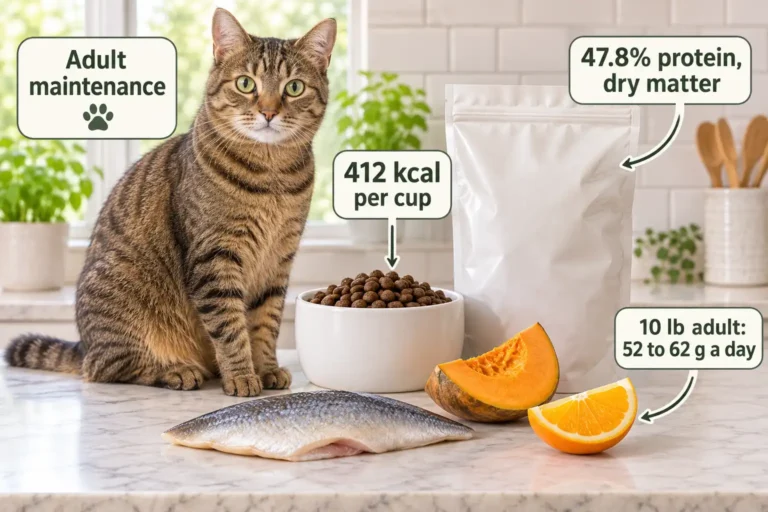
Made in Italy, grain-free, with herring listed first. The label guarantees 44% protein at 8% moisture.
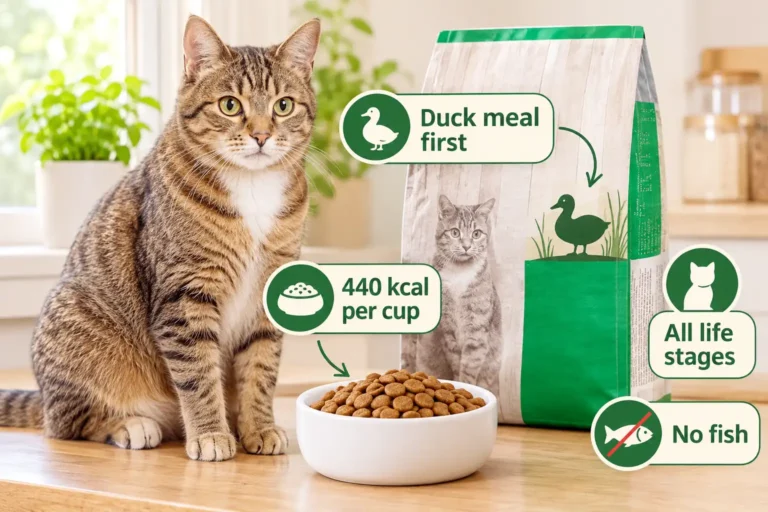
Grandma Mae’s Country Naturals Duck Meal
A duck meal recipe sold for cats and kittens. The brand calls its cat foods “Uristic,” its own word for urinary support rather than a regulatory term.
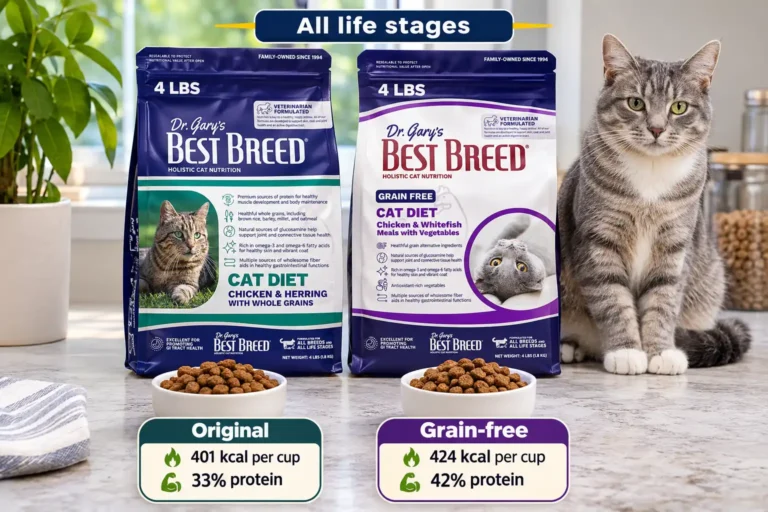
Dr. Gary’s Best Breed Cat Diet
Made in Ohio by a company a veterinarian founded in 1994. The grain-free cat diet carries an all life stages statement.
Barn Cat dry cat food, 32 lb bag
Kent’s farm-store formula, aimed at outdoor and barn cats. Labeled for all life stages, with 30% protein and 8% fat on the bag.
See all brand guides, or put two side by side in brand comparisons.
Brand details come from product labels and manufacturer listings, checked October 2026. Formulas change, so the bag in your hand wins.
Keeping dry food fresh
Storage bins, feeders, and bowls have their own supplies guides. Recalls and shelf life sit with storage and safety.
Keep it cool and dry
Cornell Feline Health Center advises storing dry food somewhere cool and dry. Heat and humidity speed up spoilage.
Keep it sealed
An airtight container helps protect nutrients and flavor, per Cornell. Put the whole bag inside the bin so the label stays with the food.
Keep the date and lot number
Check the expiration date before you open a bag, and don’t feed past it. Keep the lot number until the bag is empty. It’s how you check a recall.
Latest guides

Other Brands
Grandma Mae’s Country Naturals Duck Meal Dry Cat Food
Grandma Mae’s Country Naturals duck meal dry cat food is a grain-inclusive kibble sold mostly through independent pet stores. Its…
Brands
Best Dry Cat Food: 10 Picks by Life Stage, Calories, and Label
The best dry cat food depends on the cat eating it: its age, whether it lives indoors, and its weight….
Other Brands
Farmina N&D Ocean Herring Pumpkin & Orange Dry Cat Food
Farmina N&D Ocean Herring Pumpkin & Orange dry cat food is a grain-free, herring-based kibble made for adult cats. This…
Store Brands
Is Special Kitty Good for Cats? Label, Protein, and Recall Review
Special Kitty is a budget store brand sold in bags as large as 44 lb. Is Special Kitty good for…
Other Brands
Dr. Gary’s Best Breed Cat Diet Dry Cat Food: 2 Recipes Compared
Dr. Gary’s Best Breed Cat Diet dry cat food comes in two recipes. The original pairs chicken with brown rice…
Purina
Friskies Dry Cat Food: Calories, Protein, and Who Each Suits
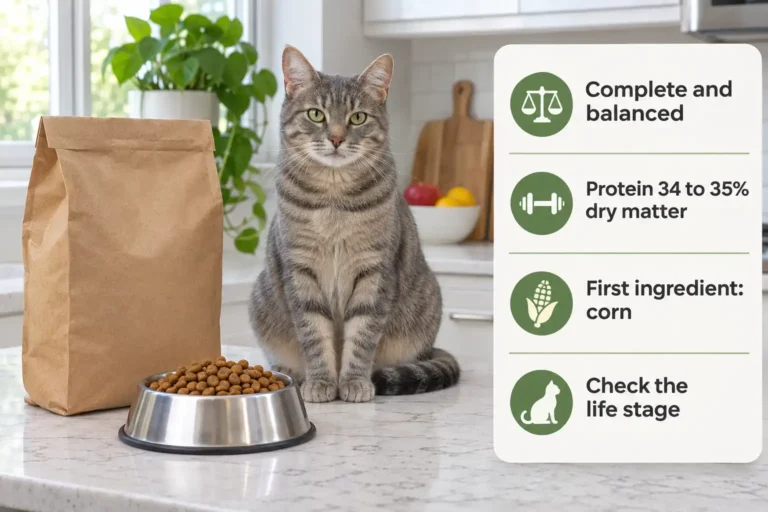
Friskies dry cat food is Purina’s everyday kibble line, and its labels raise fair questions about corn, dyes, and by-products….

To Get Updated
To Your Email Inbox
DryCatFood.org
Want to know exactly how much your cat should eat? Join our list for clear feeding guides, label breakdowns, and recall news, straight to your inbox. Free, short, and easy to unsubscribe.
Dry cat food questions
How much dry food do I feed a cat that also eats wet food?
Split the day’s calories between the two. Count the calories in the wet food first, using the can’s label. Then fill the rest with dry food, measured by the kcal per cup on the bag.
Is Special Kitty dry food good for cats?
Special Kitty is Walmart’s store brand. The formulas we checked carry AAFCO statements, so they’re complete for the life stage named: Gourmet for adult maintenance, Original for all life stages. Your cat’s weight and health decide the rest.
Does dry food clean a cat’s teeth?
Not much. Tufts veterinary nutritionists note that ordinary kibble gives only a minor dental benefit. Foods carrying a Veterinary Oral Health Council seal have passed testing for plaque or tartar control. Brushing still works best.
Is it okay to feed a cat only dry food?
For a healthy cat, yes, as long as the food is complete and balanced for its life stage. Keep fresh water out at all times. Cats with urinary or kidney problems may need wet food added, so ask your vet.
How much protein is in dry cat food?
The bags we cover list 30 to 44 percent on the label. AAFCO’s minimum is 26 percent on a dry matter basis for adults and 30 percent for kittens. Convert to dry matter before comparing two foods.
Can kittens eat adult dry food?
Not as their main food. Adult maintenance formulas are built to a lower nutrient profile than growth formulas. Feed a kitten or all life stages food until around 12 months, then switch gradually.
Can dry cat food go bad?
Yes. Cornell Feline Health Center advises checking the expiration date before feeding and storing food cool, dry, and sealed to slow nutrient loss. If it smells rancid or looks damp or moldy, throw it out.
Should I switch dry foods gradually?
Yes. Mix the new food into the old one, raising its share every couple of days. Most bag feeding guides suggest 7 to 10 days. The switching guides cover picky eaters too.
How we work
DryCatFood.org is an independent reference. We don’t make or sell cat food, and we don’t run feeding tests on our own cats.
Every guide is built from published research and regulatory documents, then checked line by line against the sources it names. Where two sources give different figures, we show both and say why.
We describe. We don’t diagnose. Vomiting, weight loss, or a cat that stops eating needs a veterinarian, not a new bag of food.
Sources we rely on
- Cornell Feline Health CenterFeeding, storage, cat health
- Tufts Cummings SchoolClinical nutrition, dental claims
- FDA Center for Veterinary MedicineLabel rules, complete and balanced
- AAFCOCat food nutrient profiles
- AAHANutrition and weight guidelines
- AAFPFeline energy needs
- WSAVA Global Nutrition CommitteeChoosing a pet food
- National Research CouncilEnergy requirement formula
- NIH PubMed CentralPeer-reviewed pet food studies
- Veterinary Oral Health CouncilDental product seals
Found a figure that looks wrong?
Calories per cup and label statements change when a food is reformulated. If ours doesn’t match the bag in your hand, tell us which formula you’re reading.
Sick cat?
A cat that stops eating, keeps vomiting, or is losing weight needs a vet, not an inbox. Call your veterinary clinic first.
editor@drycatfood.org, contact@drycatfood.org
Corrections usually go up the same week.