Can Cats Drink Milk? What’s Safe and What to Avoid
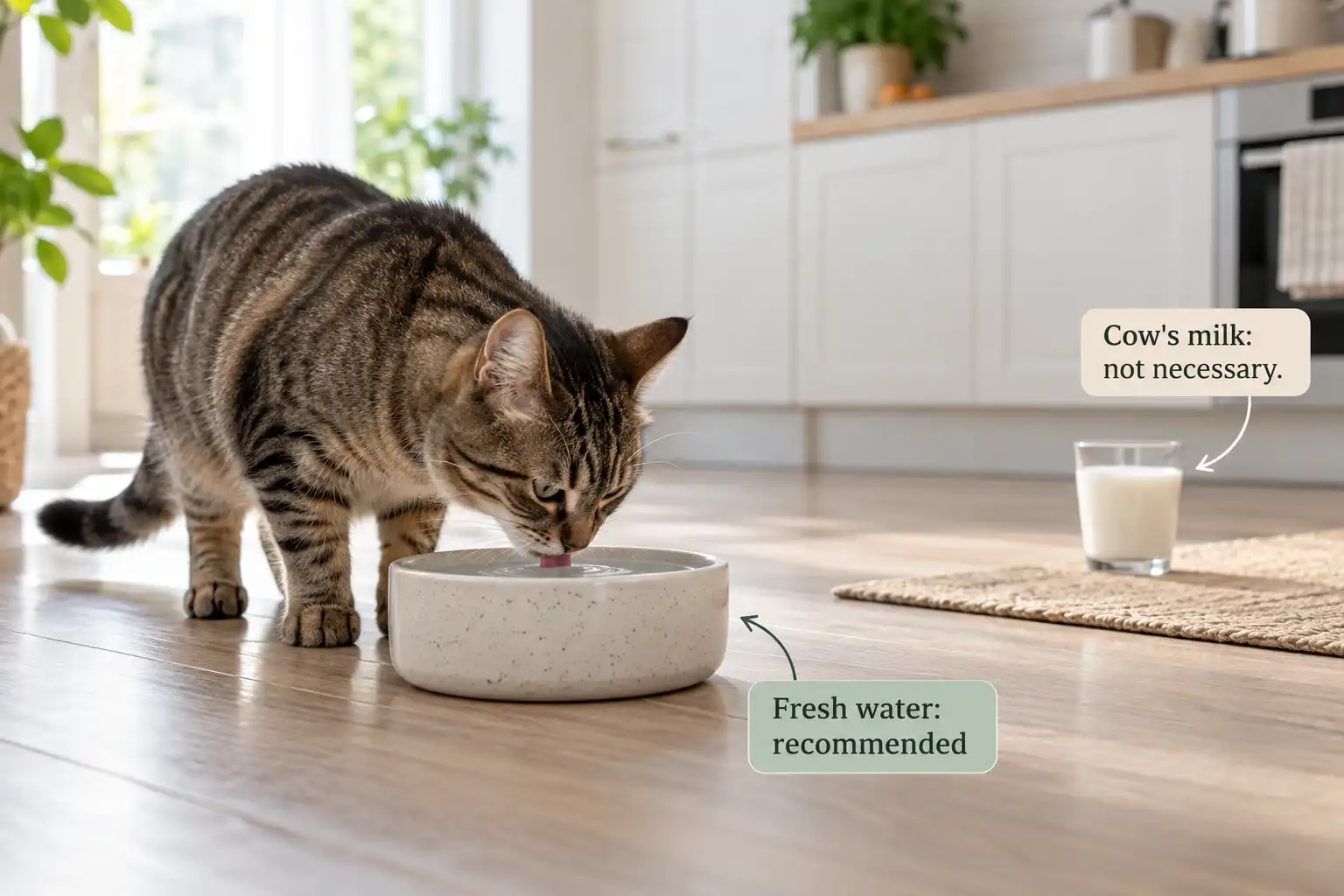
Can cats drink milk? Some cats tolerate small amounts, while others develop digestive problems. The answer depends on the cat’s age, ability to digest lactose, and type of milk. Understanding these differences helps you avoid unnecessary stomach upset.
Some adult cats can tolerate a little, but regular cow’s milk may cause diarrhea, gas, or vomiting. Cats do not need milk after weaning. Fresh water is the better everyday drink.
Can Cats Drink Regular Milk Safely?
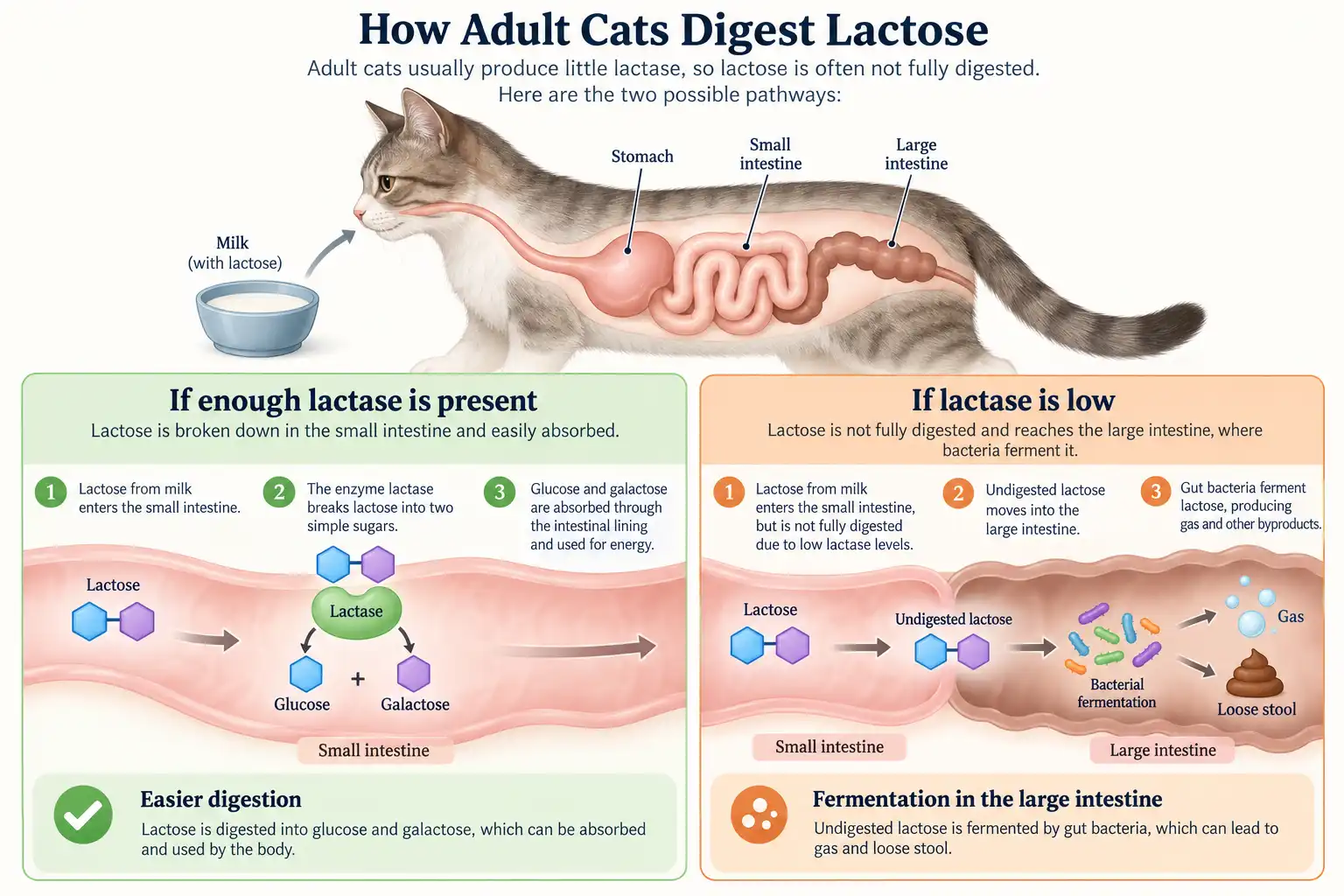
Regular cow’s milk is not recommended as an everyday drink for cats. It contains lactose, a natural milk sugar that some cats cannot digest properly.
Kittens produce an enzyme called lactase to digest their mother’s milk. As they grow and begin eating solid food, lactase activity generally decreases.
When a cat cannot digest all the lactose it consumes, some reaches the large intestine. Bacteria ferment it, potentially causing digestive problems.
Common signs include:
- Loose stools or diarrhea
- Excessive gas
- Abdominal discomfort or bloating
- Vomiting
However, not every adult cat is lactose intolerant.
The Royal Canin Academy discusses research showing that many adult cats can digest modest amounts of lactose. Individual sensitivity still varies.
Meanwhile, the Cornell Feline Health Center advises against routinely offering milk because many cats experience gastrointestinal problems.
The ASPCA takes a similarly cautious position and recommends avoiding milk as a treat or water substitute.
These recommendations differ in how much emphasis they place on lactose tolerance. However, they agree that milk is unnecessary for a healthy adult cat.
The practical distinction: Cow’s milk is not inherently poisonous, but tolerating it does not make it a useful daily drink.
Does skim milk cause fewer digestive problems?
Not necessarily. Whole milk, reduced-fat milk, and skim milk all contain lactose. Removing fat does not remove the milk sugar responsible for lactose-related digestive problems.
Skim milk contains fewer calories than whole milk, but it is not a reliable solution for cats that react to lactose.
Which Types of Milk Can Cats Drink?
Different milk products have different nutritional properties. However, most offer little benefit to a cat eating a complete and balanced diet.
The following comparison helps distinguish common choices.
| Type of milk | Suitable for cats? | What you should know |
|---|---|---|
| Regular cow’s milk | Not recommended routinely | Contains lactose and may cause digestive upset |
| Lactose-free cow’s milk | Sometimes tolerated | Removes the lactose concern but still adds unnecessary calories |
| Goat’s or sheep’s milk | Not a safer alternative | Both naturally contain lactose |
| Almond milk | Best avoided | Lactose-free but nutritionally unnecessary; additives may upset digestion |
| Oat, soy, or coconut milk | Best avoided | Ingredients and calorie content vary; some contain added sugars, oils, or thickeners |
| Commercial cat milk | Occasional treat only | Often lactose-reduced; not a replacement for water or balanced food |
| Mother’s milk or kitten milk replacer | Appropriate for nursing kittens | Provides nutrition suited to kittens before weaning |
Can Cats Have Lactose-Free Milk?
Lactose-free milk is less likely to cause lactose-related digestive upset because the lactose has been broken down or removed.
However, it still contains milk proteins and calories. It can also cause problems for cats with other dairy sensitivities.
According to Cats Protection, lactose-free milk does not provide the balanced nutrition cats need. It can also contribute unnecessary calories.
A small accidental taste is not usually an emergency when a cat remains well. Still, there is no nutritional reason to make lactose-free milk part of its daily routine.
Can Cats Drink Almond Milk?
Almond milk contains no lactose, but that does not make it a good drink for cats. Most almond milk products are designed for human diets. Some contain added sugar, oils, salt, flavorings, or thickening agents.
These ingredients may cause digestive upset, depending on the product and amount consumed.
A veterinarian-authored PetMD guide to milk for cats also advises against routinely offering almond, oat, soy, and coconut milk.
Plain, unsweetened almond milk may not cause obvious problems after a small accidental lick. However, it provides no meaningful advantage over fresh water.
What About Special Milk Made for Cats?
Commercial cat milk is generally formulated with less lactose than ordinary cow’s milk. Some products may be suitable as occasional treats for fully weaned cats. However, their calorie content and ingredients vary.
Check the product label and remember that cat milk is not the same as kitten milk replacer.
A milk treat designed for adult cats should never replace a nursing kitten’s formula.
Can Kittens Have Milk?
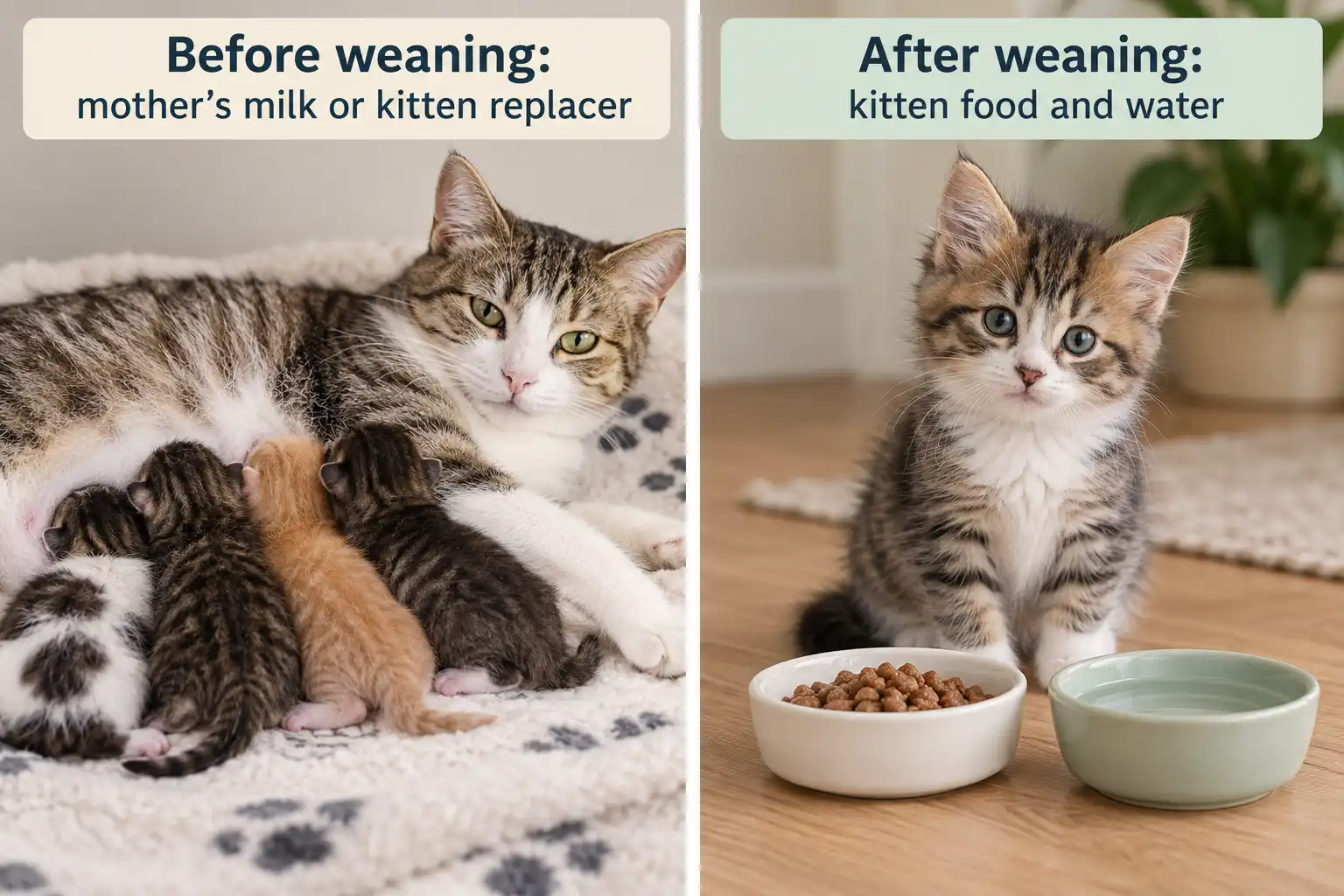
Yes. Nursing kittens need milk, but the correct type is essential. Before weaning, a kitten’s natural food is its mother’s milk. This supplies nutrients needed for early growth. If the mother cannot nurse, a veterinarian can help select an appropriate commercial kitten milk replacer.
VCA Animal Hospitals explains that cow’s milk differs substantially from mother cat milk. It contains less protein, fat, and certain essential nutrients, while containing more lactose. For this reason, regular cow’s milk, goat’s milk, almond milk, and commercial adult cat milk are not appropriate substitutes for nursing kittens.
When Do Kittens Stop Needing Milk?
The weaning process generally begins when kittens are around four weeks old. According to the ASPCA’s kitten nutrition guidance, most kittens complete weaning at approximately eight to ten weeks.
During weaning, kittens gradually move toward appropriate kitten food and fresh water.
Once fully weaned, a healthy kitten does not need extra milk alongside a complete growth-stage diet.
Food formulated for growing kittens provides different nutrition from adult maintenance food. These differences are explained in our guide to kitten and adult dry food requirements.
If you are caring for an orphaned or unweaned kitten, contact a veterinarian promptly for feeding guidance rather than substituting household milk.
What Happens If a Cat Accidentally Drinks Milk?
A small accidental amount of plain milk does not automatically mean a cat will become sick. Some cats experience no visible symptoms. Others may develop loose stool, gas, or vomiting.
Contact a veterinarian if your cat develops vomiting, diarrhea, or appetite changes. These signs are not specific to lactose intolerance and may have another cause.
If your cat has already consumed milk:
- Check the product. Determine whether it was plain milk, flavored milk, or a product containing other ingredients. Note approximately how much was consumed.
- Remove the remaining milk. Keep clean drinking water available and continue offering the cat’s normal, appropriate meals.
- Watch for digestive changes. Note any diarrhea, gas, vomiting, unusual behavior, or reduction in appetite.
- Contact your veterinarian when symptoms occur. Seek same-day care if your cat stops eating or vomits repeatedly. Breathing trouble or sudden weakness requires emergency attention.
Young kittens and cats with existing illnesses may be more vulnerable to dehydration after vomiting or diarrhea.
Cornell’s guidance on diarrhea in cats explains that gastrointestinal symptoms can also reflect other illnesses.
Milk should not automatically be blamed for every digestive problem. Our guide to common reasons cats vomit explains when further veterinary evaluation is necessary.
Do not give human anti-diarrhea medicines or other treatments without veterinary direction.
How Much Milk Is Too Much for a Cat?
There is no single milk serving that is guaranteed to be tolerated by every adult cat. Royal Canin Academy’s nutrition review suggests that many adult cats can digest modest lactose amounts. However, the ASPCA recommends avoiding milk as a treat.
Both considerations matter. Even milk that a cat digests comfortably adds calories.
For example, for a healthy, neutered indoor adult cat, 1/4 cup (approximately 60 mL) of whole cow’s milk adds about 41 kcal. This calculation uses Royal Canin Academy’s whole-milk value of 69 kcal per 100 mL.
That is an illustration of calorie intake, not a recommended milk serving.
Repeated extras can displace nutritionally balanced food or contribute to unwanted weight gain.
This matters particularly for indoor cats with lower energy needs or cats whose weight requires veterinary monitoring.
For healthy adult cats, daily food amounts should reflect body condition, activity, and the food’s calorie density. Our guide to daily dry food portions explains how those factors affect feeding amounts.
Avoid deliberately offering milk to test whether a cat is lactose intolerant. Previous tolerance does not guarantee that larger or more frequent servings will be comfortable.
What Should Cats Drink Instead of Milk?
Fresh, clean water is the best everyday drink for cats of all life stages. Water supports normal digestion, circulation, and body temperature regulation without introducing unnecessary food ingredients.
However, some cats drink relatively little from their water bowls. Their total water intake also depends on the moisture provided by food.
According to the Cornell Feline Health Center’s hydration guidance, cats eating wet food often obtain more moisture through meals. Cats eating dry food generally need to drink more water directly.
You can support normal water intake by:
- Providing fresh water throughout the day
- Keeping water bowls clean
- Placing water in several accessible locations
- Trying a wide, shallow bowl
- Offering a drinking fountain if your cat prefers moving water
- Considering complete wet food or a wet-and-dry combination
Different cats have different drinking preferences. A fountain may help one cat but make little difference to another.
Our dry versus wet cat food comparison explains how food moisture affects hydration.
If your cat suddenly drinks much more or less than usual, contact your veterinarian. Changes in drinking behavior may indicate an underlying health problem.
Frequently Asked Questions
Can Cats Drink Regular Milk If They Are Not Lactose Intolerant?
Yes, some adult cats tolerate small amounts of regular cow’s milk without obvious digestive problems. However, milk is nutritionally unnecessary and adds calories, so routine servings are not recommended even when previous tastes caused no symptoms.
Can Cats Have Lactose-Free Milk Every Day?
No, lactose-free milk should not become a cat’s everyday drink. Although removing lactose reduces one common digestive concern, the milk still contributes calories and does not replace fresh water or a complete diet.
Can Cats Eat Milk Mixed With Dry Food?
Milk should not be used routinely to soften dry cat food. It may cause digestive problems and change the meal’s calorie intake. Plain water is a more suitable option when extra moisture is needed.
Can Cats Drink Goat’s Milk Instead of Cow’s Milk?
Goat’s milk is not a reliable alternative for lactose-sensitive cats because it also contains lactose. It also does not provide the balanced nutrition nursing kittens need, so it should not replace appropriate kitten milk formula.
Can Cats Eat Yogurt or Cheese Instead of Drinking Milk?
Some cats tolerate small amounts of plain yogurt or cheese because certain dairy products contain less lactose than milk. However, these foods still add calories and may cause digestive problems, so they are unnecessary treats.
Can Cats Drink Chocolate Milk?
No. Chocolate milk contains cocoa ingredients that can be toxic to cats, alongside milk and other additives. The ASPCA identifies chocolate-related compounds as hazardous. Contact a veterinarian promptly if your cat consumes chocolate milk.
Do Cats Need Milk for Calcium?
No. Healthy cats eating a complete and balanced diet appropriate for their life stage obtain calcium and other required nutrients from their food. Extra milk is unnecessary and does not improve a properly formulated diet.
The Right Drink for Your Cat
Milk is not a nutritional requirement for cats after weaning. Although some adult cats digest small amounts without discomfort, others develop gas, diarrhea, or vomiting. Lactose-free milk and commercial cat milk may reduce certain digestive concerns, but neither replaces a balanced diet or clean drinking water.
For nursing kittens, the situation is different. Mother’s milk or an appropriate kitten milk replacer supplies nutrition that ordinary household milk cannot provide.
The simplest everyday choice is fresh water alongside complete, age-appropriate cat food. If your cat has an unusual appetite, ongoing digestive symptoms, or a sudden change in drinking habits, contact your veterinarian rather than trying different milk products.