Why Is My Cat Vomiting? 6 Causes and Emergency Signs
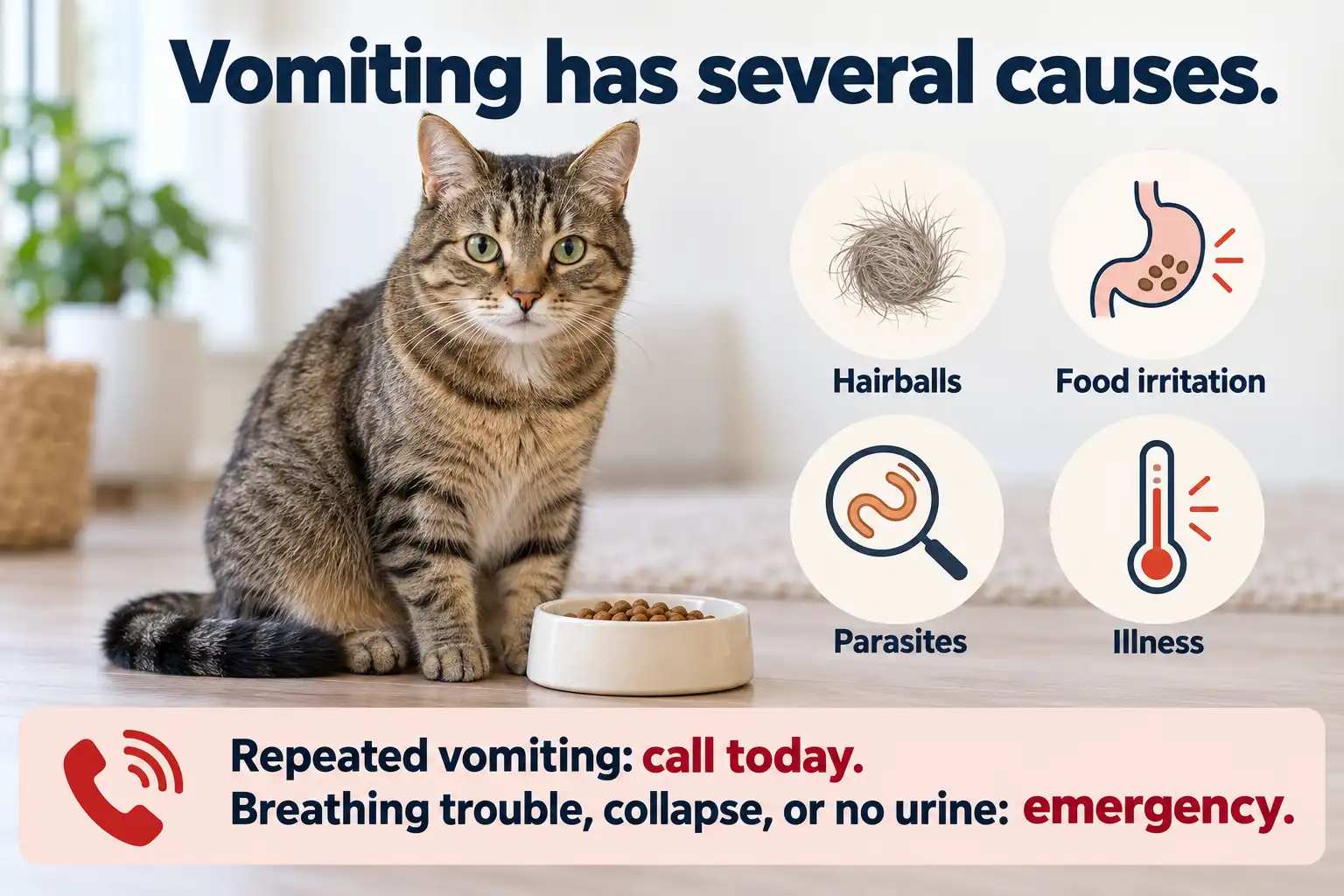
Why is my cat vomiting? The timing, visible heaving, and accompanying symptoms help determine the next step. Contact your veterinarian the same day for repeated vomiting or not eating. Do not rely on vomit color to judge urgency.
Your cat may vomit because of hairballs, food irritation, parasites, swallowed objects, or illness. Contact your veterinarian the same day for repeated vomiting, pain, or appetite loss. Vomit color alone cannot identify the cause.
When is cat vomiting an emergency?
Vomiting needs emergency care when it accompanies severe symptoms, suspected poisoning, or signs of a blockage.
| When to get help | Warning signs |
|---|---|
| Emergency care now | Breathing trouble, collapse, sudden severe weakness, severe belly pain, blood or coffee-ground material, repeated unsuccessful retching, or inability to keep water down. |
| Emergency care now | Suspected poisoning, a swallowed foreign object, or straining to urinate with little or no urine. |
| Same-day veterinary assessment | Repeated vomiting, not eating, vomiting with diarrhea, or unusual tiredness without the emergency signs above. |
VCA Animal Hospitals and Texas A&M identify these accompanying symptoms as reasons for urgent assessment. Cornell classifies urinary obstruction as an absolute emergency.
The FDA warns that true lilies and daylilies can cause fatal kidney failure. Suspected exposure needs immediate help, even before symptoms develop.
For suspected poisoning, contact your veterinarian or ASPCA Poison Control at (888) 426-4435. ASPCA operates around the clock; a consultation fee may apply.
For a vomiting kitten, contact the clinic promptly. Repeated vomiting, food refusal, low energy, or inability to retain water needs urgent assessment.
Why is my cat vomiting?
Vomiting can result from digestive irritation or disease elsewhere in the body. Cornell Feline Health Center and VCA describe causes across these six groups.
| Possible cause | Examples and useful clues |
|---|---|
| Hairballs | Swallowed fur can collect in the stomach. Repeated episodes still deserve assessment. |
| Food-related irritation | Spoiled food, new foods, or food sensitivities may trigger digestive upset. |
| Parasites or infections | Intestinal parasites and infections may also cause diarrhea or appetite loss. |
| Swallowed objects or poisons | String, toy pieces, toxic plants, and human medicines can cause serious problems. |
| Digestive disease | Possibilities include intestinal inflammation, pancreatitis, constipation, and tumors. |
| Other illness | Kidney disease, liver disease, diabetes, and hyperthyroidism can cause vomiting. |
These groups overlap. A recent food change does not prove that food caused the vomiting. Your veterinarian considers the complete history and examination.
Is it vomiting or regurgitation after eating?
Vomiting involves active abdominal heaving; regurgitation usually happens without it. Regurgitation often occurs shortly after eating or drinking, according to VCA Animal Hospitals.
Undigested food alone does not prove fast eating caused the episode. However, a veterinarian may consider that explanation when food returns passively after meals.
Record a short video when safe. It can help distinguish vomiting, regurgitation, and coughing, but never delay urgent care to capture one.
What do yellow liquid, white foam, and clear vomit mean?
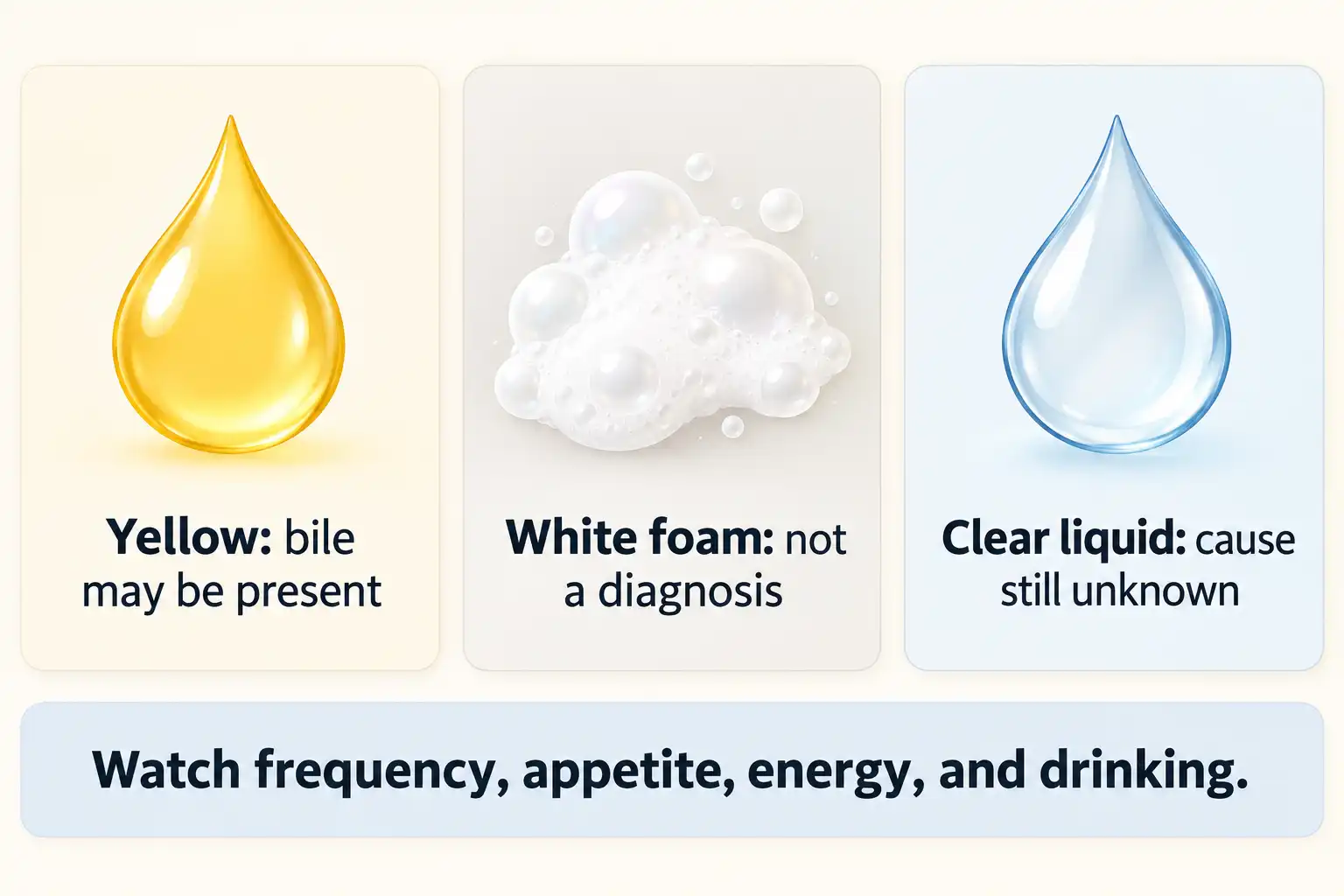
Appearance helps describe an episode, but it cannot establish the diagnosis. Your veterinarian also needs the timing, frequency, and other symptoms.
Why is your cat vomiting yellow liquid?
Yellow liquid may contain bile. VCA explains that gastrointestinal inflammation can produce foamy, yellowish bile after the stomach empties. Therefore, yellow vomit does not prove that hunger is the only problem.
Why is your cat puking white foam?
White foam does not identify a specific illness. Vomiting can bring up froth, but coughing can also produce foamy material. Note whether the episode involves abdominal heaving or coughing; foam alone does not confirm a hairball.
What does a cat throwing up liquid mean?
Liquid may come up during vomiting or regurgitation. Note whether your cat heaves or passively brings it up after drinking. Inability to keep water down needs urgent veterinary care.
Can intestinal parasites cause vomiting in cats?
Yes, intestinal parasites can cause vomiting. Cornell identifies roundworms as one example, particularly in kittens. Diarrhea, appetite loss, or a potbellied appearance may accompany infection.
Visible worms are not required for an infection to be present. Ask whether to bring a fresh stool sample. Your veterinarian selects testing and treatment based on the suspected parasite, not vomit color.
What should you do while arranging veterinary care?
Follow the clinic’s instructions rather than starting home treatment.
- Ask what and when to feed. Do not start a fast or skip meals on your own. Prolonged poor intake can contribute to hepatic lipidosis, a potentially fatal liver condition.
- Keep fresh water available unless directed otherwise. Do not force your cat to eat or drink. Report any inability to retain water promptly.
- Avoid unapproved remedies. Do not give human medicines or try to make your cat vomit. ASPCA states that no safe at-home method exists for inducing vomiting in cats.
Also, do not pull ribbon or string protruding from your cat’s rear. VCA warns that pulling can damage the intestines; seek veterinary help instead.
What should you record for your veterinarian?
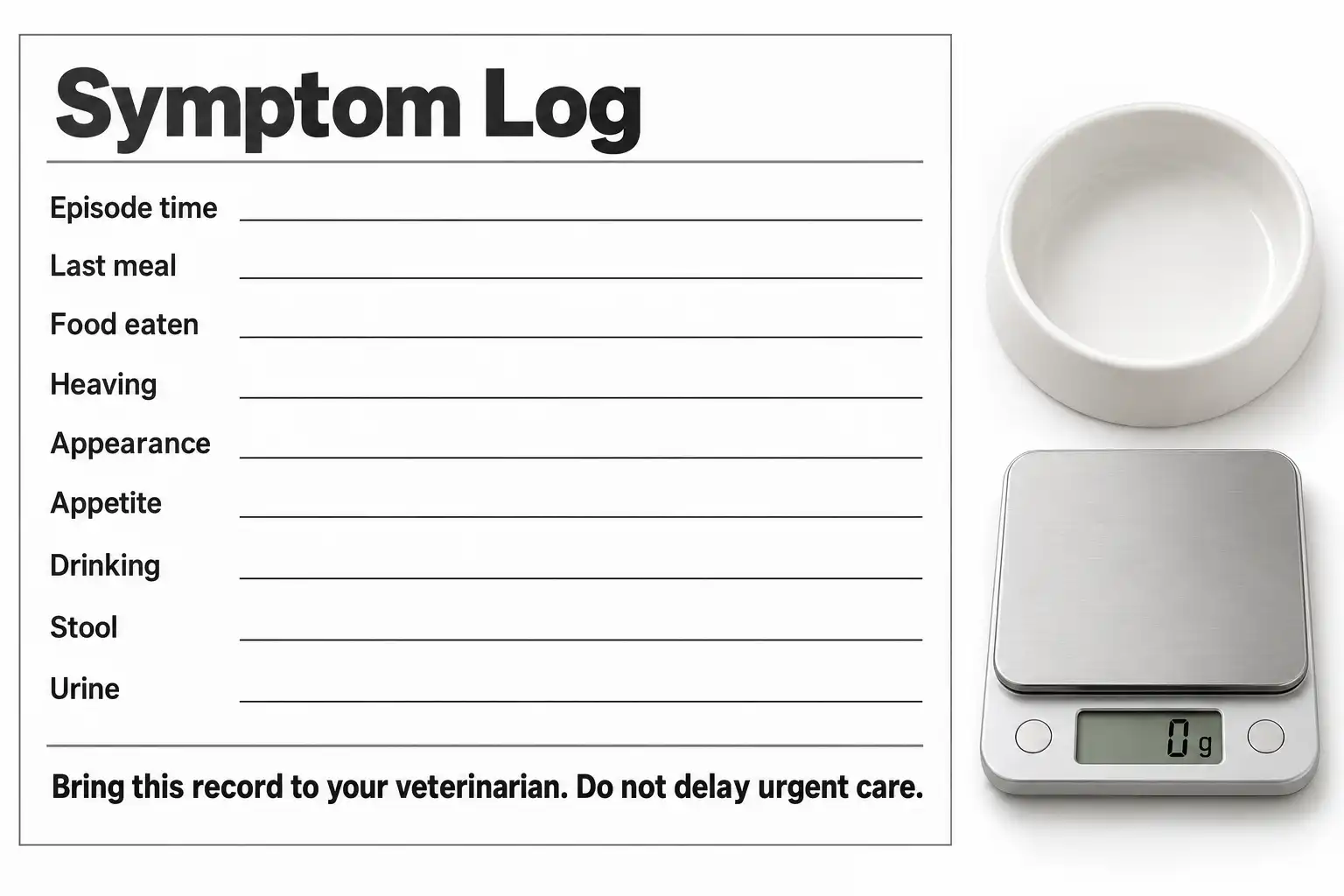
Record episode times, meal timing, appetite, drinking, stool, and urine. Also list medicines, recent food changes, and possible plant or string exposure. These details help guide the investigation.
Include the exact recipe name and a photo of the food’s ingredient and nutrition panels.
A weighed-food log makes intake more specific. For a hypothetical adult cat’s dry-food log, 40 g offered minus 15 g left equals 25 g eaten.
This assumes no spills or shared bowls. It records intake, not food retained after vomiting, and is not a feeding target.
How does a veterinarian find and treat the cause?
Your veterinarian starts with the history and examination, then selects appropriate tests. Cornell describes bloodwork, stool testing, X-rays, and ultrasound as possible steps. Some persistent cases require intestinal biopsies.
Treatment depends on the diagnosis. It may include fluids, veterinary nausea control, parasite treatment, or treatment for an obstruction. Your veterinarian also decides whether a therapeutic diet is appropriate.
Can feeding changes prevent another episode?
Sometimes, but only when they address the cause. For regurgitation linked to fast eating, Texas A&M discusses slow feeders and food puzzles. These tools do not treat unexplained vomiting.
For a recovered adult cat, AAHA’s feline guidelines support gradual food transitions over 7 to 10 days, when clinically appropriate. Follow the clinic’s individual plan. Keep the replacement diet appropriate for your cat’s growth or adult-maintenance stage.
Report renewed vomiting or food refusal rather than pushing through the switch.
FAQs about Cat Vomiting
Why does my cat vomit but act normal?
An isolated episode is not always an emergency when your cat remains alert and eats, drinks, and urinates normally. However, recurring vomiting or new symptoms need veterinary assessment, even when your cat seems well between episodes.
Can my indoor cat have intestinal parasites?
Yes, indoor cats can encounter parasites through infected fleas or rodents. Staying indoors reduces some exposures but does not eliminate infection, so your veterinarian may still recommend stool testing when vomiting or diarrhea occurs.
Should I switch my cat from dry food to wet food?
Switching formats alone does not identify the cause of vomiting. Discuss wet and dry feeding options with your veterinarian after assessment, then follow a plan that suits your cat’s life stage and health.
Why is my older cat vomiting and losing weight?
Vomiting with weight loss can accompany kidney disease, hyperthyroidism, intestinal disease, or other illness in senior cats. Arrange an examination rather than assuming this pattern reflects normal aging, even if your cat still seems hungry.
What matters most after your cat vomits?
Contact your veterinarian the same day if your cat vomits repeatedly or stops eating. Hairballs, parasites, food irritation, swallowed objects, and underlying illness are possible causes. Do not assume recurring vomiting is simply a hairball problem.
Record when episodes happen and note changes in appetite, drinking, energy, stool, and urine. Also mention recent food changes or possible exposure to string, plants, or medicines. These details help your veterinarian choose appropriate tests rather than relying on appearance alone.
Seek emergency care for breathing trouble, collapse, suspected poisoning, or straining without passing urine. While arranging care, do not force food or water or give human medicines without veterinary direction. Instead, ask your clinic what and when to feed. Follow that advice rather than trying several remedies at home.