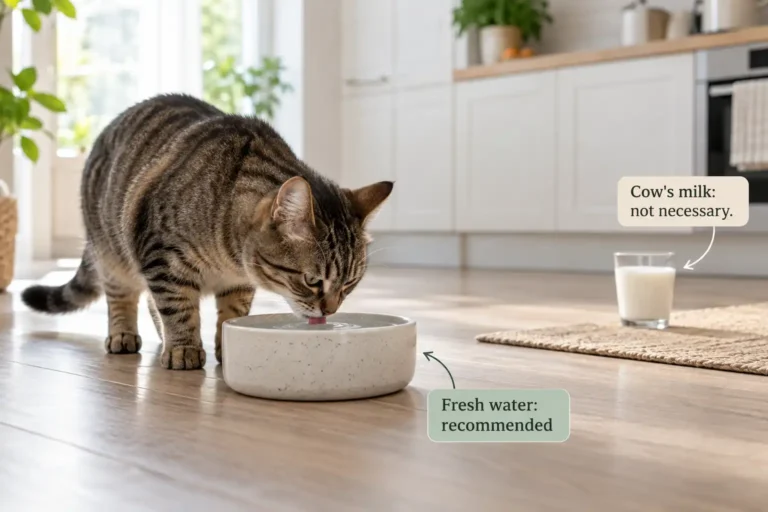
Can Cats Eat Apples? Safe Amounts, Seeds, and Prep Steps
Can cats eat apples? The question usually comes up when a cat noses at a slice on the counter. This guide covers which parts are safe, how much fits a cat’s day, and how other fruits compare.
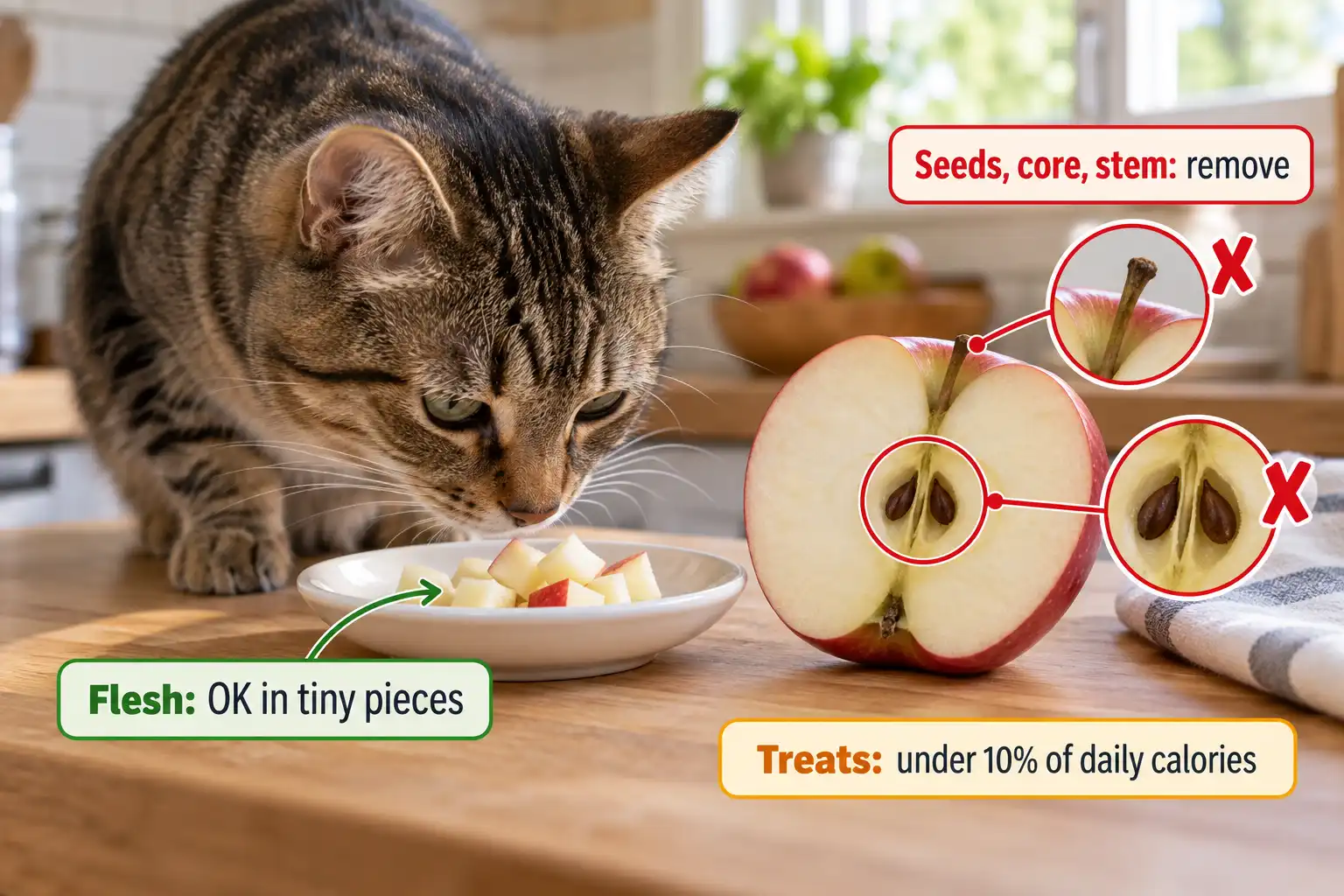
Yes, cats can eat apples in small amounts. Plain apple flesh, cut into pea-sized pieces without seeds, core, or stem, is safe for a healthy adult cat. AAHA caps all treats at 10 percent of a cat’s daily calories.
Can Cats Eat Apples Safely?
Yes, apple flesh is safe for a healthy adult cat in small pieces. The seeds, core, and stem are not. Tufts’ Petfoodology, the nutrition blog of Tufts Cummings School of Veterinary Medicine, lists chopped apple as a low-calorie treat. NC State’s College of Veterinary Medicine also names seedless apple as a treat food. Its do-not-feed list, however, includes apple seeds.
Still, apple adds nothing a cat needs. Tufts points out that cats do not need fruits or vegetables in their diets at all. A dry food with an AAFCO “complete and balanced” statement for your cat’s life stage already covers the nutrients.
So think of apple as a snack, not a supplement. A few small pieces now and then are fine. Skipping it entirely costs your cat nothing.
How Much Apple Can a Cat Have?
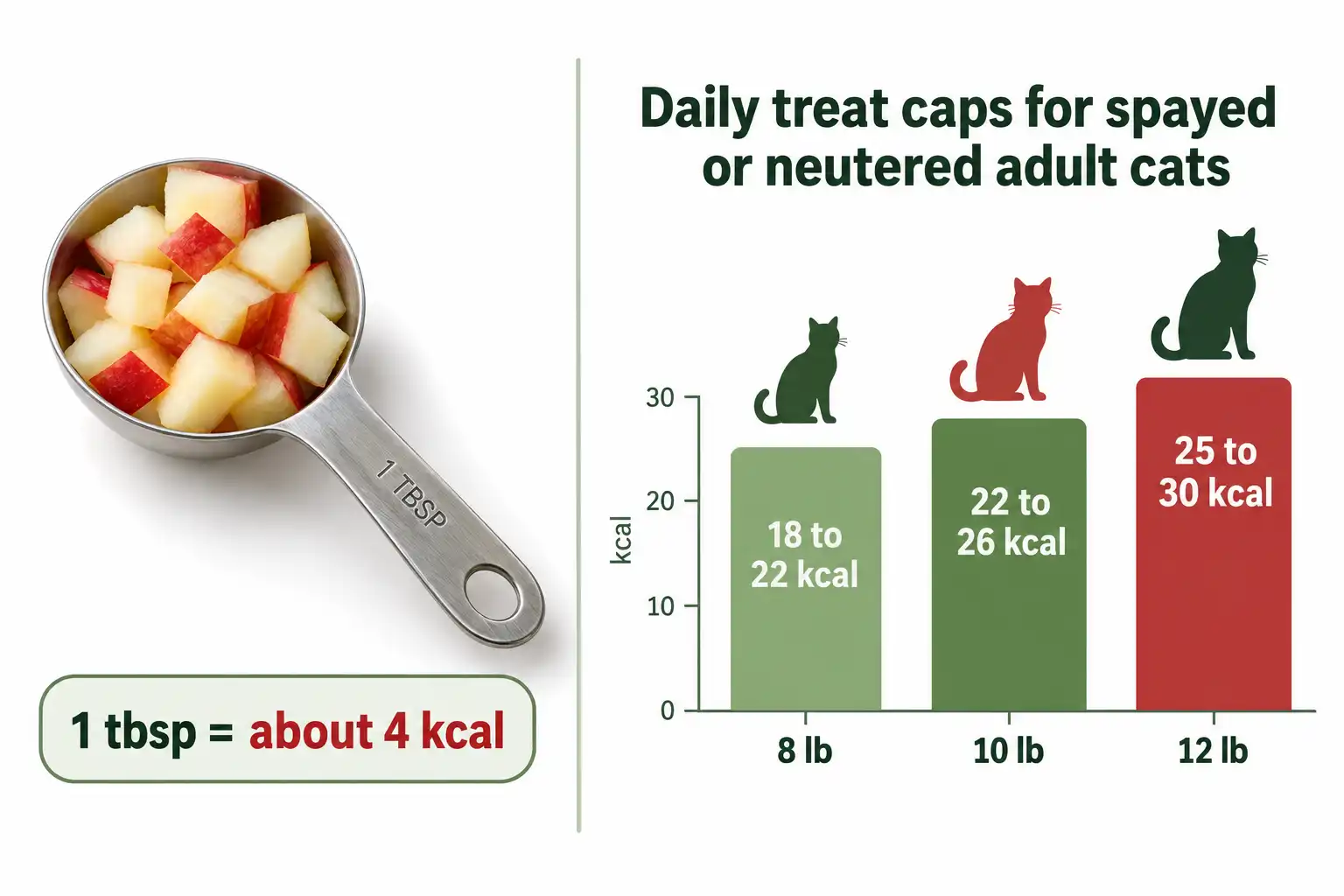
For a healthy adult cat, a teaspoon of chopped apple (about 1 kcal) is a sensible serving. The upper limit comes from calories. AAHA’s weight management guidance caps treats, table food included, at 10 percent of a cat’s daily calories.
To find that 10 percent, start with daily calories. AAHA’s 2021 nutrition guidelines estimate resting energy (RER) as 70 x (body weight in kg)^0.75. A spayed or neutered adult cat then needs 1.0 to 1.2 times its RER.
Here is the math for a 10 lb spayed or neutered adult cat:
- Weight in kg: 10 / 2.2046 = 4.54 kg
- RER: 70 x 4.54^0.75 = about 218 kcal
- Daily need: about 220 to 260 kcal
- Treat cap at 10 percent: 22 to 26 kcal
Next, convert apple to calories. Tufts’ Petfoodology lists 1/4 cup of chopped apple (30 grams) at 15 kcal. That works out to about 4 kcal per tablespoon and about 1 kcal per teaspoon.
So one tablespoon of apple uses about a sixth of that 10 lb cat’s daily treat allowance. Run your own cat’s weight through the daily food calculator to get its number.
Treat Cap by Body Weight
| Spayed or neutered adult cat | Daily calories (AAHA factor 1.0 to 1.2) | 10 percent treat cap | Chopped apple at the cap |
|---|---|---|---|
| 8 lb | about 185 to 220 kcal | 18 to 22 kcal | about 5 to 6 tbsp |
| 10 lb | about 220 to 260 kcal | 22 to 26 kcal | about 6 to 7 tbsp |
| 12 lb | about 250 to 300 kcal | 25 to 30 kcal | about 7 to 8 tbsp |
These caps assume apple is the only extra food all day. They are ceilings, not serving sizes. Most cats get other treats too, so the real room is smaller. Intact and very active outdoor cats burn more, so ask your veterinarian for their factor. For an overweight cat, the calories come from the target weight your veterinarian sets.
Published figures differ here. Tufts uses a round average of 300 kcal for a 10 lb cat, with no life stage named. That sets its cap at 30 kcal. The AAHA formula for a spayed or neutered adult lands lower, so start from the lower range. Your cat’s body condition decides in the end.
Treats and kibble also share one budget. The same daily calories set how many cups of dry food your cat needs. So a daily treat habit counts against that total.
How to Prepare Apple for a Cat
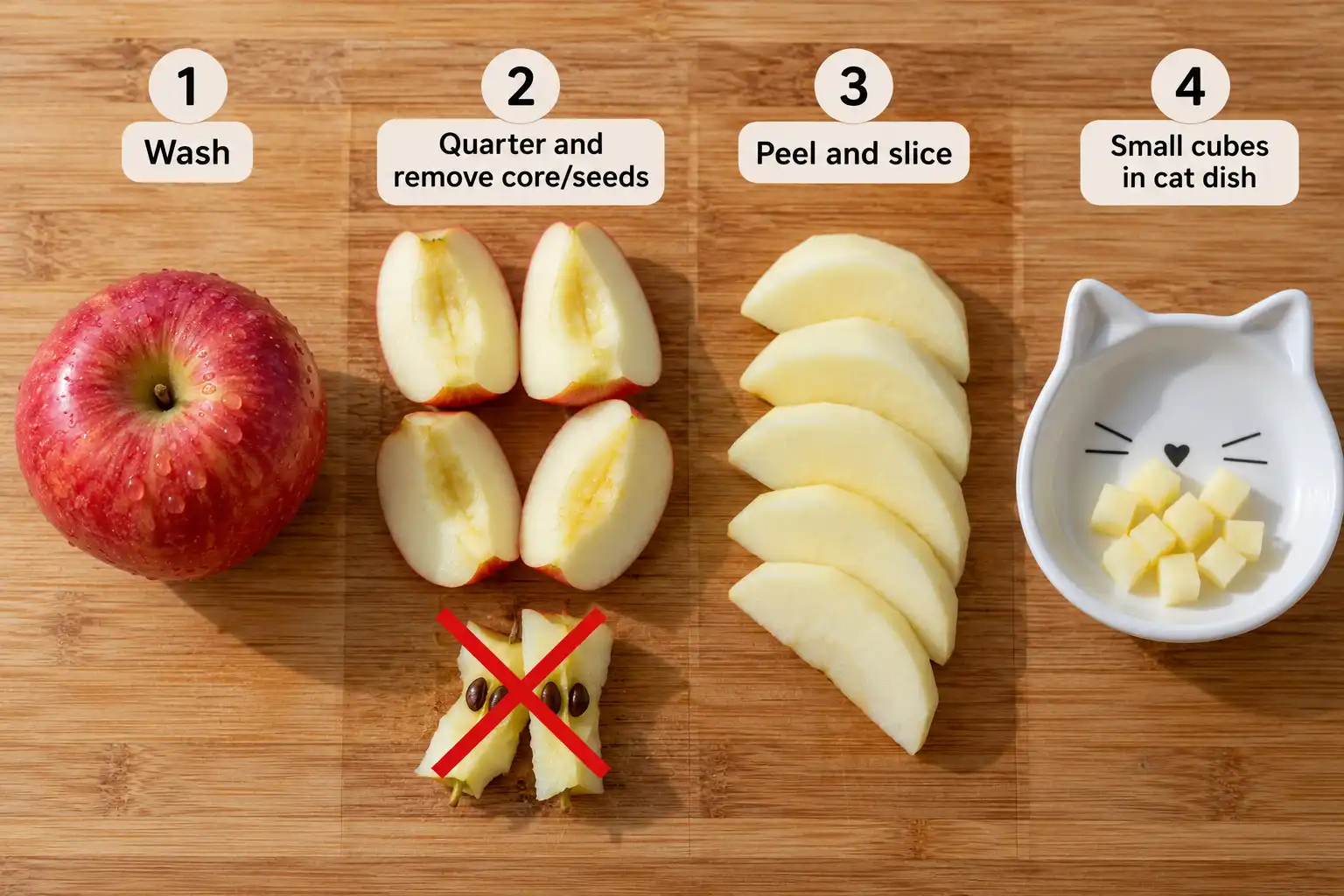
- Wash the apple. Rinse it under running water to clear dirt and residue from the skin.
- Cut out the seeds, core, and stem. NC State lists apple seeds as toxic. The core and stem are hard to chew.
- Peel it if you like. The skin is safe, but peeled flesh is easier to chew.
- Dice the flesh into pea-sized pieces. Small pieces lower the choking risk, especially for a cat that gulps food.
- Serve it plain. Skip cinnamon, caramel, sugar, and peanut butter. NC State lists sugary and fatty foods among those that can cause vomiting or diarrhea.
- Start with one or two pieces. A new food can upset a cat’s stomach, so offer a little first.
If vomiting or diarrhea follows, stop the apple and call your veterinarian. Call the same day if vomiting repeats or your cat stops eating.
What to Do If Your Cat Ate Apple Seeds or a Core
Call your veterinarian or ASPCA Animal Poison Control at (888) 426-4435 if your cat ate seeds or a core. The poison center may charge a consultation fee. Get same-day care for labored breathing, repeated vomiting, sudden weakness, or refusal to eat. Don’t try to make your cat vomit at home.
Why the caution? NC State’s veterinary hospital puts apple seeds on its do-not-feed list, next to peach and plum pits. These seeds contain compounds that can release cyanide when chewed. Yet no published figure says how many seeds would harm a cat. That gap calls for a phone call, not a wait-and-see approach.
A core brings a second risk. It’s hard and fibrous, and a cat may swallow a chunk whole. Gagging, retching, or pawing at the mouth needs a veterinarian right away.
Plain apple flesh can still upset a sensitive stomach, one of the common reasons cats vomit. Vomiting more than once means a same-day call to your veterinarian.
Why Do Some Cats Like Apples If They Can’t Taste Sweet?
It isn’t the sugar. A 2005 study in PLoS Genetics, archived in NIH PubMed Central, found that cats carry a broken Tas1r2 gene. That gene builds one half of the sweet taste receptor. Without it, cats most likely can’t taste sweetness at all.
So a cat that grabs an apple cube is reacting to something else. The crunch, the smell, the novelty, or the attention that comes with a shared snack could all play a part. No published research pins down which one.
Cantaloupe has the same reputation for drawing cats in, and it has no better explanation. Either way, a cat’s interest in fruit is not a sign that it needs fruit.
What Fruits Can Cats Eat?
Healthy adult cats can eat small amounts of apple, blueberries, strawberries, cantaloupe, watermelon, honeydew, and banana. Tufts’ Petfoodology lists each as a low-calorie treat and gives the amount that holds about 15 kcal.
| Fruit | Amount for about 15 kcal (Tufts) | Smaller serving | Prep before serving |
|---|---|---|---|
| Apple | 1/4 cup chopped (30 g) | 1 tbsp chopped: about 4 kcal | Remove seeds, core, and stem |
| Blueberries | 20 berries (25 g) | 1 berry: under 1 kcal | Halve or quarter each berry |
| Strawberries | 3 medium (50 g), 16 kcal | 1 medium berry: about 5 kcal | Cut off the green top, then dice |
| Cantaloupe, honeydew, watermelon | 1/3 cup diced (50 g) | 1 tbsp diced: about 3 kcal | Remove rind and seeds |
| Banana | 1/8 medium (20 g) | Half that (10 g): about 8 kcal | Peel and slice thin |
A 10 lb spayed or neutered adult cat has a 22 to 26 kcal treat cap. Any one of those Tufts amounts uses more than half of it. So the smaller serving is the more realistic portion.
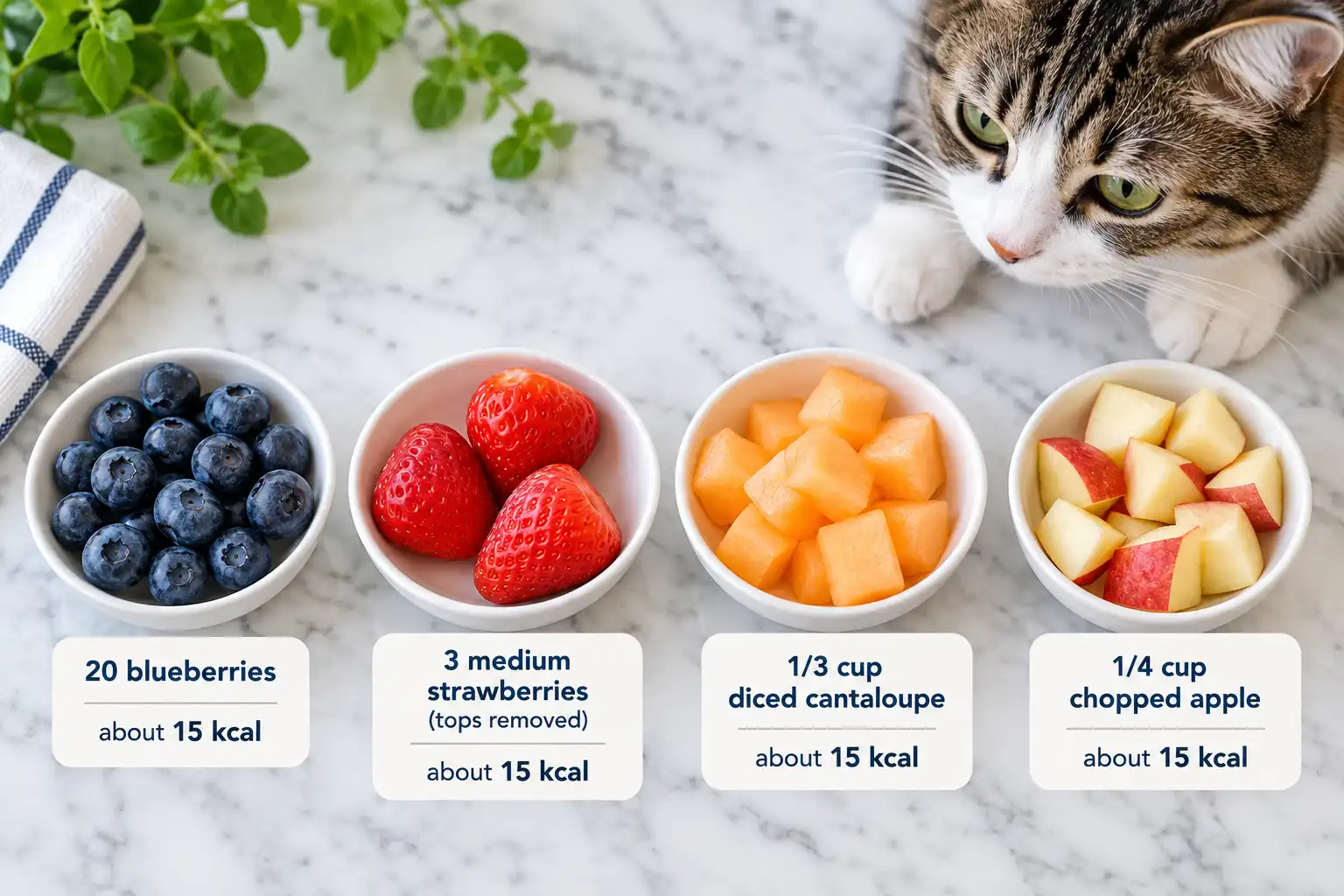
Banana packs the most calories per bite here. Tufts’ 20 grams of banana carries the same 15 kcal as 50 grams of melon. So a banana treat for a cat should be a thinner slice than a melon or apple serving.
Can Cats Have Blueberries?
Yes, plain blueberries are safe in small numbers for a healthy adult cat. Tufts puts 20 berries at about 15 kcal, so one berry is under 1 kcal. Halve or quarter each berry so your cat can’t swallow it whole.
Published calorie figures for blueberries differ. NC State’s treat sheet lists them at 0.10 kcal per gram. Tufts’ figure works out to about 0.6 kcal per gram. Count the higher Tufts figure so a handful of berries doesn’t get undercounted.
Can Cats Eat Strawberries?
Yes, a healthy adult cat can eat a small piece of plain strawberry. Tufts lists 3 medium strawberries at 16 kcal, so one berry is about 5 kcal. That’s roughly a fifth of a 10 lb spayed or neutered adult cat’s daily treat cap. Cut off the green top and dice the berry before serving.
Skip strawberry jam, syrup, and sugar-free desserts. Sugar-free foods can hide xylitol, which NC State calls extremely toxic to dogs and cats.
Is Cantaloupe Good for Cats?
Cantaloupe is safe as an occasional treat, but it isn’t good for cats in a nutritional sense. A complete and balanced food already covers what a healthy adult cat needs. Tufts lists 1/3 cup of diced cantaloupe at 15 kcal, the same as watermelon and honeydew. That makes 1 tablespoon about 3 kcal.
Remove the rind and seeds, then dice the flesh small. A bite of melon adds very little water, though. It doesn’t replace the water bowl for a cat on dry food.
Fruits to Keep Away From Cats
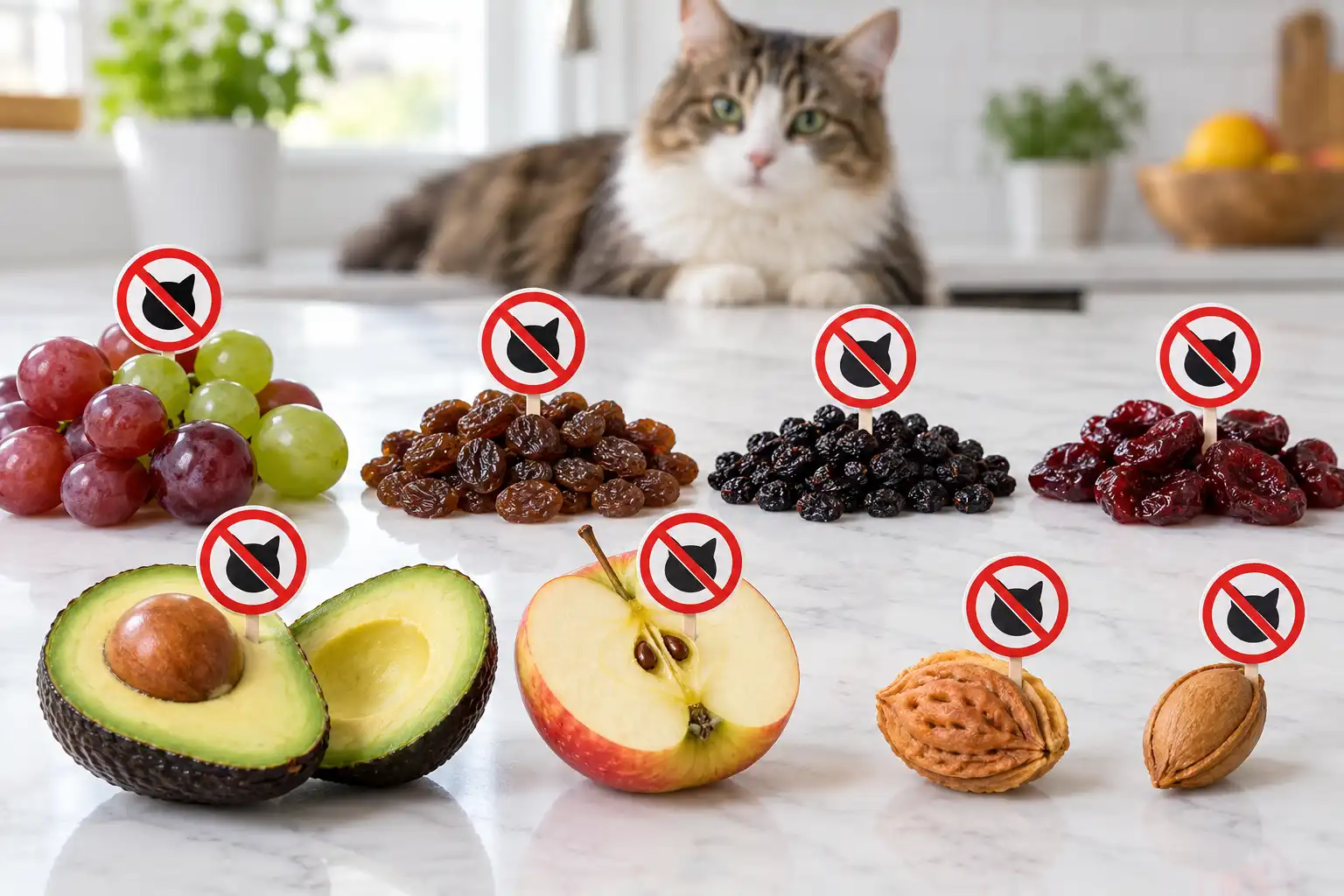
NC State’s veterinary hospital lists these fruits and fruit parts as do-not-feed foods for dogs and cats:
- Grapes, raisins, sultanas, and currants
- Cherries
- Apple seeds, peach pits, and plum pits
- Avocado
It also lists citrus fruits among foods that can cause vomiting or diarrhea.
Grapes need a closer look. Most published cases of kidney injury from grapes and raisins involve dogs. Reports in cats are few, so the research offers no safe amount for cats. That gap is a reason to keep grapes out of reach, not a reason to test the limit. If your cat eats grapes or raisins, call your veterinarian the same day.
Baked goods carry their own risk. Pies, muffins, and trail mix can hide raisins, sugar, butter, or xylitol, so keep them off your cat’s menu entirely.
Kittens, Overweight Cats, and Cats With a Diagnosis
Kittens. A kitten’s food should carry an AAFCO statement for growth or all life stages. Tufts names that as the label to look for. Fruit only displaces that growth food, so a kitten gets a crumb-sized taste at most. The label matters because kitten and adult formulas differ in their nutrient minimums.
Overweight adults. Every treat calorie counts against a weight plan. Your veterinarian sets the target weight and the pace of loss, and any treat fits inside that plan. Never cut a cat’s meals sharply to make room for snacks.
Healthy seniors. AAFCO has no senior nutrient profile. So a healthy older cat follows the adult treat math for its own weight and body condition.
Cats with a diagnosis. Tufts notes that its treat list may not suit a cat with a medical condition. Ask your veterinarian before offering fruit to a cat with diabetes, kidney disease, or a digestive problem. During a food elimination trial, even one treat can spoil the result, so fruit stays out completely.
Apple on a Dry Cat Food Ingredient List
Some dry cat foods list apples, dried apples, or apple pomace (pressed apple pulp) among their ingredients. The FDA requires pet food ingredients to appear in order of weight as added, water content included. So fruit that sits far down a long list makes up a small share of the food.
That means apple on the bag is no reason to buy a food, and no reason to avoid one. The nutritional adequacy statement, the calorie statement, and the first ingredients matter far more. Each one makes sense once you read the label line by line.
FAQs about Apples for Cats
Can cats eat apple skin?
Yes, a small piece of washed apple skin is safe for a healthy adult cat. Peeled flesh is softer and easier to swallow, though, so peeling makes sense for cat-sized pieces.
Is one apple seed dangerous for a cat?
No published figure sets a safe or harmful number of apple seeds for cats. So call your veterinarian or ASPCA Animal Poison Control if your cat chewed any seeds at all.
Can cats eat applesauce?
Only plain, unsweetened applesauce, in a lick-sized amount, after you check the label. Sugar-free foods can hide xylitol, which NC State’s veterinary hospital calls extremely toxic to dogs and cats.
Can cats eat dried apples or apple chips?
Skip them, because drying concentrates calories and sugar into each piece. Apple chips often add sugar, salt, or oil, which NC State lists among foods that can cause vomiting or diarrhea.
Are green apples safer than red apples for cats?
Neither color is safer for cats, because the same rules cover every apple variety. Feed plain flesh only, and remove the seeds, core, and stem from green and red apples alike.
Can cats drink apple juice?
No, apple juice is a poor choice for cats, since it delivers fruit sugar with no nutrient a cat needs. Fresh, clean water is the only drink a cat requires.
Putting This Into Practice
Treat apple as an occasional taste for a healthy adult cat, not a food group. Wash, core, and dice it, then offer a teaspoon or less and count it toward the 10 percent treat cap. Keep seeds, cores, grapes, and raisins out of reach. If your cat eats any of them, or gets sick after a new food, call your veterinarian.