Why Do Cats Knead? Understanding This Common Behavior
Why do cats knead blankets, beds, and even your lap? This familiar paw-pressing behavior begins during kittenhood. Adult cats often continue kneading when they feel comfortable, although the behavior can have several possible meanings.
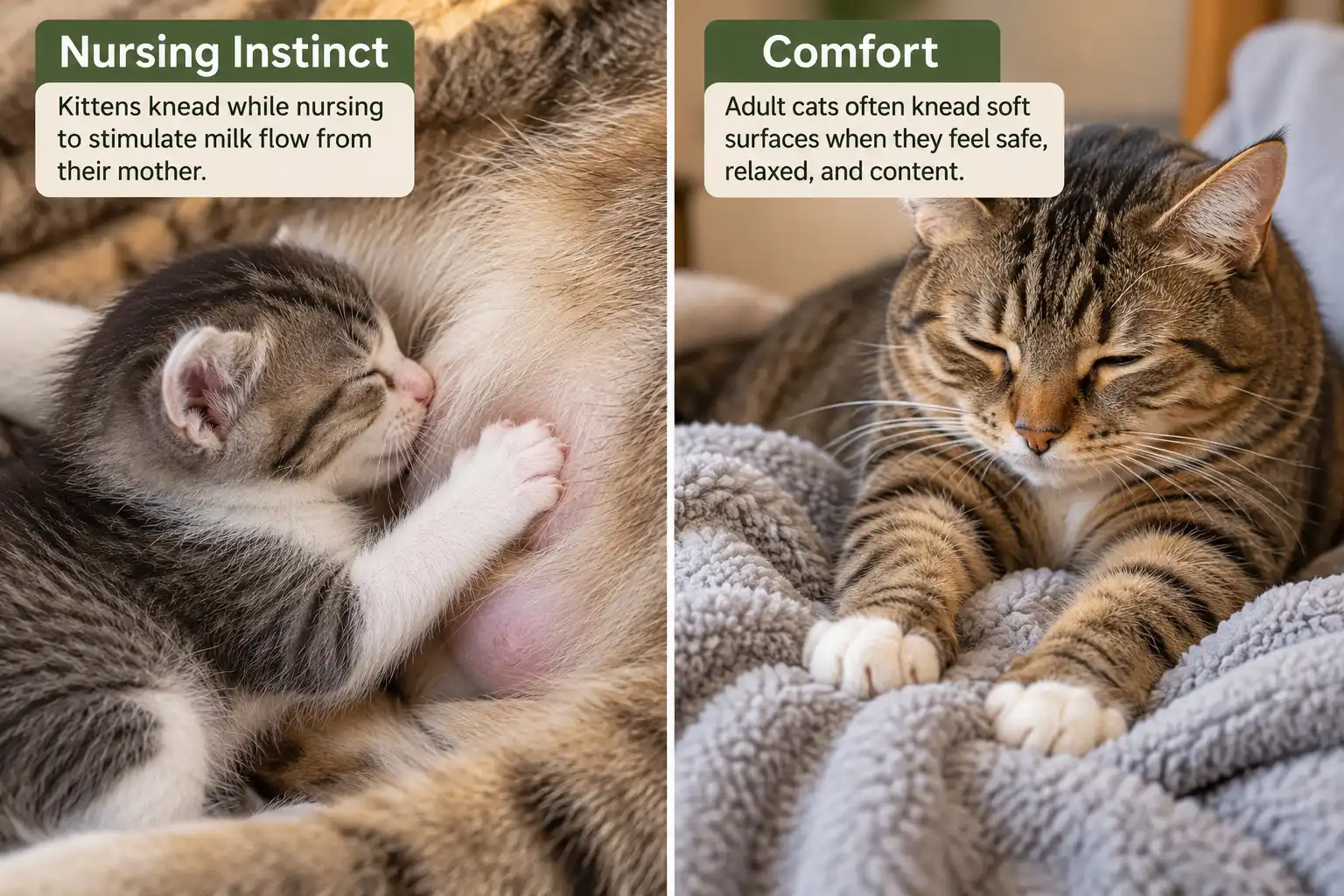
Cats knead by rhythmically pressing their paws against a surface. Kittens use this motion to stimulate milk flow while nursing. Adult cats often knead for comfort, while preparing a resting spot and depositing scent are other possible explanations.
What Is Cat Kneading or Making Biscuits?
Cat kneading is a repetitive motion in which a cat presses its paws against a surface, usually alternating between the left and right front paws. The movement resembles someone pressing dough, which explains the nickname “making biscuits.”
Cats commonly knead:
- Soft blankets, pillows, and beds.
- A person’s lap, stomach, or clothing.
- Cushions and other comfortable resting surfaces.
- Occasionally, another cat they feel comfortable around.
Some cats extend their claws while kneading. Others keep their claws mostly retracted. Purring, stretching, and occasional drooling can also accompany the movement.
According to Blue Cross, kneading begins during nursing and may continue into adulthood.
Why Do Cats Knead With Their Paws?
Cats knead primarily because the behavior begins as an instinctive action during nursing. However, several explanations may account for why adult cats continue doing it.
1. Kneading begins during nursing
Newborn kittens press their paws against their mother’s mammary area while nursing.
This rhythmic pressure helps stimulate milk flow. Consequently, kneading becomes associated with feeding, warmth, and close contact with their mother.
The behavior can remain long after a kitten stops nursing.
2. Kneading may provide comfort
Many adult cats knead when they appear relaxed. A familiar surface may trigger a movement associated with the comfort of nursing. For example, a cat might knead a fleece blanket before curling up to sleep.
However, researchers have not established exactly why every adult cat continues kneading.
Cats Protection explains that comfort is a leading explanation, but the full purpose of adult kneading remains uncertain.
3. Cats may knead to prepare a resting spot
Some cats knead their bedding immediately before lying down. One theory suggests that this behavior relates to ancestral cats pressing down vegetation to create comfortable resting areas.
However, this explanation is less firmly established than kneading’s role during nursing.
4. Kneading may help deposit scent
Cats have scent glands around their paws. As they knead, they may transfer scent to the surface beneath them. According to VCA Animal Hospitals, scent marking is one possible function of kneading.
However, a kneading cat is not necessarily trying to claim ownership of a person or object.
5. Kneading may stretch the front legs
Kneading repeatedly flexes and extends a cat’s paws, toes, and front legs.
The movement may provide a comfortable stretch, particularly after resting. Still, deliberate stretching remains a possible explanation rather than a proven primary reason for kneading.
Why Do Cats Make Biscuits on You?
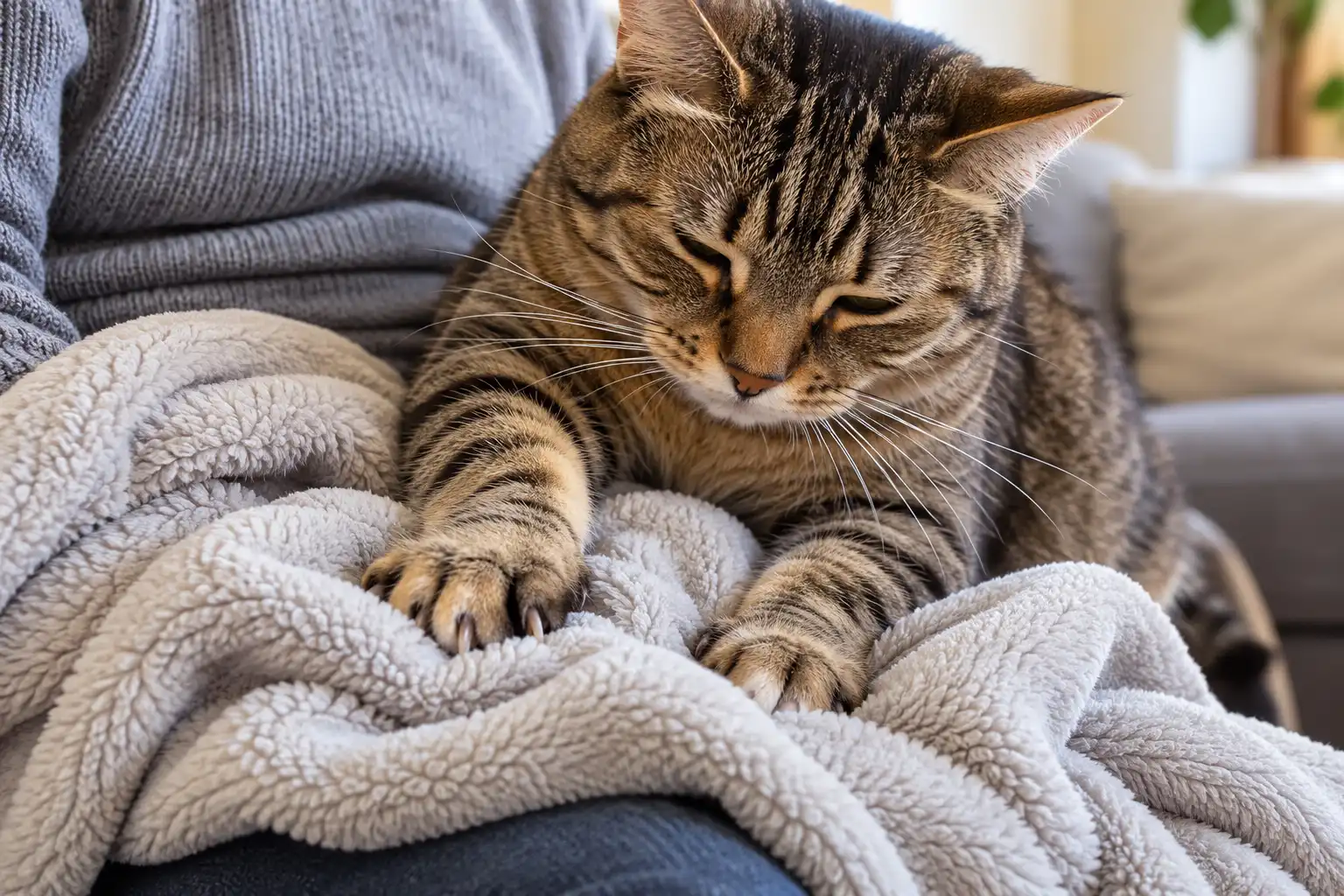
Cats often knead people because they feel comfortable with them. Your lap provides warmth, a relatively soft surface, and familiar contact. If your cat climbs onto your lap, begins kneading, and eventually falls asleep, this generally suggests relaxation.
Some cats knead their preferred people more often than others. However, kneading alone cannot establish how strongly a cat is bonded to someone.
Kneading on you does not mean your cat literally mistakes you for its mother.
Instead, the cat may be repeating a familiar behavior associated with comfort and security.
The texture of your clothing can also influence kneading. A cat may prefer a fleece-covered lap over bare skin or smooth fabric.
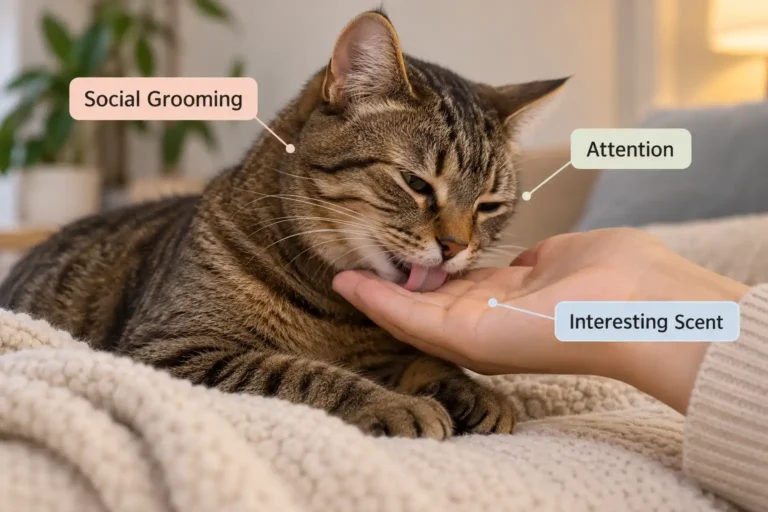
Some cats also lick people during close contact. Why cats lick people involves several possible explanations, including social interaction and grooming-related behavior.
Why Do Cats Knead Blankets and Beds?
Cats often knead blankets because soft, flexible materials provide a comfortable surface for the repetitive paw movement. Fleece, soft cotton, and other cushioned fabrics may encourage kneading because they yield beneath the paws.
Some cats develop preferences for particular blankets. Others knead different surfaces depending on where they choose to rest. You may also notice a cat:
- Kneading a blanket before sleeping.
- Purring while pressing its paws into the fabric.
- Holding a section of blanket in its mouth.
- Sucking or lightly mouthing the fabric.
Kneading and blanket sucking are related behaviors, but they are not identical.
Some cats suck fabric without swallowing it. However, chewing off and swallowing pieces creates a different concern.
The Cornell Feline Health Center warns that swallowed fabric can cause dangerous intestinal obstructions.
If your cat chews or swallows blanket material, remove access to the fabric and contact your veterinarian. Do not assume that fabric eating is harmless kneading.
Why Do Adult Cats Knead If They No Longer Nurse?
Adult cats knead because some retain the behavior they first use as nursing kittens. Although kneading no longer serves its original feeding purpose, familiar textures and comfortable situations may continue to trigger the movement.
Adult cats show considerable individual variation. Some knead daily, while others rarely knead. A few may not display noticeable kneading at all.
A cat that does not knead is not necessarily unhappy or less attached to you.
Likewise, kneading does not automatically mean a cat was separated from its mother too early. The behavior occurs in cats with different early experiences. Kneading alone cannot reveal a cat’s weaning history.
Older cats may also continue kneading. However, sudden changes in a senior cat’s movement or behavior deserve attention, especially when accompanied by stiffness or discomfort.
Why Do Cats Knead While Purring, Drooling, or Extending Their Claws?
Cats often display several behaviors together while kneading. The additional behaviors can provide context, although none gives a completely reliable interpretation on its own.
Kneading and purring
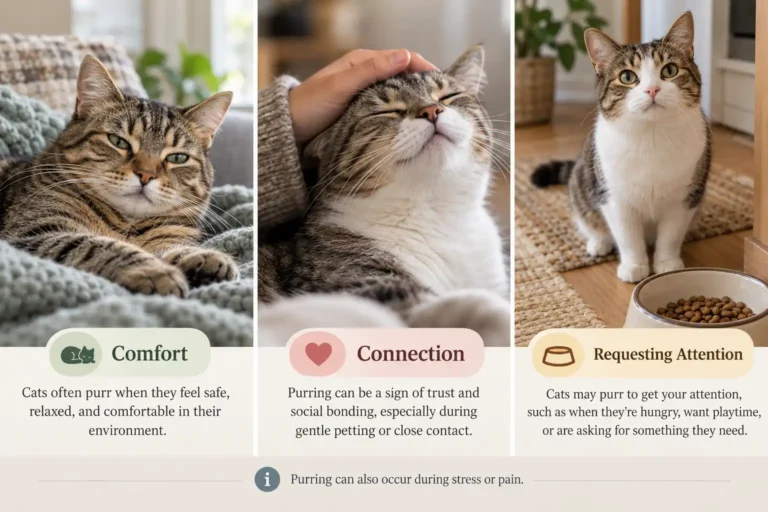
A cat that kneads while purring and resting comfortably may feel relaxed. However, purring is not always a sign of happiness. Cats sometimes purr during stress or discomfort.
Therefore, consider the cat’s posture, surroundings, and other behavior rather than interpreting the sound alone. You can learn more about these different situations in why cats purr.
Kneading with claws extended
Some cats naturally extend and retract their claws while kneading. This does not automatically indicate aggression.
However, even friendly kneading can scratch your skin. A folded blanket provides protection without preventing the cat from kneading.
Kneading and drooling
A little drooling during relaxed kneading can occur in some cats.
However, sudden or unusually heavy drooling is different. Contact your veterinarian if it develops unexpectedly, particularly alongside difficulty eating, mouth discomfort, or other behavior changes.
Is Cat Kneading Always a Sign of Happiness?
No. Kneading often accompanies relaxation, but some cats may also use the behavior to soothe themselves during stressful situations. Observing the cat’s entire body provides more information than watching the paws alone.
| What you notice | What it may suggest | What to do |
|---|---|---|
| Relaxed ears, half-closed eyes, loose posture | The cat appears comfortable | Allow kneading to continue |
| Kneading before settling into bed | The cat may be preparing to rest | Provide comfortable bedding |
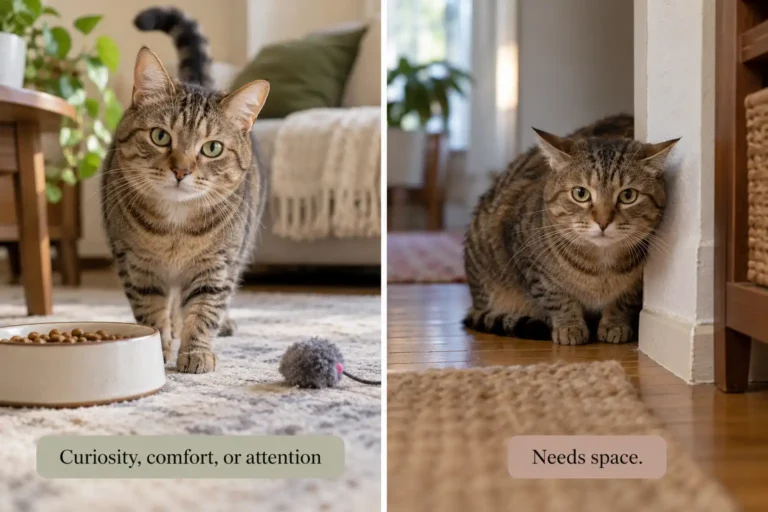
| Kneading with tense posture or flattened ears | The cat may be uncomfortable or stressed | Give space and check the surroundings |
| Sudden increase in kneading with hiding or appetite changes | A possible health or behavioral concern | Contact your veterinarian |
| Kneading accompanied by swallowing fabric | Risk of gastrointestinal obstruction | Remove the material and contact your veterinarian promptly |
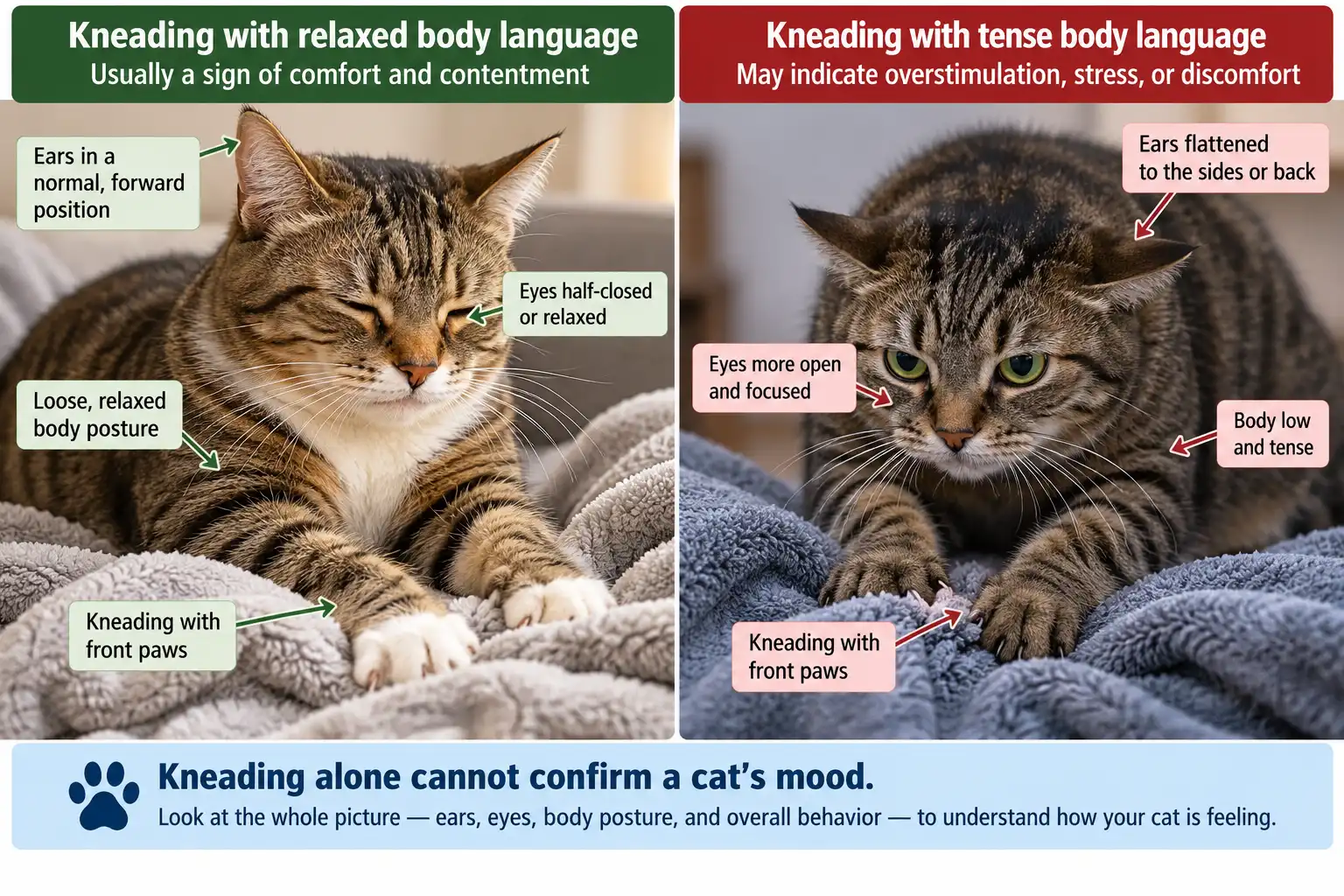
Cats Protection’s body language guidance explains how ear position, posture, eyes, and other signals help indicate whether a cat is relaxed or distressed.
No single behavior proves what a cat feels. Instead, look for patterns and changes from the cat’s usual behavior.
How Can You Make Cat Kneading Comfortable?
Kneading is a normal behavior, so the goal is usually to manage where it happens rather than eliminate it. If your cat’s claws make kneading uncomfortable, try these steps.
1. Place a thick blanket on your lap
Fold a soft blanket and position it between your skin and your cat’s paws.
This lets the cat continue kneading while reducing scratches.
Choose fabric without loose threads that could catch the claws or be swallowed.
2. Provide a designated kneading spot
Place a comfortable, washable blanket or cat bed near your usual sitting area.
If your cat begins kneading directly on your skin, gently encourage it onto the alternative surface.
Avoid pulling its paws away abruptly.
3. Keep the claws appropriately trimmed
Regular nail care can reduce discomfort from sharp claws.
The ASPCA’s cat grooming guidance advises trimming only the sharp claw tips and avoiding the sensitive tissue inside the nail.
If your cat resists handling, ask your veterinarian or a qualified groomer for help.
4. Avoid punishing natural kneading
Scolding or startling a cat for kneading can create unnecessary stress.
Instead, calmly reposition the blanket or offer another comfortable surface.
If your cat enjoys kneading in a particular place, keep that area available when practical.
When Should You Worry About Excessive Cat Kneading?
Normal kneading rarely requires veterinary attention. However, a sudden change in frequency, intensity, or accompanying behavior deserves closer attention.
Contact your veterinarian if your cat:
- Begins kneading much more frequently than usual while showing other behavior changes.
- Appears painful, stiff, or reluctant to move normally.
- Suddenly hides more or becomes less interactive.
- Shows reduced appetite or unexpected drooling.
- Repeatedly chews or tries to swallow blankets or clothing.
These signs do not establish a diagnosis. A veterinarian can determine whether a medical or behavioral problem needs investigation.
Seek same-day veterinary care if your cat stops eating, repeatedly vomits, or develops sudden weakness. Suspected fabric ingestion also warrants prompt veterinary advice, even before symptoms appear.
Frequently Asked Questions
Why does my cat knead only me?
Your cat may knead only you because your lap, clothing, or presence feels particularly comfortable. Individual preferences vary. Choosing one person for kneading can suggest familiarity, but it does not establish a cat’s complete social preferences.
Why does my cat knead me and then bite?
Some cats may nip when physical contact becomes too stimulating. A bite does not always relate directly to kneading. Stop petting, watch the cat’s body language, and give it space. Seek advice if biting becomes frequent.
Why does my cat knead with all four paws?
Some cats knead with their front and back paws rather than only their front paws. This can be a normal variation. However, unusual movements accompanied by limping, stiffness, or signs of discomfort warrant veterinary attention.
Does kneading mean my cat was weaned too early?
No. Kneading does not reliably indicate early weaning. Cats that experience normal nursing and weaning can continue kneading throughout adulthood. The behavior alone cannot establish when a cat stopped nursing or was separated from its mother.
Why doesn’t my cat make biscuits?
Some cats rarely knead or never display noticeable kneading. This variation is not automatically a sign of unhappiness. A cat can show comfort through resting nearby, relaxed body language, gentle rubbing, or other friendly social behaviors.
Do cats knead when they are stressed?
Yes, some cats may knead as a self-soothing behavior during stress or discomfort. However, kneading alone cannot establish anxiety. Watch for hiding, tense posture, appetite changes, or unusual behavior, and consult your veterinarian when changes persist.
What to Remember About Cat Kneading
Kneading is usually a normal part of cat behavior rather than something that needs correction. Its connection to nursing is well established, while the reasons for adult kneading are less certain. Comfort, familiar textures, resting behavior, and scent communication may all contribute.
If your cat kneads your lap, a thick blanket can make the experience more comfortable. If your cat prefers bedding, provide a safe surface without loose threads. Pay attention to relaxed or tense body language rather than assuming every kneading session means happiness.
Most importantly, consider what is normal for your individual cat. Frequent kneading, occasional kneading, and little kneading can all occur in healthy cats. Sudden changes accompanied by other concerning signs deserve veterinary advice.