Why Does My Cat Stare at Me? 7 Reasons and What to Do
Cats watch people out of curiosity, anticipation, comfort, or concern. The meaning depends on when the staring happens and what the cat’s ears, tail, eyes, and body are doing.
Cats stare at you to observe your movements, request food or attention, invite play, or assess their surroundings. A relaxed body usually suggests calm interest. Stiff posture, flattened ears, or sudden behavior changes deserve closer attention.
Why Does My Cat Stare at Me? 7 Common Reasons
Most staring is ordinary cat behavior. However, two cats can look directly at someone for very different reasons. The following explanations help you identify what might be happening.
1. Your Cat Is Curious About What You’re Doing
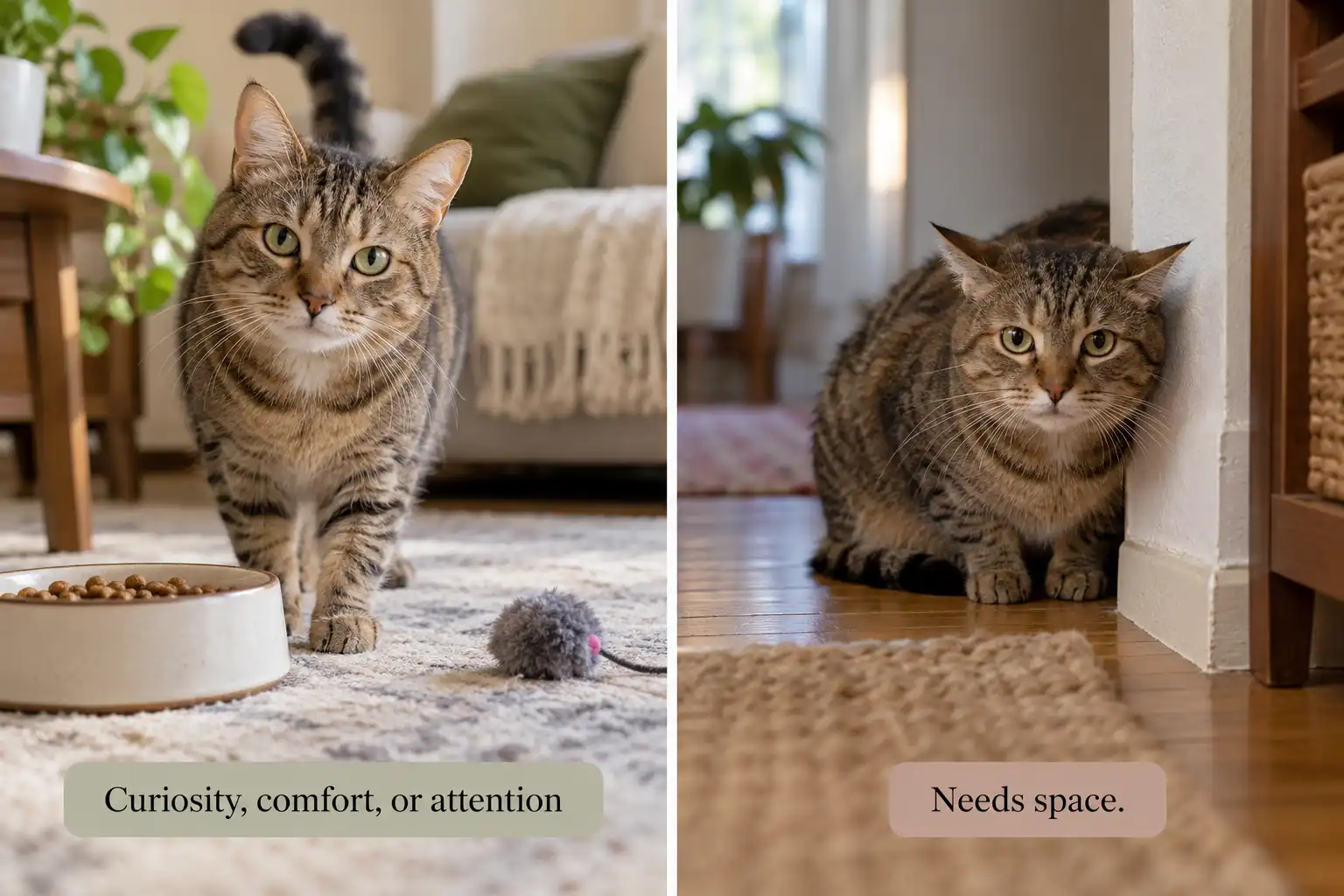
Cats pay attention to movement, sounds, and changes in their surroundings. When you walk across a room, open a cabinet, or move something unfamiliar, your cat may stop and watch. This behavior can be simple observation rather than a request.
Signs of curiosity include:
- Ears pointing forward
- An alert but relaxed posture
- Eyes following your movements
- Whiskers directed toward something interesting
A curious cat might watch you for a while before returning to its previous activity. If the cat appears comfortable and continues behaving normally, you usually don’t need to do anything.
2. Your Cat Expects Food
Cats often learn the routines surrounding their meals. Your cat might stare when you enter the kitchen, approach its feeding area, or get up at the usual breakfast time.
Cats Protection explains that cats can learn to associate eye contact with rewards, including food and attention. Consequently, staring may become a familiar way to get your response.
Look for these clues:
- Staring near a normal mealtime
- Walking toward the food bowl
- Meowing after making eye contact
- Following you into the kitchen
However, staring does not automatically mean your cat needs more food.
For a healthy adult cat, compare its meals with an appropriate daily feeding amount based on weight rather than adding food whenever it looks at you.
3. Your Cat Wants Your Attention
Sometimes your cat simply wants you to respond. It may stare while you’re reading, working, or sitting on the couch. When you look back, it might approach, rub against you, or meow. If these actions regularly receive attention, your cat may repeat them.
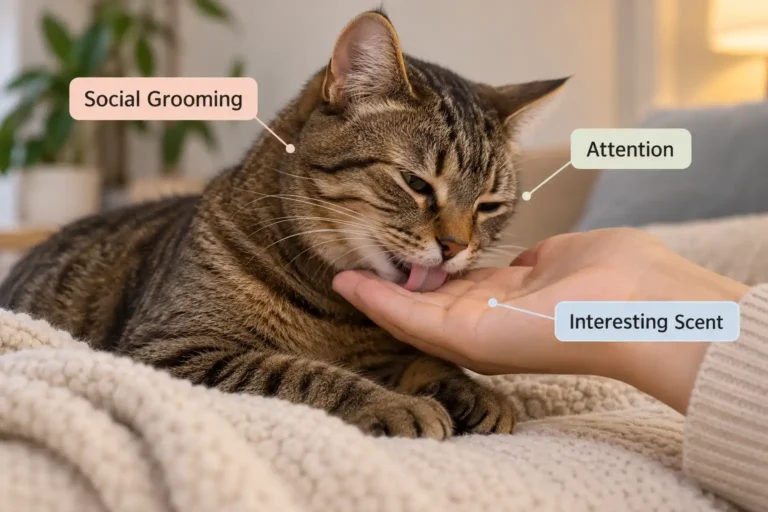
For example, a cat might learn that watching you closely leads to petting or play. Some cats combine staring with other social behaviors, such as licking your hand.
However, attention-seeking does not always mean the cat wants physical contact. Offer your hand without moving into the cat’s space. Let the cat decide whether to approach.
4. Your Cat Feels Comfortable Around You
A relaxed cat may watch you because it feels comfortable in your presence. The stare is usually accompanied by a loose body, naturally positioned ears, and soft eyes. Some cats also narrow their eyes or blink slowly.
A 2020 study published in Scientific Reports found that cats showed more eye-narrowing behavior when people slow-blinked at them. Cats were also more likely to approach an unfamiliar researcher after slow-blink interactions.
However, slow blinking does not prove affection.
In its 2025 explanation of cat blinking, Cats Protection notes that cats can also slow-blink during stressful situations.
Therefore, consider the entire posture. A cat that watches you while kneading a soft blanket and resting comfortably may simply enjoy being nearby.
5. Your Cat Wants to Play
A fixed gaze can precede playful stalking or pouncing. You might notice your cat watching your moving feet, tracking a toy, or crouching before a sudden playful movement. Younger cats often show this behavior while practicing hunting-related movements.
Signs that suggest play include:
- Tracking a moving object
- Shifting weight before a pounce
- Watching an interactive toy
- Returning for another playful chase
What should you do?
Offer a wand toy, rolling ball, or another suitable cat toy.
The Feline Veterinary Medical Association identifies opportunities for play and natural hunting behavior as important parts of a healthy indoor environment. Avoid encouraging attacks on hands or feet. Instead, direct the activity toward appropriate toys.
6. Your Cat Is Unsure About Something
Not every stare is friendly or playful. Sometimes cats watch someone closely because they are uncertain about what might happen next. A visitor, unfamiliar sound, sudden movement, or another cat can make them cautious.
You may notice:
- Ears turning sideways or backward
- A lowered or crouched body
- Wide eyes
- A tucked tail
- Hesitation to approach
These signals suggest the cat may need distance.
Avoid staring back continuously, reaching toward the cat, or blocking its escape route. Give it room to move somewhere comfortable.
7. Your Cat Is Warning You to Keep Your Distance
A hard stare can also appear when a cat feels threatened, frustrated, or defensive. Unlike ordinary curiosity, this behavior often comes with noticeable body tension.
The cat may freeze, flatten its ears, lash its tail, growl, or hiss.
Do not interpret a fixed stare alone as aggression.
However, when several warning signals appear together, stop approaching. Allow the cat to move away without confrontation.
Cats Protection’s body-language guidance explains that direct staring can feel threatening to cats. Forcing eye contact or physical interaction can make an already uncomfortable cat more stressed.
What Does a Cat’s Stare Mean? Read These Body Signals
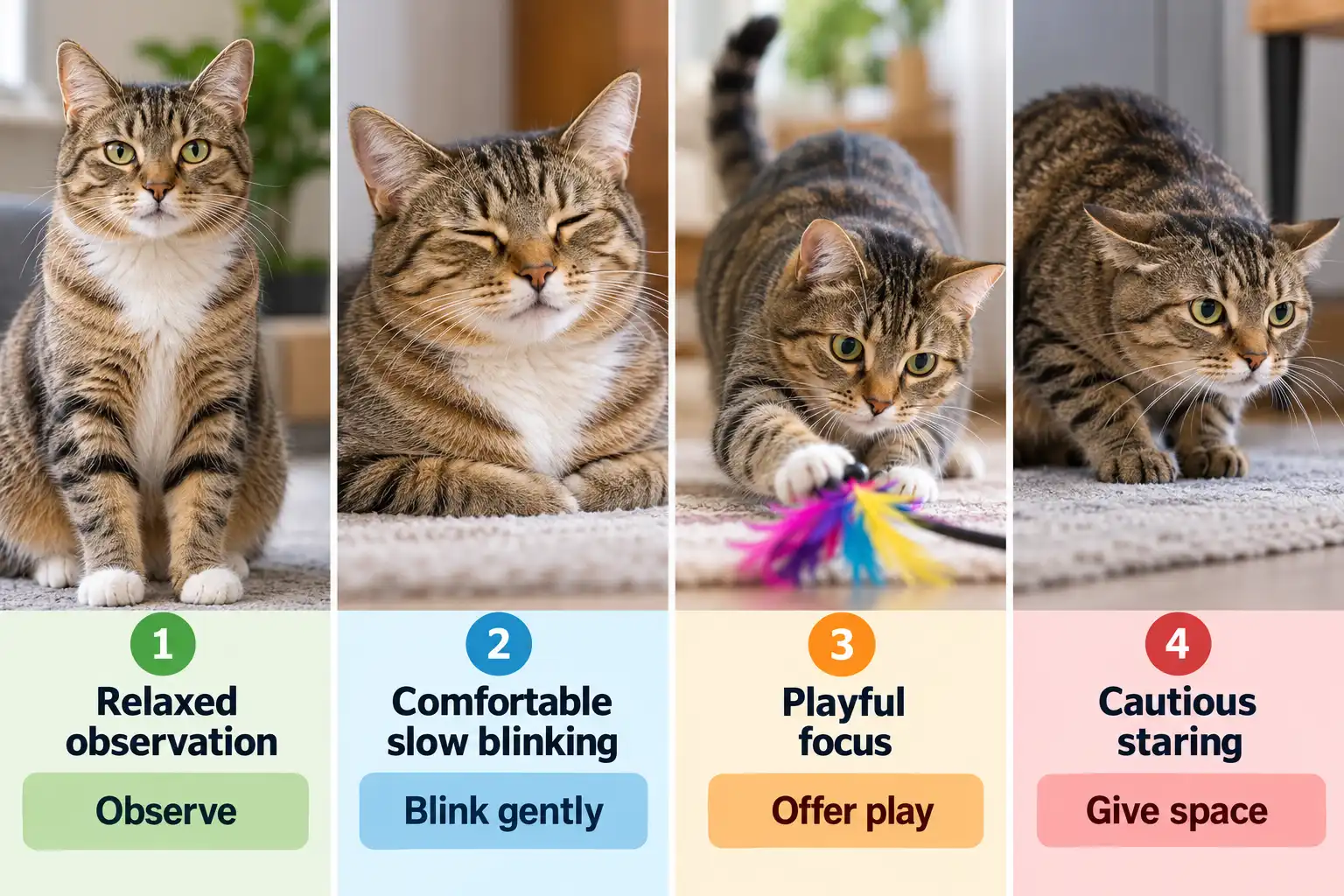
The best way to understand staring is to check the whole body, not just the eyes. This comparison helps distinguish comfortable observation from behavior that needs a different response.
| What you notice | Possible meaning | What to do |
|---|---|---|
| Soft eyes, relaxed ears, loose posture | Comfortable or curious | Stay calm and allow interaction |
| Slow blink with a relaxed body | Possibly a positive social signal | Try a gentle slow blink |
| Staring near the food bowl | Expecting a familiar meal | Follow the usual feeding schedule |
| Focused gaze toward a moving toy | Play or hunting interest | Offer interactive play |
| Wide eyes, sideways ears, crouched body | Uncertainty or fear | Increase distance |
| Fixed gaze, stiff body, growling or tail lashing | Defensive warning | Stop approaching |
| Blank staring with confusion or reduced responsiveness | Possible health concern | Contact your veterinarian |
Remember: Pupil size changes with lighting and excitement, not just fear. Even purring can have different meanings, so no single signal confirms how a cat feels.
Why Does My Cat Stare at Me When I Sleep?
Your cat may watch you while you sleep because it is awake, curious, or waiting for a familiar morning activity.
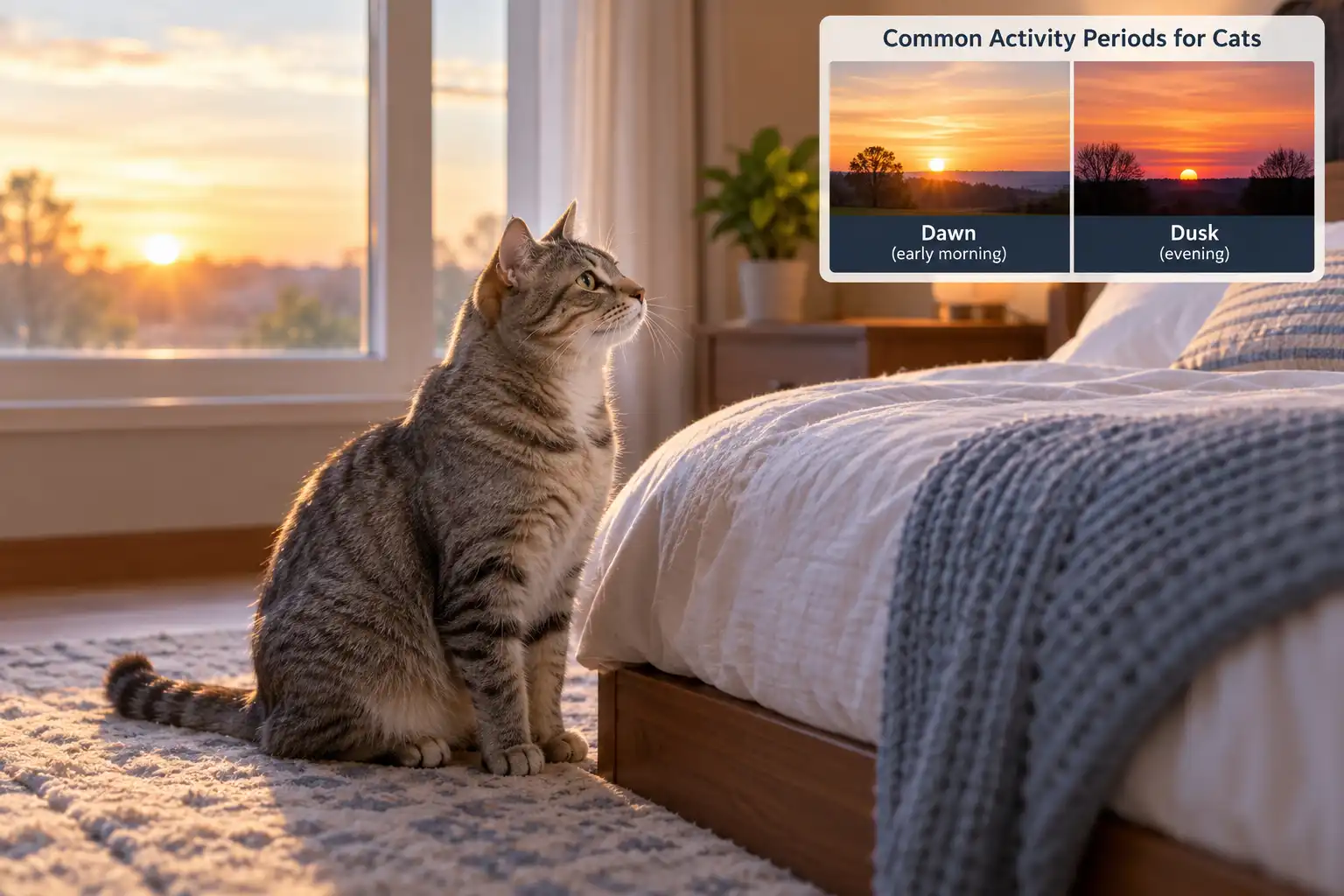
Cats do not follow exactly the same sleep schedule as humans. They are generally crepuscular, meaning they tend to be more active around dawn and dusk. Cats Protection explains this pattern in its guidance about cats at night. Several explanations are possible.
Your Cat Is Already Awake
Your cat might be active while you’re resting.
If it is sitting nearby, watching you may simply be part of observing its surroundings.
There is no strong evidence that this behavior means your cat is guarding you.
Your Cat Is Waiting for Breakfast
A cat may associate your waking movements with morning food.
If getting out of bed regularly leads to breakfast, the cat might watch for signs that you’re about to wake up.
Your Cat Wants Interaction
Some cats approach the bed because they want company or play.
If nighttime attention becomes a routine, the behavior may continue.
To reduce unwanted nighttime interruptions:
- Provide interactive play during the day and evening.
- Keep feeding times reasonably predictable.
- Offer comfortable sleeping places.
- Provide suitable toys and environmental enrichment.
- Avoid rewarding repeated wake-up attempts with unplanned meals.
Do not withhold necessary meals to change this behavior.
If nighttime staring or wakefulness is a sudden change, especially in an older cat, contact your veterinarian.
Does Staring Mean the Same Thing for Kittens, Adults, and Senior Cats?
Staring can have different contexts depending on a cat’s age, activity level, and daily environment.
| Cat life stage | What to consider |
|---|---|
| Kittens | Staring may precede play, stalking, or a sudden pounce. |
| Healthy adult cats | Familiar routines, curiosity, and social interactions often explain staring. |
| Senior cats | Ordinary observation remains normal, but new staring episodes accompanied by confusion or behavior changes need veterinary attention. |
Indoor cats may also watch household activities because those events form a large part of their daily stimulation.
For an otherwise healthy cat, predictable social interaction, places to perch, and appropriate play can help meet behavioral needs.
However, a cat’s age or living environment cannot establish the reason for staring on its own.
How Should You Respond When Your Cat Stares at You?
The most useful response depends on the cat’s body language and what happens immediately before the stare.
Step 1: Check the Body Language
Look at the ears, tail, body position, and facial tension.
A relaxed cat may welcome interaction. A crouched or stiff cat may prefer distance.
Step 2: Consider the Situation
Ask what happened just before your cat started staring.
Was it nearly mealtime? Did you move a toy? Did someone enter the room?
These details often provide better clues than the stare itself.
Step 3: Try a Gentle Slow Blink
If your cat looks comfortable, soften your gaze and slowly close and reopen your eyes.
Then look slightly away.
Your cat might respond with a similar movement, approach, or simply continue resting.
Avoid trying this as a way to approach a frightened cat.
Step 4: Offer an Appropriate Activity
If your cat appears interested in playing, offer a toy.
If it approaches for contact, provide gentle attention when welcomed.
For a cat waiting for food, maintain its normal meal schedule rather than automatically offering extra treats.
Step 5: Respect the Cat’s Choice
Some cats prefer watching from a distance.
Avoid picking up, petting, or following a cat that turns away or moves into a hiding place.
A calm response helps keep interactions predictable.
When Should You Worry About Your Cat Staring?
Contact your veterinarian if staring is new, unusually persistent, or accompanied by changes in awareness, vision, appetite, movement, or normal behavior.
Ordinary staring at a person rarely indicates illness by itself.
However, staring blankly into space or at walls can sometimes appear alongside medical problems.
The Cornell Feline Health Center identifies prolonged blank staring, disorientation, altered sleep patterns, and nighttime vocalization among possible signs of cognitive dysfunction in older cats.
These signs can also occur with other conditions. Staring alone cannot establish a diagnosis.
Watch for:
- Suddenly staring into corners or at walls for long periods
- Appearing confused in familiar rooms
- Bumping into furniture
- Unequal pupil sizes or sudden changes in eyesight
- Unusual nighttime vocalization
- Reduced interest in normal activities
- Changes in eating, drinking, or litter box habits
Cornell also advises prompt veterinary evaluation for unusual changes in the eyes or vision.
Seek same-day veterinary care if your cat stops eating, has repeated vomiting, strains to urinate or produces no urine, develops breathing difficulty, or becomes suddenly weak. These signs require attention regardless of whether the cat is staring.
If the cat seems well but has developed a new staring pattern, note when it occurs and what other behavior accompanies it. A short video may help your veterinarian assess the change.
Frequently Asked Questions
Why Does My Cat Just Sit and Stare at Me?
Your cat may simply be watching your movements or waiting for a familiar event, such as feeding or play. If the body remains relaxed and the cat behaves normally afterward, the staring is usually harmless.
Why Does My Cat Look at Me and Meow?
Staring combined with meowing often seeks a response, such as attention, food, or access to another room. Check the usual routine first, and contact your veterinarian if the vocalization is new, excessive, or accompanied by other changes.
Why Does My Cat Stare at Me Without Blinking?
An unbroken stare can reflect concentration, curiosity, or tension. Check the rest of the body. Flattened ears, a stiff posture, growling, or a lashing tail suggest the cat needs more space.
Why Does My Cat Stare at Me While I Eat?
Your cat may be interested in the smell of your meal or may have learned to expect attention or food. Maintain its regular feeding routine and avoid sharing food that is unsuitable for cats.
Does My Cat Stare at Me Because It Loves Me?
A relaxed cat may maintain eye contact because it feels safe around you. However, staring does not prove affection. Choosing to stay nearby, relaxed posture, and friendly social behavior provide more useful clues together.
Why Does My Cat Stare at the Wall Instead of Me?
Your cat may notice a sound, insect, shadow, or reflection that escapes your attention. However, new or prolonged wall staring accompanied by confusion, reduced responsiveness, or vision changes requires a veterinary assessment.
Understanding Your Cat’s Staring Behavior
Most cats stare because something has captured their attention. Sometimes that something is you. Your movements, familiar routines, and responses can make you especially interesting to watch.
The most useful clue is not how long your cat stares, but what happens around the behavior. A relaxed cat watching from the couch communicates something different from a frightened cat holding a tense, fixed gaze.
Pay attention to the whole body, respond without forcing interaction, and respect the cat’s need for space. If staring changes suddenly or appears alongside unusual symptoms, seek veterinary advice rather than assuming it is normal.