Can Cats Eat Bananas? Safe Portions, Peels, Chips, and Bread
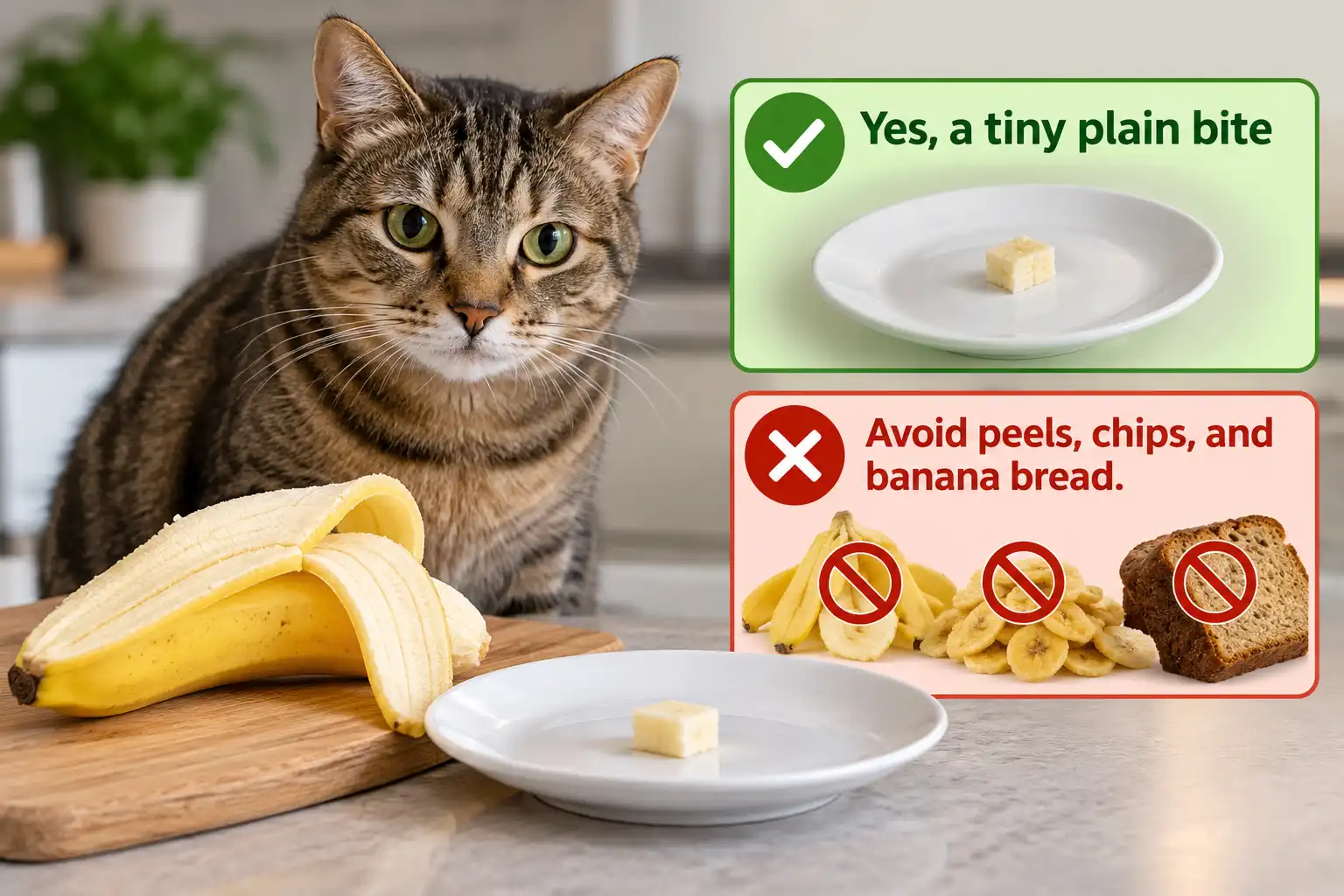
Can cats eat bananas? Yes, but being non-toxic does not make bananas a necessary part of a cat’s diet. The amount, preparation, and other ingredients matter, especially if your cat has a medical condition or sensitive digestion.
Yes, cats can eat small amounts of plain, ripe banana. The ASPCA lists bananas as non-toxic to cats. However, bananas offer little nutritional benefit. Give only an occasional tiny piece, and avoid banana peels, chips, and bread.
Are Bananas Safe for Cats?
Yes. Plain banana flesh is generally safe for healthy cats when offered in very small amounts. The ASPCA classifies the edible banana plant (Musa acuminata) as non-toxic to cats.
However, non-toxic does not mean every cat can digest banana comfortably.
Some cats may experience:
- Vomiting: An unfamiliar food may irritate the digestive system.
- Diarrhea: A larger serving can cause loose stools.
- Constipation: Digestive changes are possible after eating unfamiliar fruit.
- Excess calorie intake: Frequent treats can contribute to unwanted weight gain.
According to PetMD’s veterinary guidance, small amounts are usually tolerated by healthy cats. However, digestive upset remains possible.
Therefore, bananas should be considered optional treats rather than regular food.
Are Bananas Good for Cats?
Bananas contain nutrients, but they offer little meaningful nutritional benefit to cats. The Cornell Feline Health Center explains that cats are obligate carnivores. Their nutritional requirements include nutrients that must come from animal-based sources.
Bananas contain potassium, fiber, and vitamin B6. However, these nutrients do not make bananas necessary for cats.
A properly formulated cat food already supplies the essential nutrients needed for its intended life stage. The FDA explains that foods labeled “complete and balanced” must meet established nutritional adequacy requirements.
You can learn how to identify these statements when reading a cat food label.
Bananas also contain natural sugars and starch. These are not automatically poisonous, but cats do not need bananas as an additional carbohydrate source.
The practical difference: A healthy cat can tolerate a small banana treat without gaining a meaningful nutritional advantage.
How Much Banana Can a Cat Eat?
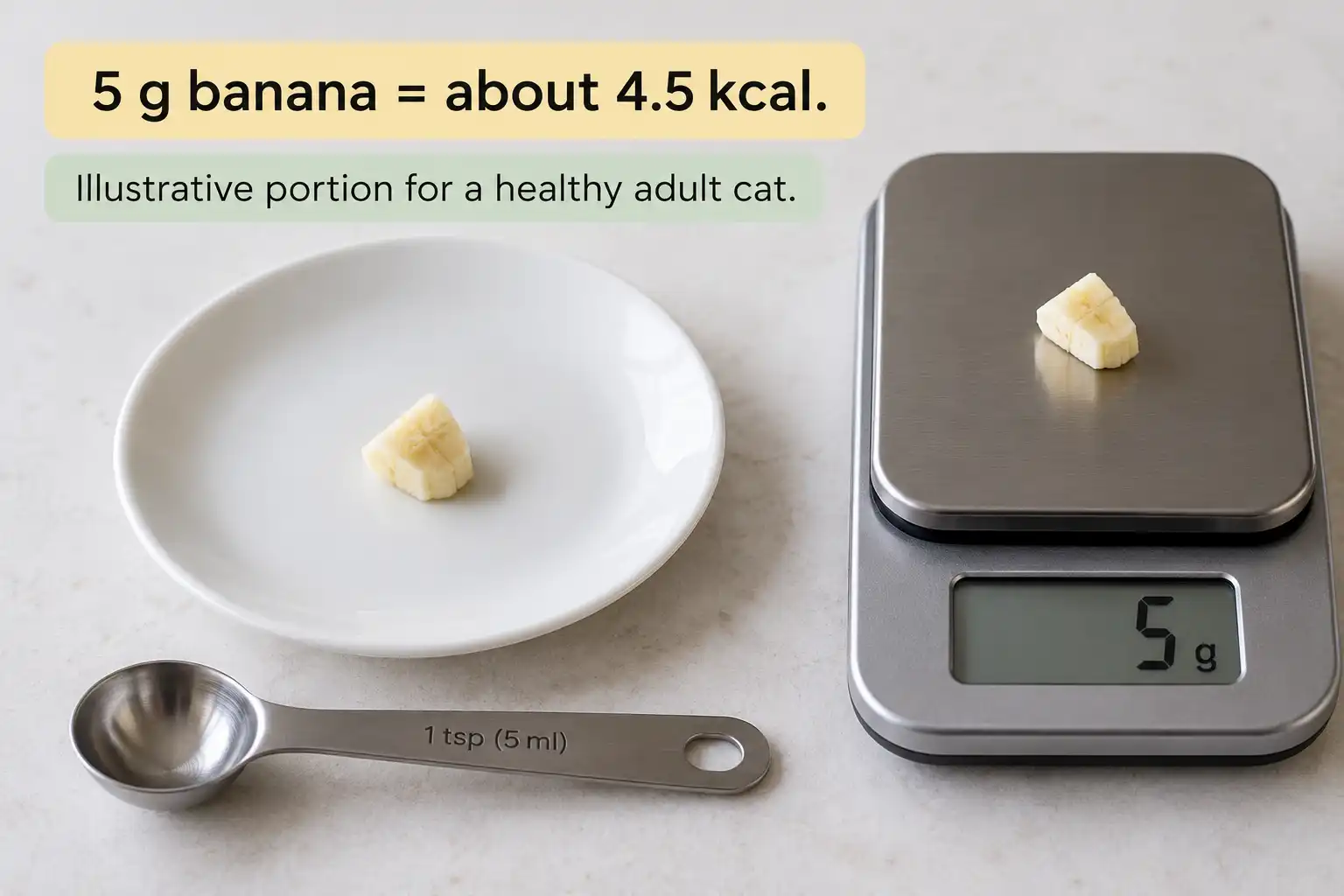
For a healthy adult cat, a single pea-sized piece of peeled banana is a conservative starting amount. There is no established, scientifically tested banana-specific serving size for every cat. Individual tolerance varies.
For a healthy adult cat, a 5 g portion of mashed banana, approximately one level teaspoon, provides about 4.5 kcal.
That figure comes from USDA FoodData Central data for raw bananas.
| Banana amount | Approximate calories | Feeding interpretation |
|---|---|---|
| 1 g | 0.9 kcal | Very small taste |
| 3 g | 2.7 kcal | Small sample |
| 5 g | 4.5 kcal | Example portion, not a daily target |
| 10 g | 8.9 kcal | More than necessary for a casual taste |
These USDA-based calculations illustrate the calorie contribution of banana for a healthy adult cat. They are not established safe-dose thresholds.
How does banana fit into a cat’s daily calories?
The Tufts Cummings School of Veterinary Medicine recommends limiting treats and other extras to no more than 10% of total daily calorie intake. For a hypothetical healthy, neutered indoor adult cat maintaining its ideal body condition on 220 kcal/day, that limit equals 22 kcal/day from all treats combined.
For the same healthy adult cat, a 5 g banana portion uses approximately 4.5 kcal of that allowance.
The 10% rule is a maximum for all treats, not a recommendation to fill that allowance with bananas. A pea-sized bite is sufficient for trying the fruit.
Your cat’s actual calorie needs depend on body condition, weight, activity, and health. You can use the daily food calculator to help estimate food portions.
How Should You Feed Banana to a Cat?
If your cat is healthy and shows interest in banana, offer only a tiny amount of plain fruit. Follow these steps:
- Choose a ripe banana. Select fresh, soft fruit without added ingredients.
- Remove the peel. Keep the tough outer skin away from your cat.
- Prepare a small piece. Mash a pea-sized amount or cut it into a very small, soft bite.
- Offer it separately. Allow your cat to smell or taste the fruit without mixing it into an entire meal.
- Watch for digestive changes. Stop offering banana if vomiting, diarrhea, or appetite changes occur.
Do not force your cat to eat banana or repeatedly offer it after a refusal. Avoid adding honey, sugar, milk, yogurt, or other flavorings. These ingredients are unnecessary and may introduce additional digestive concerns.
Keep your cat’s usual complete and balanced food available according to its normal feeding schedule.
Which Banana Products Are Safe for Cats?
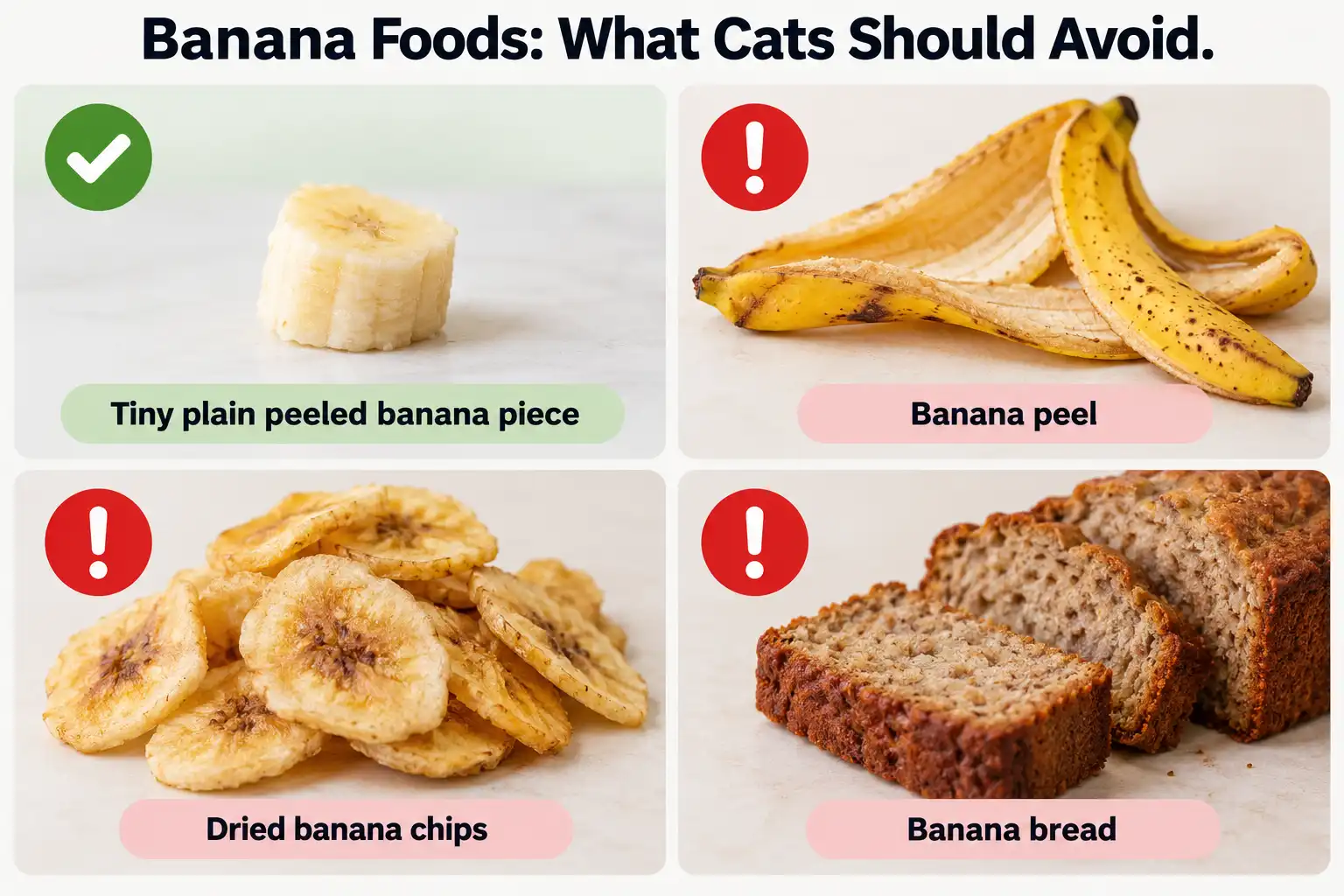
Plain, peeled banana is the simplest option. Other banana products can introduce choking hazards, difficult textures, or added ingredients.
| Banana product | Can cats eat it? | Main concern |
|---|---|---|
| Fresh, peeled banana | Yes, tiny amounts | Unnecessary sugar and calories |
| Plain mashed banana | Yes, tiny amounts | Excess portions |
| Banana peel | No | Choking or digestive obstruction |
| Banana chips | Best avoided | Hard texture and possible added oil or sugar |
| Banana bread | Not recommended | Sugar, fat, and potentially harmful ingredients |
| Banana pudding | Not recommended | Dairy, sugar, and other additives |
A product containing bananas is not automatically suitable for cats.
Can Cats Eat Banana Peels?
No. Cats should not be fed banana peels. Although the banana plant itself is non-toxic, its peel is tough, fibrous, and difficult to digest.
A cat that swallows a piece of peel may experience digestive discomfort. Larger pieces may also cause choking or an intestinal obstruction. These risks are different from poisoning. The peel does not need to contain a toxin to cause harm.
PetMD specifically warns against feeding banana peels because of their choking and obstruction risks.
If your cat swallows banana peel, contact your veterinarian for advice. The size of the swallowed piece and your cat’s condition affect the urgency.
Do not attempt to induce vomiting at home.
Can Cats Eat Banana Chips?
Banana chips are best avoided, even when they contain only bananas. Drying removes much of the fruit’s water. This leaves a firmer, more concentrated food that offers no particular benefit to cats.
Commercial banana chips may also contain:
- Added sugar or honey
- Frying oils
- Salt or flavorings
- Other ingredients not intended for cats
Hard chips can be difficult to chew and may create a choking risk.
A small piece of plain, unsweetened dried banana is not necessarily poisonous. However, that does not make banana chips a suitable regular treat.
If you want to share banana with a healthy adult cat, a tiny piece of soft, fresh fruit is the simpler choice.
Can Cats Eat Banana Bread?
Banana bread is not recommended for cats. Unlike plain banana, banana bread usually contains several ingredients. Common examples include flour, butter or oil, eggs, and added sugar.
These ingredients increase calories without making the bread nutritionally useful for cats. Some recipes also contain chocolate chips or raisins. These require additional caution.
The FDA’s food safety guidance identifies chocolate and raisins among potentially dangerous foods. Chocolate toxicity is established in cats, while evidence concerning raisin toxicity in cats is less certain than in dogs.
If your cat eats banana bread containing chocolate or raisins, contact your veterinarian or an animal poison control service immediately.
A tiny crumb of plain banana bread without harmful additions is unlikely to create a banana-specific poisoning emergency in a healthy adult cat. Still, intentional feeding offers no nutritional advantage.
Which Cats Should Avoid Bananas?
Banana is not equally appropriate for every cat. Life stage, digestive tolerance, body condition, and existing health conditions matter.
Kittens
Healthy kittens may tolerate a tiny taste, but bananas are unnecessary during growth.
Kittens need a nutritionally complete diet formulated for growth. Fruit should not displace their regular meals.
The nutritional differences are explained in our guide to kitten and adult cat food.
Adult cats with excess weight
Bananas add calories without supplying the balanced nutrients of a complete cat food.
If your adult cat is overweight, discuss its feeding plan and appropriate treats with your veterinarian. Avoid making unplanned food reductions or replacing meals with fruit.
Cats with diabetes or digestive conditions
Cats with diabetes, chronic digestive problems, or food restrictions should not be given banana without veterinary guidance.
Natural sugar does not automatically make banana poisonous. However, an existing medical condition can change whether an additional food is appropriate.
Senior cats
Age alone does not make banana toxic to senior cats.
However, some older cats have conditions that require individualized diets. If your senior cat has a diagnosed illness, difficulty chewing, or a veterinarian-directed feeding plan, ask before introducing new treats.
What Happens if a Cat Eats Too Much Banana?
Eating a large amount of banana can cause digestive upset, although the severity varies. Possible signs include vomiting, diarrhea, changes in stool consistency, reduced appetite, or abdominal discomfort.
A healthy cat that eats a tiny piece of plain banana and continues behaving normally may need only routine observation.
However, do not assume every symptom after banana consumption is caused by the fruit.
When should you contact a veterinarian?
Seek veterinary advice based on what your cat ate and the symptoms that follow.
- Small amount of plain banana, no symptoms: Monitor normal eating, activity, and litter box habits.
- A large amount or swallowed peel: Call your veterinarian for guidance on the amount and possible digestive risks.
- Banana bread with chocolate or raisins: Contact a veterinarian or animal poison control service immediately.
- Repeated vomiting or refusal to eat: Seek veterinary care the same day.
- Breathing trouble or sudden weakness: Obtain emergency veterinary care.
Do not withhold normal meals, force-feed your cat, or attempt home treatments for suspected obstruction.
If vomiting occurs, our guide to possible causes of vomiting in cats provides further context. It does not replace prompt veterinary assessment when warning signs appear.
Frequently Asked Questions
Do cats eat bananas because they like the sweet taste?
Not necessarily. Cats lack the normal functional receptor used to detect sweetness. Some may investigate bananas because of their smell or texture, while others show no interest. Both responses are normal.
Can cats have mashed bananas?
Yes. A healthy adult cat can have a tiny amount of plain mashed banana occasionally. Use peeled, ripe fruit without additives. Mashed banana is easier to portion into very small servings than large slices.
Can cats eat frozen bananas?
Frozen banana chunks are not recommended. Their firm texture may make chewing difficult and increase choking concerns. If offering banana to a healthy adult cat, use soft, thawed fruit and keep the amount very small.
Can cats have bananas every day?
Daily banana feeding is unnecessary. Even small portions add calories without providing a meaningful nutritional benefit. For a healthy adult cat, reserve banana for occasional tastes and prioritize a complete, balanced diet.
Can bananas help a constipated cat?
Bananas are not an established constipation treatment for cats. Their fiber content does not justify feeding larger amounts, which could worsen digestive discomfort. Contact your veterinarian if your cat struggles to pass stool.
Can cats eat unripe or green bananas?
Green bananas are not known to be toxic, but they are firmer and contain more starch than ripe bananas. For a healthy adult cat, a tiny piece of soft, ripe banana is preferable.
Should You Give Your Cat Banana?
Bananas are not poisonous to cats, but they are not necessary for good nutrition. A healthy adult cat can occasionally have a tiny piece of soft, peeled banana without it becoming a regular feeding habit.
The important difference is between plain fruit and other banana products. Peels can present physical hazards, while chips and bread introduce unnecessary ingredients or textures.
If your cat refuses banana, there is no reason to encourage it. Small, appropriately formulated cat treats or pieces taken from the usual measured food portion are practical alternatives.
For cats with medical conditions, appetite changes, or digestive symptoms, follow veterinary guidance rather than using banana as a dietary remedy.