Why Do Cats Purr? Understanding Kittens and Adult Cats
Why do cats purr even when they are not visibly relaxed? Purring is more than a sign of happiness. Its meaning depends on your cat’s surroundings, body language, and behavior. Understanding these clues helps you recognize comfort, communication, and possible distress.
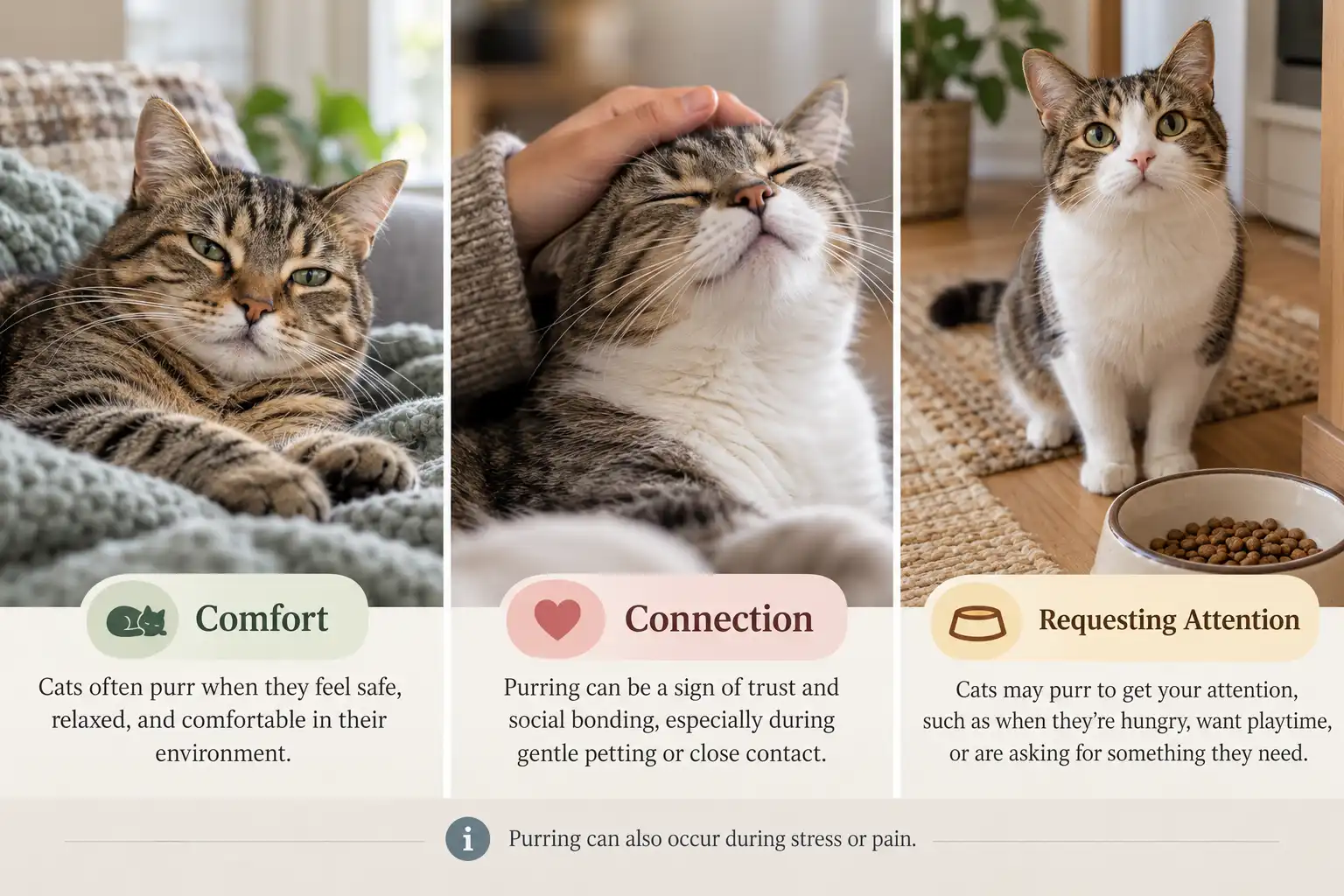
Cats purr to express comfort, communicate with people or other cats, and request attention or food. They may also purr when stressed or in pain. The sound alone cannot confirm happiness or good health.
What Does It Mean When Cats Purr?
Cat purring has several possible meanings, and the situation determines which is most likely. A relaxed cat may purr during comfortable contact. Another might produce the same sound while feeling uncertain or uncomfortable.
According to Cats Protection, purring can accompany happiness, social bonding, stimulation, stress, and pain.
The following table compares six common situations.
| When cats purr | Possible meaning | Other clues to notice |
|---|---|---|
| While resting or becoming sleepy | Comfort and relaxation | Loose posture, relaxed ears, soft eyes |
| When greeting you or being petted | Friendly interaction or attention seeking | Approaching, rubbing, leaning toward contact |
| Around mealtime | Requesting food or attention | Approaching the bowl, following you |
| During nursing | Communication between mother and kitten | Close contact, nursing behavior |
| During travel or unfamiliar situations | Stress or possible self-soothing | Tense posture, ears turned sideways or backward |
| During illness or discomfort | Possible pain or distress | Hiding, reduced activity, appetite changes |
These are possible interpretations, not separate purring signals with fixed meanings. Even a familiar purr can mean something different when the circumstances change.
Why Do Cats Purr When You Pet Them?
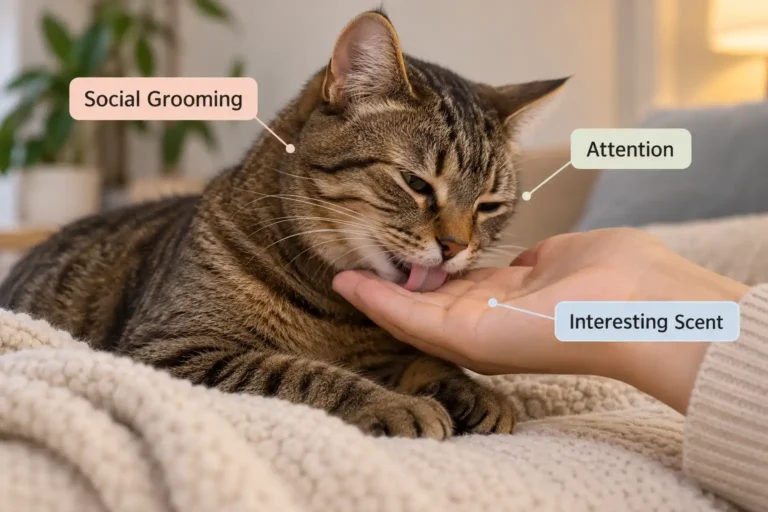
Cats often purr during petting because they enjoy the contact and feel comfortable. Gentle touch can be part of a positive social interaction, especially when the cat approaches you voluntarily.
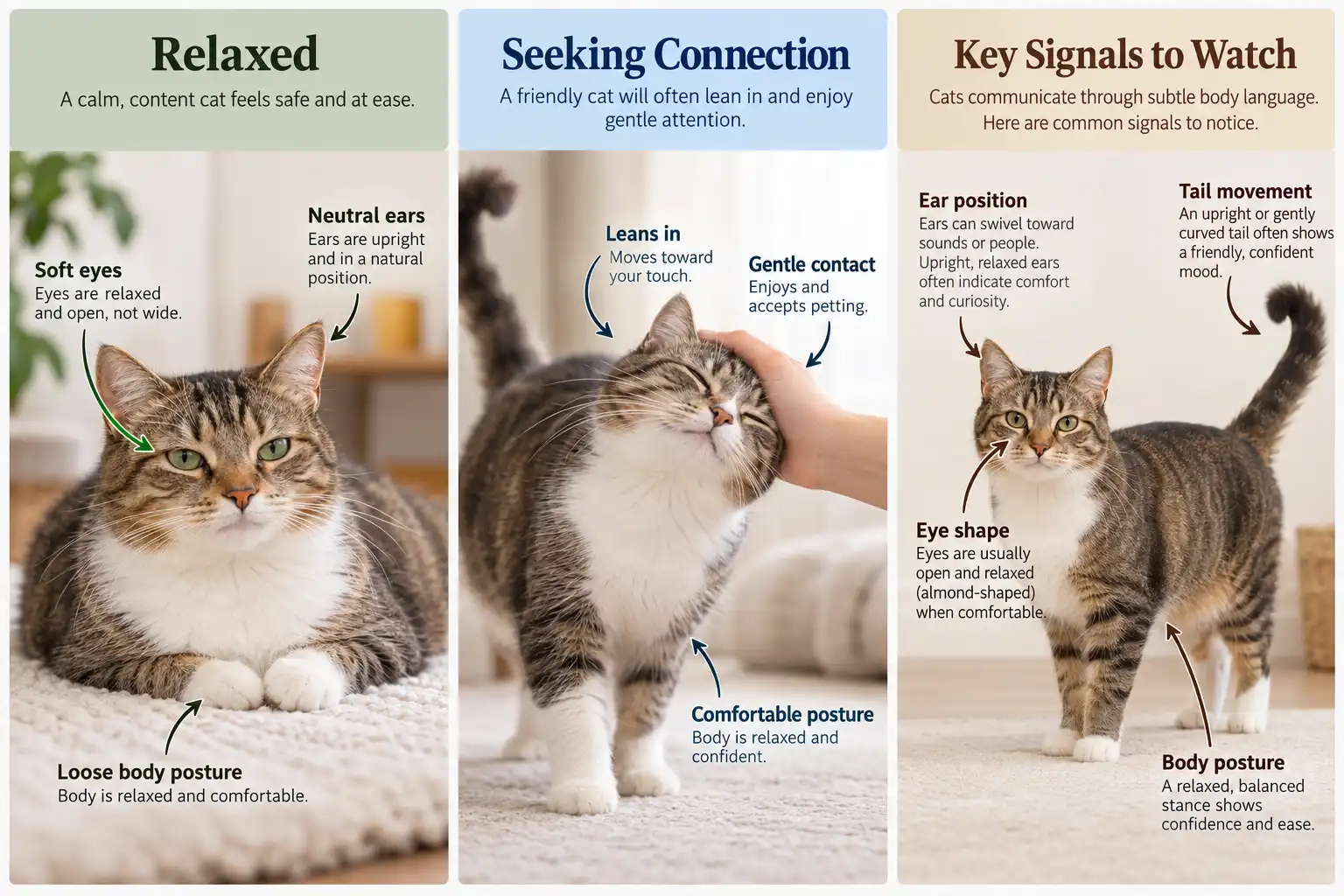
A relaxed cat may also:
- Lean its head into your hand.
- Rub its cheeks against your fingers.
- Keep its ears in a natural position.
- Slowly blink or partially close its eyes.
- Knead a soft blanket while resting nearby.
However, purring does not mean your cat wants unlimited petting.
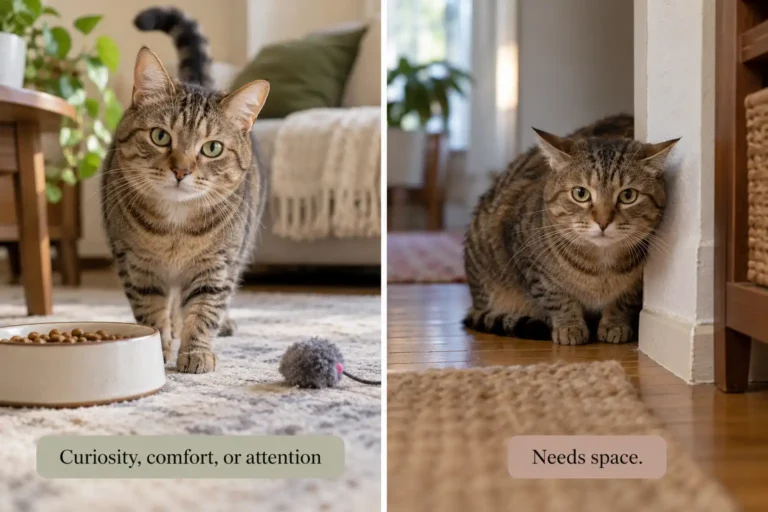
Some cats become overstimulated when touched for too long. Tail twitching, skin rippling, tense muscles, or ears turning backward can indicate that the interaction should stop.
The Feline Veterinary Medical Association advises gentle, brief petting with pauses that allow cats to choose whether the interaction continues.
For a more comfortable interaction:
- Let your cat approach. Avoid forcing contact or picking up a cat that wants space.
- Start with gentle strokes. Many cats prefer contact around the cheeks, forehead, and head.
- Pause regularly. See whether your cat moves toward your hand for more attention.
- Stop when behavior changes. Give your cat space if it turns away, stiffens, or becomes agitated.
A cat that purrs and then bites may be communicating that it has had enough contact, rather than showing sudden aggression.
What Does It Mean When a Kitten Purrs?
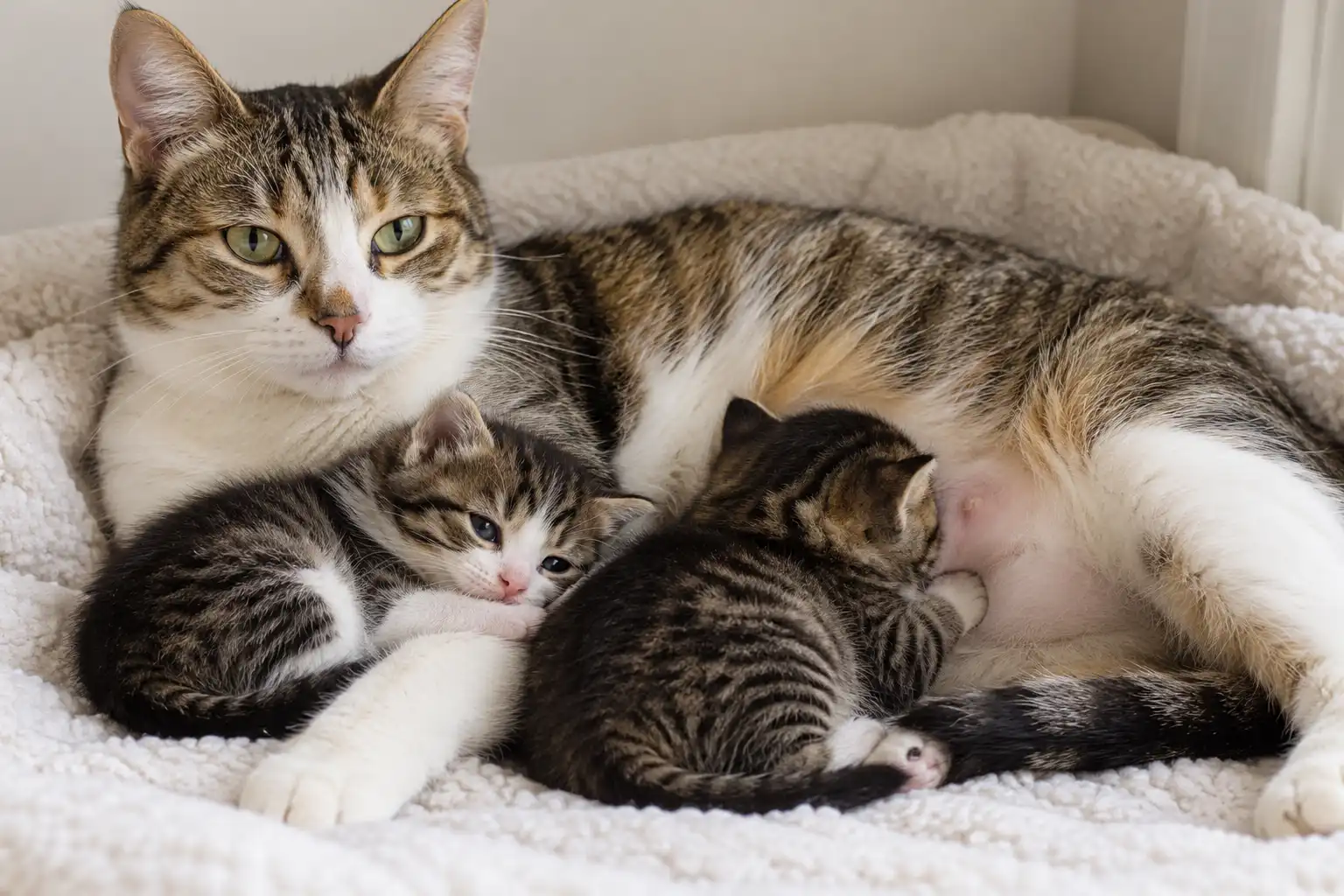
Kittens begin purring very early in life, often within their first few days. The behavior helps maintain contact between kittens and their mother. A mother cat may purr while nursing, and her kittens can purr during feeding.
NC State University College of Veterinary Medicine identifies nursing and close social contact among the situations associated with purring.
Why do kittens purr while nursing?
Purring appears to contribute to communication and bonding between a mother and her kittens. Young kittens rely heavily on touch and smell. The vibrations produced during purring may help them maintain contact with their mother.
As kittens grow, they may also purr during grooming, resting, and friendly interactions with people.
However, purring does not prove that a kitten is receiving enough food. Normal feeding, growth, and activity remain more useful indicators.
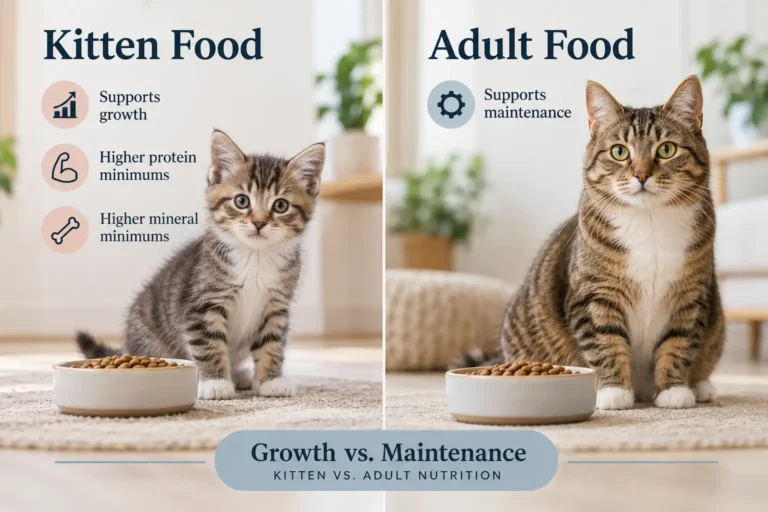
If a kitten is not feeding properly or seems weak, seek veterinary advice promptly. As kittens begin eating solid food, their nutritional needs also differ from those of adults. These differences are explained in the guide to kitten and adult dry food.
Why Do Cats Purr When They Want Food?
Some cats use purring to request food or attention. This type of purr may sound different from the gentle rumbling heard during relaxation. A 2009 study by Karen McComb and colleagues, published in Current Biology, investigated what researchers call a solicitation purr.
The researchers identified a higher-pitched, cry-like sound embedded within the lower-frequency purr of cats seeking food. When people listened to recordings, they generally rated these solicitation purrs as more urgent than ordinary purring. This suggests that some cats can use the sound to influence human responses.
However, not every cat produces an obvious solicitation purr. Also, purring beside a food bowl does not necessarily mean your cat needs additional calories.
If your cat frequently requests food, check its regular feeding routine and daily portions. The guide to daily dry food amounts by weight explains how to estimate portions for healthy cats.
A sudden increase in hunger, especially with weight loss or other changes, warrants veterinary evaluation.
How Do Cats Make a Purring Sound?
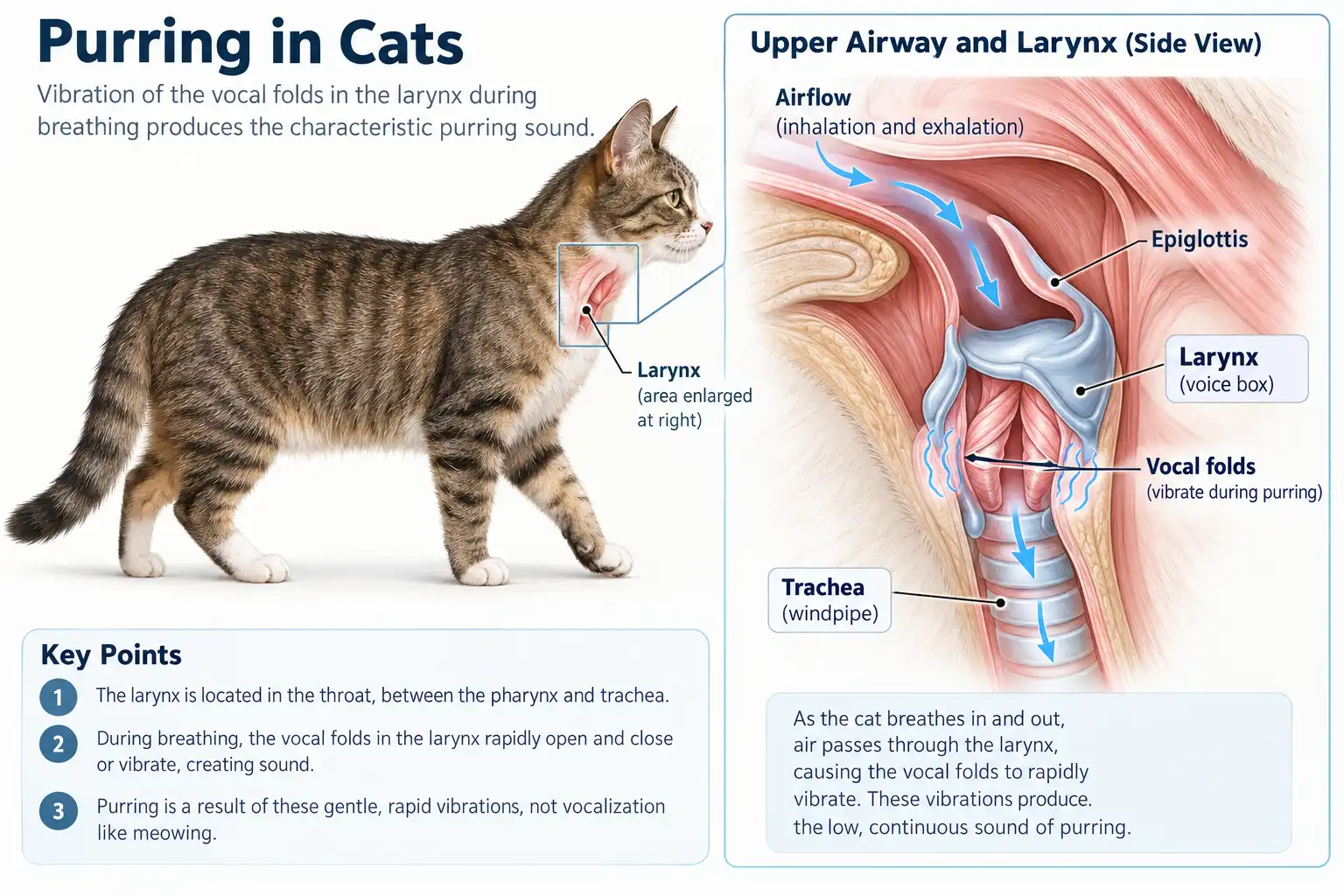
Cats produce purring sounds through vibrations in their larynx, commonly called the voice box. The sound typically occurs during both inhalation and exhalation. This helps explain the familiar continuous rumbling pattern.
However, the exact biological mechanism is more complicated than older explanations suggested.
What does recent research show?
A 2023 study published in Current Biology examined the larynges of eight domestic cats. Researchers found that the isolated larynges could produce low-frequency vibrations at approximately 25 to 30 Hz without active muscle contractions or nerve signals.
Specialized tissue within the vocal folds appeared to help produce these unusually low frequencies. Earlier explanations emphasized rapid muscle contractions controlled by the nervous system.
The newer findings suggest that airflow and vocal-fold structure can generate purring-like vibrations. However, they do not establish exactly how living cats start or control every purr. Muscle activity may still contribute to the process.
Can Cats Purr When They Are Scared or in Pain?
Yes. Cats can purr while experiencing fear, stress, discomfort, or pain. This is why purring should never be used as the only indicator of a cat’s well-being. Some cats purr during veterinary examinations, unfamiliar situations, or recovery from injury.
Purring during distress may serve a self-soothing function, although researchers have not fully established why it occurs. VCA Animal Hospitals explains that increased purring alongside behavioral changes can indicate discomfort.
Which warning signs should you look for?
Pay attention when unusual purring occurs alongside:
- Hiding or avoiding familiar interactions.
- Reduced appetite or changes in drinking.
- Reluctance to jump, climb, or move normally.
- A hunched or unusually tense posture.
- Changes in grooming or litter box habits.
- Unusual tiredness or restlessness.
These signs do not identify a particular illness. However, they justify contacting a veterinarian.
Seek veterinary care the same day if your cat stops eating, vomits repeatedly, strains to urinate, has difficulty breathing, or becomes suddenly weak. Breathing trouble or an inability to pass urine requires immediate emergency attention.
A cat can be purring and still need urgent medical care.
Does Purring Help Cats Heal?
The idea that purring supports healing is an interesting scientific hypothesis, but direct evidence that purring speeds recovery in cats remains limited. Some researchers have suggested that low-frequency vibrations might contribute to tissue or bone health.
However, finding similar frequencies in purring and experimental vibration research does not establish that a cat’s own purring heals an injury. The 2023 Current Biology study investigated how the sound is produced. It did not test whether purring improves healing outcomes.
Likewise, the suggestion that purring reduces pain or promotes recovery should not be treated as an established veterinary treatment.
If your cat is injured or unwell, the presence of purring does not mean the problem is improving. Veterinary assessment remains necessary.
How Can You Tell Whether Your Cat Is Purring Happily?
The most useful approach is to consider three things together: body language, surroundings, and normal behavior.
1. Check the body language
A comfortable cat often has a relaxed body, neutral ears, soft eyes, and natural movements. However, a stiff body, flattened ears, or persistent tail movement may indicate discomfort or overstimulation.
2. Consider what is happening
A cat purring while resting on a familiar blanket is in a different situation from one purring during a frightening car ride. Similarly, a cat following you toward the food bowl may be requesting something rather than expressing relaxation.
3. Compare with normal habits
Every cat has individual communication patterns. Some purr frequently and loudly. Others produce barely audible vibrations. A sudden change in purring, especially alongside changes in appetite, activity, or interaction, deserves attention.
The goal is not to interpret every sound perfectly. Instead, look for patterns that help you recognize what is normal for your cat.
FAQs about Cat Purring Meaning
Why does my cat purr when they see me?
Cats may purr when greeting familiar people because the interaction is comfortable or they want attention. If your cat approaches with relaxed body language, rubs against you, or seeks contact, the purring is likely positive.
Why does my cat purr and knead a blanket?
Purring and kneading commonly occur together during relaxation, and kneading is a behavior associated with early nursing. An adult cat may continue both behaviors when comfortable, although these actions alone cannot establish its emotional state.
Why does my cat purr so loudly?
Some cats naturally produce louder purrs than others, so volume alone does not indicate stronger affection or happiness. If your cat’s purring becomes unusually loud or changes alongside other behaviors, consider a veterinary check.
Can cats purr while sleeping?
Cats can purr during drowsiness and quiet rest, including around the time they fall asleep. Purring does not establish which sleep stage a cat is in, so avoid interpreting the sound alone as proof of deep sleep.
Why has my cat suddenly stopped purring?
A cat may stop purring because its situation or mood has changed, and some cats purr very little naturally. However, a sudden change accompanied by reduced appetite, hiding, or unusual behavior warrants veterinary advice.
Why does my cat purr and then bite me?
A cat may purr during enjoyable petting but become overstimulated as contact continues. Watch for tail twitching, tension, or ears turning backward, and stop petting before your cat feels the need to bite.
Do all cats purr?
Most domestic cats can purr, but not all produce an easily noticeable sound. Some purr quietly or infrequently, and a cat that rarely purrs is not necessarily unhappy when its other behaviors remain normal.
Understanding What Your Cat’s Purr Is Telling You
Purring is one of the ways cats communicate, but it does not carry a single meaning. A comfortable cat may purr during petting, rest, or social contact. A kitten may purr while nursing, and an adult cat may use a distinctive sound to request food or attention.
The most useful information comes from observing the whole cat. Notice its posture, willingness to interact, surroundings, and normal daily habits. Avoid assuming that every purr means happiness, especially when behavior changes unexpectedly. If your cat is eating, moving, and behaving normally, familiar purring is generally reassuring. Unusual purring accompanied by illness-related signs deserves veterinary attention.