Why Does My Cat Lick Me? 6 Reasons and When to Worry
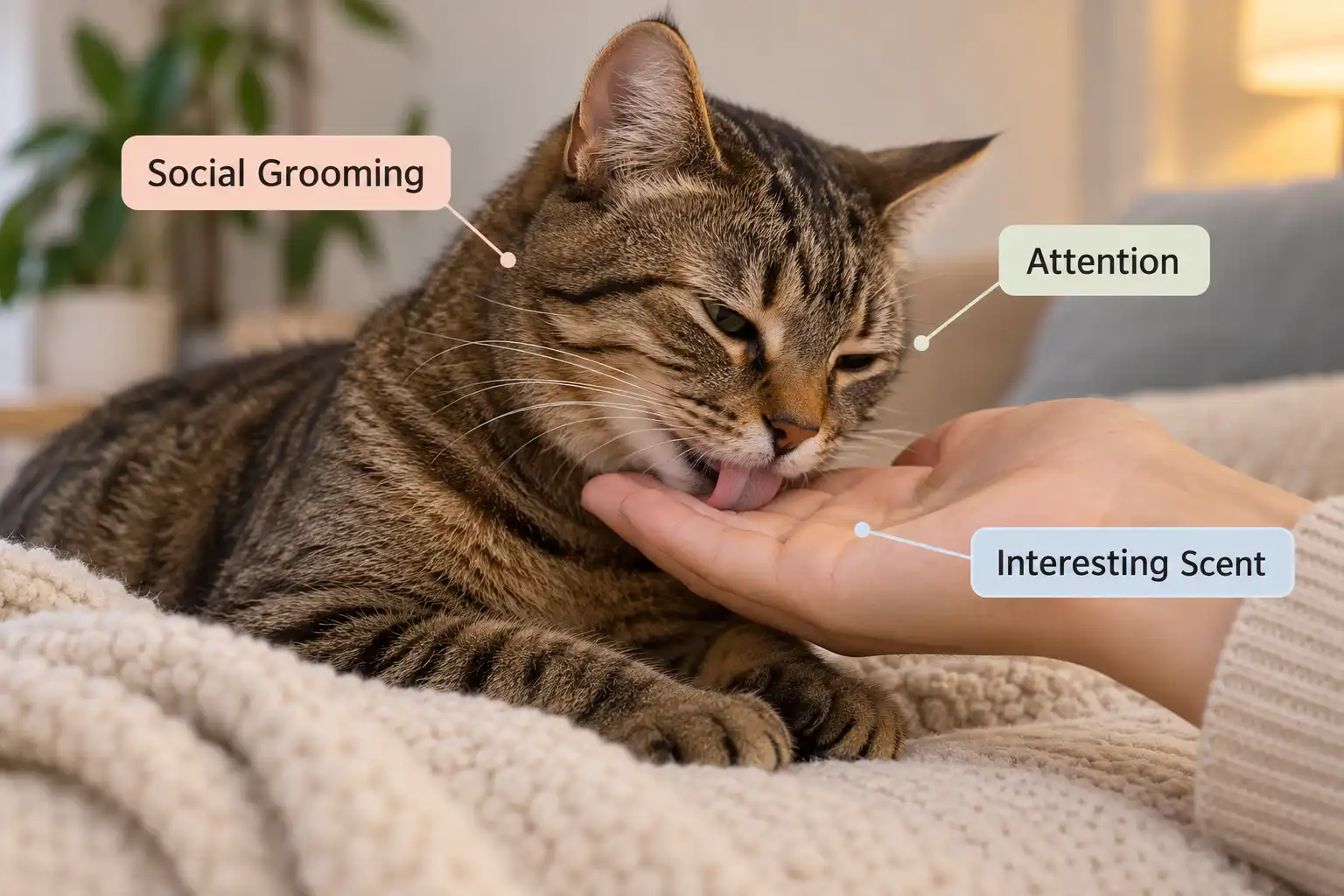
Why does my cat lick me? Usually, this behavior involves grooming or social contact. However, the same lick can mean curiosity, a request for attention, or discomfort. The timing and your cat’s body language offer better clues than licking alone.
Cats often lick people to show affection, groom socially, seek attention, or investigate interesting tastes and smells. Occasional licking is usually normal. However, sudden excessive licking, new biting, or other behavioral changes may need veterinary attention.
Why Do Cats Lick You? 6 Common Reasons
Cats lick people for several reasons, and not every lick has the same meaning. According to Cats Protection and VCA Animal Hospitals, social bonding, attention, and interesting scents can all explain the behavior.
1. Social grooming and affection
Cats groom themselves, but they also groom familiar cats. This behavior, called allogrooming, helps maintain social relationships. When your cat licks your hand or arm while resting beside you, it may be showing similar social behavior.
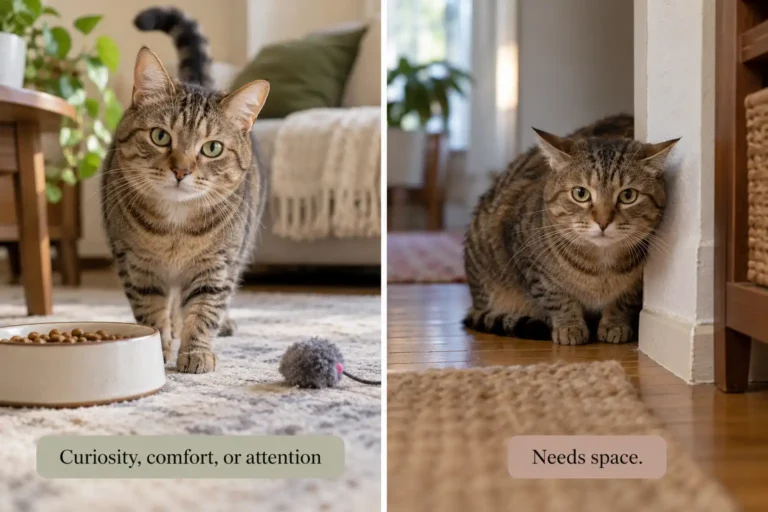
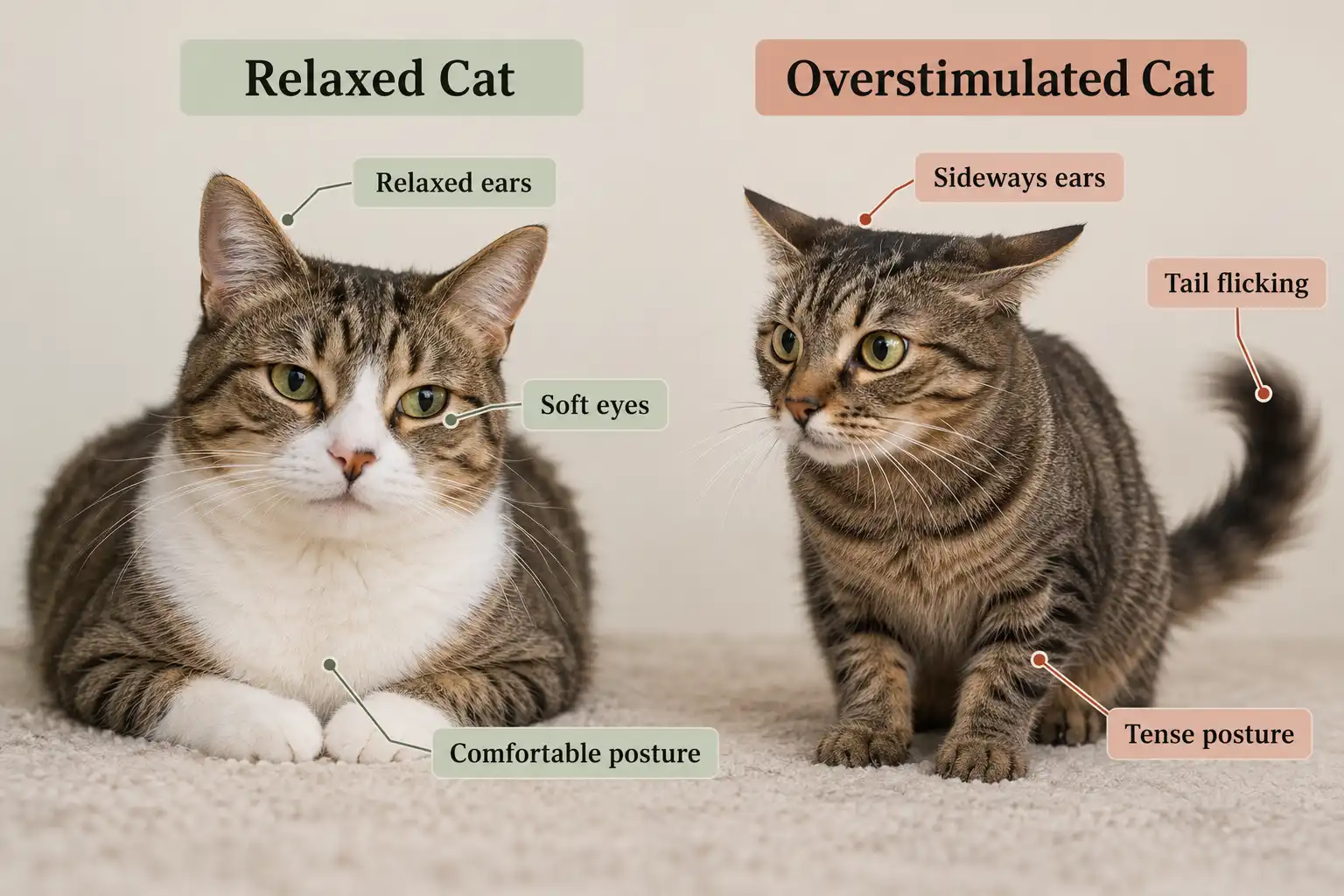
A relaxed posture, soft eyes, and comfortable body position make this explanation more likely. However, licking alone cannot prove what your cat feels.
2. Sharing familiar scents
Cats use scent to recognize familiar individuals and surroundings. Licking may help transfer familiar smells between socially connected cats. Some cats may extend this behavior to people.
However, this does not mean your cat is trying to dominate you or claim ownership of you.
3. Asking for attention
Some cats learn that licking produces a response. For example, your cat may lick your hand and receive petting, conversation, or another interaction.
Over time, that response can reinforce the behavior. Your cat may begin licking whenever it wants attention, particularly during quiet moments.
4. Investigating your taste or smell
Your skin can carry interesting smells and tastes. Sweat contains salt, while cooking can leave food odors on your hands. Soap, shampoo, and skincare products may also attract curiosity.
However, some products can harm cats if swallowed. Never intentionally allow your cat to taste lotions or medicated skin.
5. Finding comfort through licking
Licking can be a calming, repetitive activity. Some cats lick themselves or familiar people during quiet periods. Others develop a habit associated with resting or receiving attention.
However, repetitive licking does not automatically mean relaxation. The surrounding behavior matters.
6. Responding to stress or discomfort
Not all frequent licking is affectionate. Changes in routine, unfamiliar visitors, or other stressful situations may affect licking behavior. Physical discomfort can also contribute.
The Cornell Feline Health Center explains that excessive grooming can have medical or behavioral causes. Excessive licking of people also deserves attention when the behavior changes suddenly.
If licking increases alongside appetite loss, vomiting, hiding, or apparent pain, contact your veterinarian rather than assuming it is affection.
What Does It Mean When My Cat Licks Me in Different Situations?
The meaning of licking depends on when it happens and how your cat behaves. A cat licking your hand while resting may be grooming socially. The same cat might lick during a long petting session before becoming irritated.
Use these clues to understand the difference.
| When your cat licks you | Possible explanation | What you should do |
|---|---|---|
| While cuddling with relaxed ears | Social grooming or affection | Allow brief contact if comfortable |
| After you stop petting | Seeking attention | Watch whether licking produces a response |
| After cooking or exercising | Interesting food scent or salty skin | Wash away residues and products |
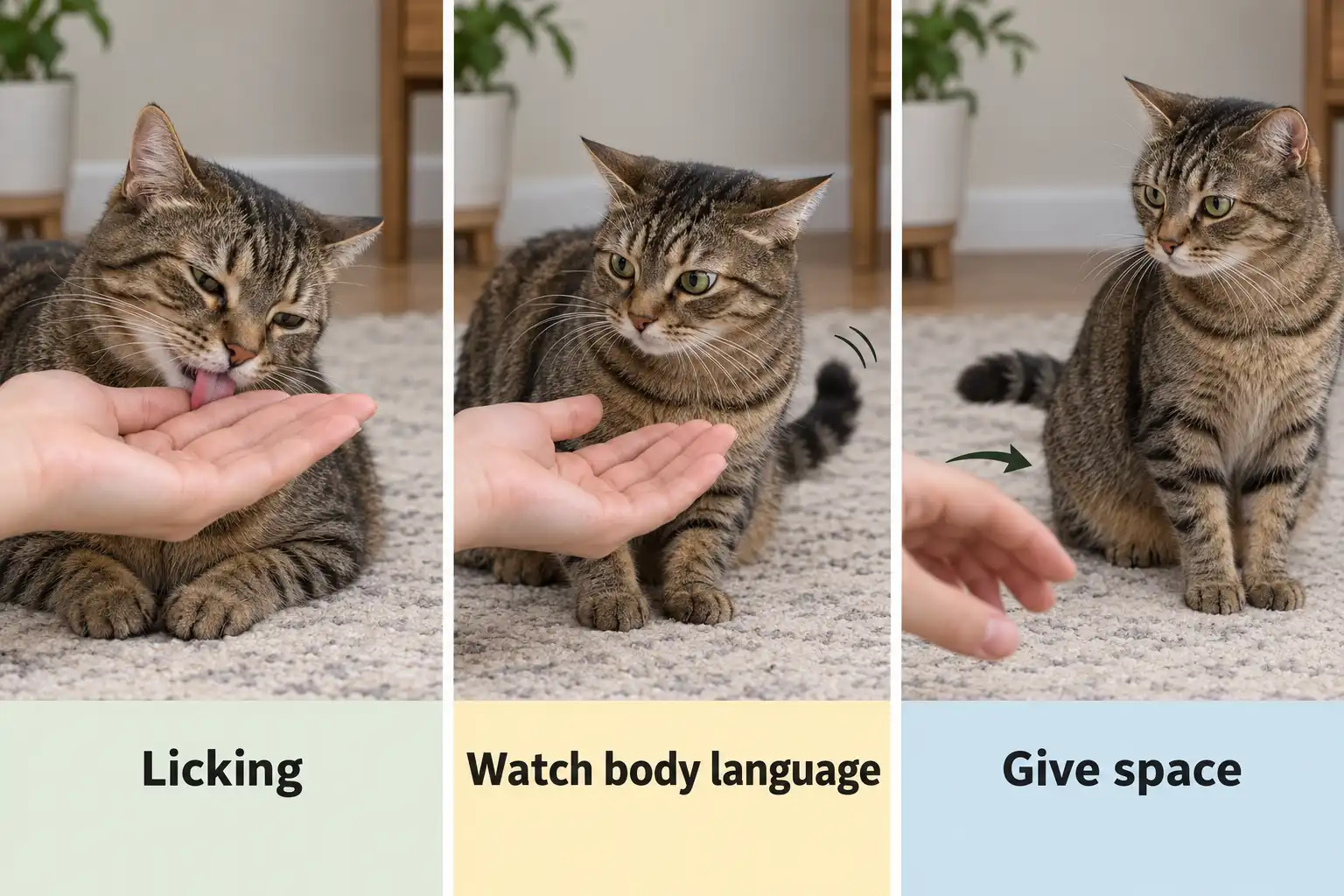
| During prolonged petting, with a flicking tail | Overstimulation | Stop touching and give space |
| During play, followed by grabbing or biting | Play-related excitement | Redirect toward a suitable toy |
| Suddenly and repeatedly, with unusual behavior | Stress or possible discomfort | Contact your veterinarian |
According to the ASPCA’s guidance on cat aggression, tail movements, changing ear positions, and restlessness can warn that a cat no longer wants to be touched.
Remember: Body language provides clues, not certainty. A single lick or tail movement cannot establish your cat’s emotional state.
Why Does My Cat Lick My Face, Hands, or Hair?
Cats may lick different parts of your body because of social grooming, familiar scents, or interesting tastes. However, the location alone does not establish the reason.
Why does my cat lick my face?
Face licking may be an attempt at social grooming or attention-seeking. Your face is often close to your cat during cuddling or resting. A cat may use that opportunity to investigate your scent or initiate contact.
However, avoid encouraging licking around your mouth, nose, and eyes. Cat saliva can contain microorganisms that are unsafe for people, particularly those with weakened immune systems.
VCA Animal Hospitals advises caution with close face contact because cat mouths are not free from potentially harmful germs.
If your cat approaches your face, gently turn away or offer an alternative interaction.
Why does my cat lick my hands, feet, or hair?
Hands and feet often carry food odors, sweat, and familiar scents.
Consequently, your cat may investigate them through licking. Hair can also attract grooming behavior or interest in shampoo and other products.
Pay attention to these situations:
- Hands: Licking after cooking may reflect interest in food residue.
- Feet: Sweat or unfamiliar odors may attract investigation.
- Hair: Social grooming or interest in hair products may explain the behavior.
Keep cats from licking skin or hair treated with potentially harmful products. Discourage chewing or swallowing hair as well.
Why Does My Cat Lick Me Then Bite Me?
A cat that licks you and then bites may be overstimulated, playful, or uncomfortable with continued touching. The ASPCA describes petting-induced aggression as biting that occurs when physical contact becomes unpleasant or irritating.
For example, your cat may begin a petting session with relaxed grooming. After several strokes, it may reach its tolerance limit.
Warning signs can include:
- Quickly turning toward your hand.
- Flicking or swishing the tail.
- Moving the ears sideways or backward.
- Becoming restless or tense.
- Attempting to move away.
When you notice these signals, stop petting. Allow your cat to leave rather than continuing the interaction.
A gentle nip is not necessarily a sign of affection. Even mild biting communicates something about the situation.
Why does my cat bite me then lick me?
Biting followed by licking can also occur during excitement or play. According to Cats Protection, cats may alternate licking and biting when overstimulated. Play behavior can contribute, particularly when a cat treats moving hands as toys.
The lick afterward does not prove that your cat is apologizing. Instead, consider what happened before the bite. If your cat was chasing your fingers, redirect future play toward a wand or kicker toy.
If biting happens during petting, shorten the interaction and respect early warning signals.
Why Does My Cat Keep Licking Me So Much?
Frequent licking is not necessarily a problem, especially when it has always been part of your cat’s behavior. Some cats regularly groom people during quiet moments. Others learn to lick whenever they want attention.
However, a noticeable change deserves closer observation.
How can you tell if licking is excessive?
There is no established number of daily licks that separates normal behavior from a medical or behavioral problem.
Instead, compare the behavior with your cat’s usual routine.
Consider these questions:
- Has the licking increased suddenly?
- Does it continue even when you stop interacting?
- Does your cat appear unable to settle?
- Has excessive self-grooming also started?
- Are eating, sleeping, or social habits changing?
The Cornell Feline Health Center identifies pain, itching, and stress as possible contributors to excessive self-grooming. Licking people has different patterns, but a sudden increase can also justify veterinary evaluation.
If the behavior is new, record when it happens and any accompanying changes. Share those observations with your veterinarian.
Does licking mean something different in kittens and older cats?
Age can influence licking and related behavior, but it does not establish one explanation. Kittens learn grooming-related behavior early in life. They may also combine licking with playful mouthing.
For kittens, consistent early care and play routines help establish appropriate interactions without encouraging biting hands.
Adult cats may develop predictable attention-seeking habits.
In senior cats, newly excessive licking or reduced tolerance for touch warrants veterinary attention, particularly when movement or other behaviors change.
How Can You Stop Your Cat From Licking You?
You can discourage unwanted licking through gentle redirection, consistent responses, and appropriate alternatives. Punishment is unnecessary and may increase stress.
Cats Protection advises redirecting unwanted licking toward enjoyable activities rather than pushing or punishing the cat.
1. Calmly end the interaction
When licking becomes uncomfortable, pause petting and gently move your hand away. Avoid yelling, spraying water, or physically restraining your cat.
2. Encourage another activity
Offer suitable alternatives, such as a wand toy, scratching surface, or grooming brush your cat already accepts. Introduce these activities during calm moments, rather than making every lick the signal for an immediate reward.
3. Reward interactions without licking
Give attention when your cat sits beside you calmly or approaches without licking. This helps reinforce other ways to request interaction.
4. Keep petting sessions comfortable
Start with gentle contact around areas your cat enjoys, such as the cheeks or chin. Keep sessions short and allow your cat to walk away.
5. Provide enough activity and choice
Regular play, resting areas, hiding places, and climbing opportunities can help support healthy behavior. For indoor cats, predictable daily activity and environmental enrichment provide alternatives to repeatedly seeking attention through licking.
If excessive licking continues despite these changes, arrange a veterinary assessment before treating it as a behavioral habit.
Is It Safe to Let Your Cat Lick You?
Occasional licking of intact skin is generally less concerning than licking the face or an open wound. However, it is not completely risk-free.
Protect your skin and face
Avoid allowing your cat to lick:
- Your mouth, nose, or eyes.
- Open cuts, scratches, or irritated skin.
- Skin covered with medicines or potentially harmful products.
Wash skin after unwanted licking. Take additional precautions for young children and people with weakened immune systems.
Be especially careful with topical medicines
Some human skin medications are dangerous to cats.
The U.S. Food and Drug Administration reports serious illnesses and deaths in cats associated with exposure to certain prescription topical pain medications containing flurbiprofen.
The FDA also warns that topical fluorouracil can cause severe poisoning if ingested. Its warning includes cats, although the agency had not received confirmed cat cases in the cited reports.
Keep medicated skin and medication containers inaccessible to your cat. If your cat licks a potentially harmful medicine, contact a veterinarian or animal poison control service immediately.
What if your cat bites and breaks your skin?
Wash the wound immediately with soap and warm water.
The CDC advises seeking medical attention for serious wounds, signs of infection, uncertain rabies vaccination status, or relevant tetanus concerns. Cat bites, especially puncture wounds, can become infected.
Do not dismiss a bite simply because your cat licks you afterward.
When Should You Worry About Your Cat Licking You?
Contact your veterinarian if licking becomes sudden, persistent, difficult to interrupt, or occurs alongside other changes.
Particularly concerning signs include:
- New aggression or biting when touched.
- Excessive self-grooming, bald patches, or irritated skin.
- Drooling, apparent mouth discomfort, or difficulty eating.
- Hiding, unusual restlessness, or reduced activity.
- A noticeable loss of appetite or vomiting.
If licking accompanies repeated vomiting or other digestive symptoms, prioritize veterinary advice rather than trying behavior training first.
Seek same-day veterinary help if your cat stops eating or vomits repeatedly. Straining without producing urine, breathing difficulty, or sudden weakness requires emergency attention.
Medical causes should be considered before assuming that a sudden behavior change reflects anxiety or attention-seeking.
FAQs about Cat Behavior
Why does my cat lick me while purring?
Licking while purring often accompanies social contact, especially when your cat has relaxed ears and a comfortable posture. However, purring does not always mean happiness, so consider body language before continuing to pet.
Why does my cat always lick me at bedtime?
Bedtime licking may be part of a familiar grooming or attention-seeking routine. If it disrupts your sleep, calmly end the interaction and offer play or quiet social contact earlier in the evening.
Why does my cat lick only me and not other people?
Some cats lick one person more because that individual is familiar or consistently responds to licking. This does not prove a particular ranking of affection, since cats may interact differently with different people.
Why does my cat lick me and knead at the same time?
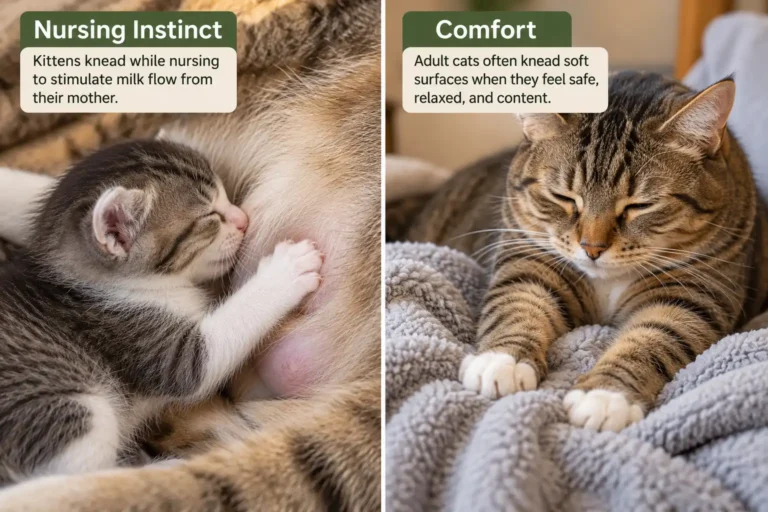
Licking and kneading can occur together when a cat is settling down or engaging in comfortable social contact. Both are associated with behaviors seen early in life, but their combination has no single proven meaning.
Why does my cat lick my clothes or blankets?
Clothing and blankets carry familiar scents that may interest your cat. Occasional licking may be harmless, but repeated chewing or swallowing fabric warrants veterinary attention because it can create health risks.
Why does my cat’s tongue feel like sandpaper?
A cat’s tongue contains backward-facing structures called papillae that help remove loose hair during grooming. These can feel rough against human skin, so calmly redirect licking if it becomes uncomfortable.
Understanding What Your Cat Is Telling You
Licking is a normal part of many cats’ behavior, but its meaning depends on the situation.
A relaxed cat licking your hand during quiet contact may be engaging in social grooming. Licking after you prepare food may reflect interest in its smell. Meanwhile, licking followed by biting can indicate excitement or discomfort with continued handling.
Watch your cat’s posture, consider what happened immediately before the licking, and notice whether the behavior changes over time.
You do not need to encourage licking to build a close relationship. Gentle petting, appropriate play, and allowing your cat to choose when to interact can provide positive alternatives.
Most occasional licking needs no intervention. However, sudden excessive licking, repeated biting, or accompanying health changes deserve veterinary attention.