Can Cats Eat Cheese? 8 Types, Risks, and Safer Choices
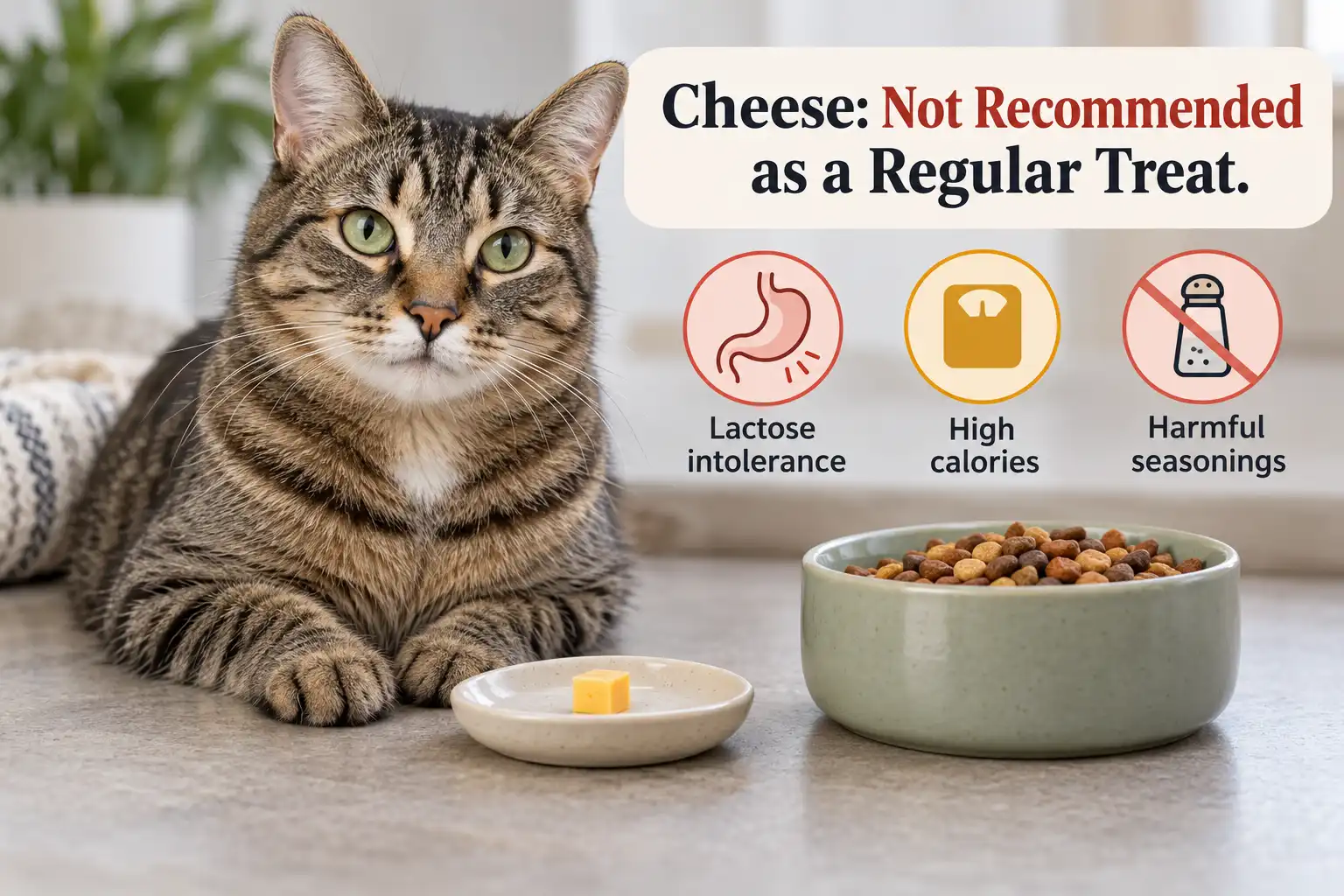
Can cats eat cheese safely? Plain cheese is not inherently poisonous, but its lactose, fat, and salt make it a poor snack. The type of cheese and added ingredients matter, especially if your cat has already eaten some.
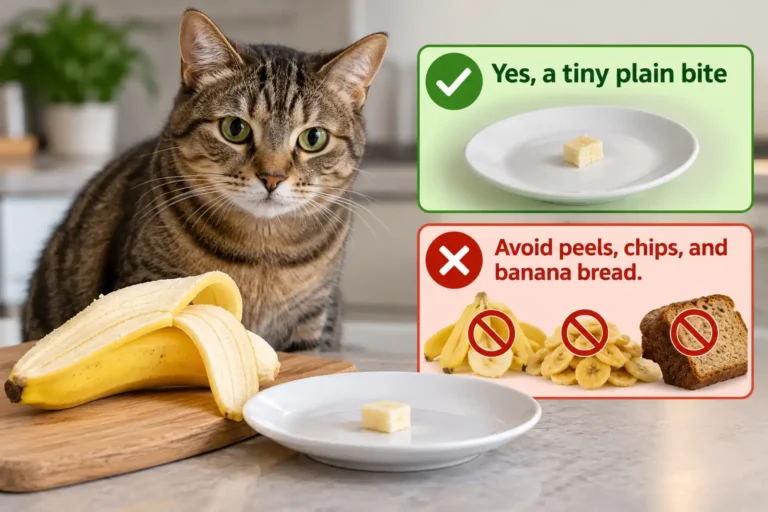
Can cats eat cheese? A small bite of plain cheese is usually not poisonous to a healthy adult cat, but it is not a recommended treat. Lactose can upset digestion, and seasoned cheese dishes may contain toxic ingredients.
Is Cheese Bad for Cats?
Cheese can be bad for cats because many cannot digest lactose properly. Its concentrated fat, salt, and calories also make it unsuitable for regular feeding.
According to the Cornell Feline Health Center, many cats are lactose intolerant and can develop digestive problems after consuming dairy products.
There are three main concerns.
1. Lactose can upset digestion
Lactose is the natural sugar in milk and dairy products. Cats need an enzyme called lactase to digest it.
Kittens produce lactase to digest their mother’s milk. However, lactase production generally decreases after weaning.
As a result, dairy products may cause:
- Diarrhea or loose stools
- Excess gas and bloating
- Abdominal discomfort
- Vomiting
Not every cat reacts the same way. Lactose levels also differ between cheeses.
2. Cheese contains concentrated fat and salt
Many cheeses pack substantial calories into small portions. Regular extras can contribute to unwanted weight gain.
Certain cheeses also contain considerable sodium. This makes them a poor choice for cats with health conditions requiring dietary management.
3. Cheese does not provide balanced cat nutrition
Cheese contains protein and calcium, but that does not make it a suitable substitute for cat food.
Cats need an appropriate balance of essential amino acids, fatty acids, vitamins, and minerals. Cheese alone cannot provide that balance.
Veterinary sources differ slightly in their advice. PetMD considers occasional plain cheese acceptable for cats that tolerate dairy. Cats Protection advises avoiding cheese because it offers little benefit and may cause digestive problems.
Both positions support the same practical choice: cheese is unnecessary, and a cat with known dairy intolerance should not receive it.
Which Types of Cheese Can Cats Eat?
No cheese is necessary for a healthy cat. However, the type matters when assessing what a cat has already eaten.
Aged hard cheeses generally contain less lactose than many fresh cheeses. That does not eliminate their fat, salt, or calorie concerns.
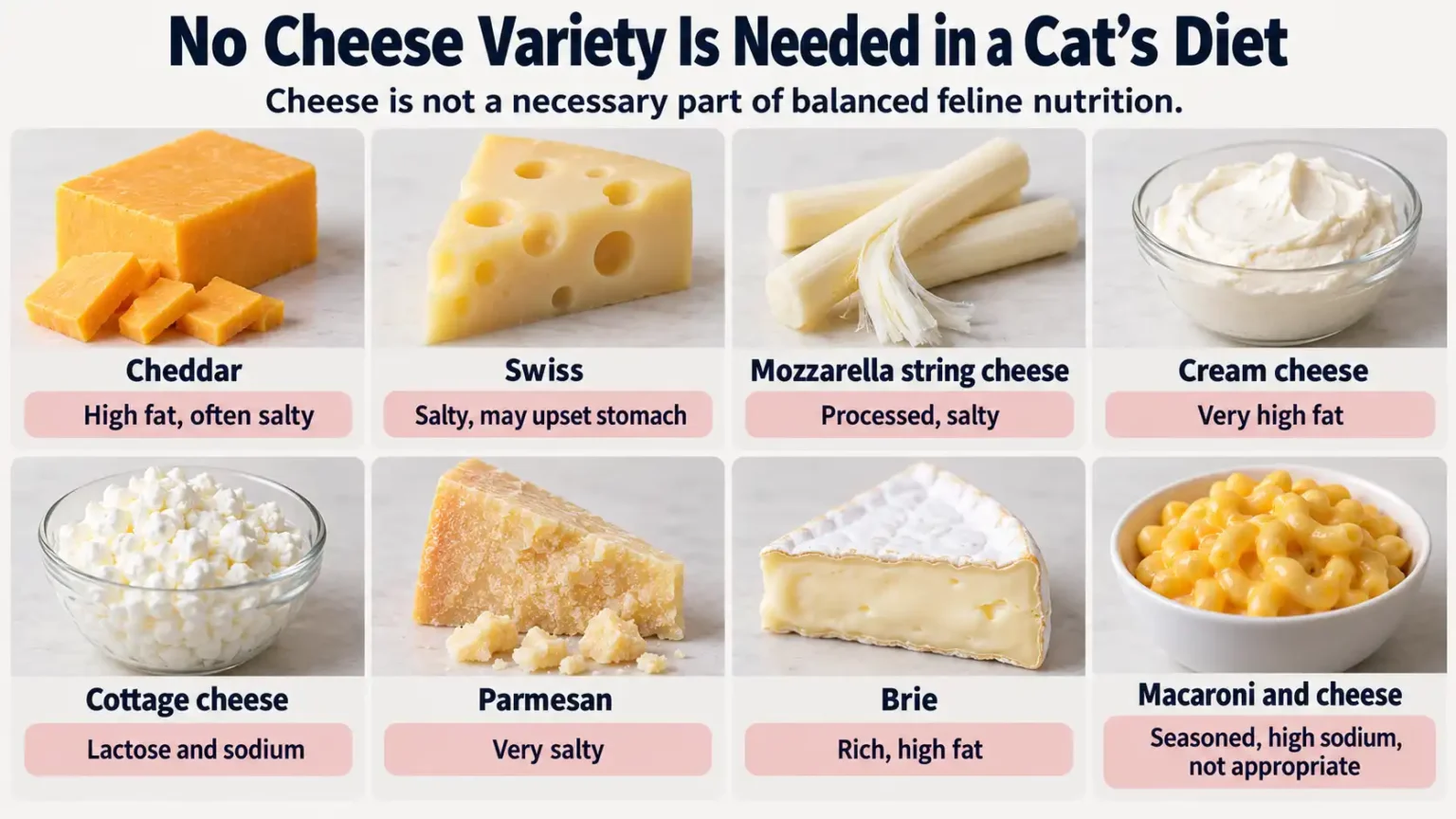
| Cheese type | Main concern | Feeding advice |
|---|---|---|
| Cheddar | High fat and calories, but relatively low lactose when aged | Not a regular treat |
| Swiss or Gouda | Lower lactose when aged, but still rich | Not needed |
| String cheese (mozzarella) | Dairy intolerance and choking risk from long strands | Avoid offering |
| Cream cheese | Concentrated fat and remaining lactose | Avoid |
| Cottage cheese | Contains lactose, moisture, and sometimes considerable sodium | Avoid |
| Parmesan or feta | Parmesan can be especially salty; feta also contains lactose | Avoid |
| Brie or blue cheese | Rich, mold-ripened products with variable composition | Avoid |
| Mac and cheese | Rich sauce, salt, and potentially toxic seasonings | Do not offer |
The table compares common concerns, not guaranteed safe and unsafe doses. Individual tolerance and product ingredients vary.
Why is mac and cheese a bigger concern?
Macaroni and cheese is not a suitable cat treat. Its sauce commonly contains butter, milk, salt, and seasonings.
Some recipes include onion or garlic powder. Both are toxic to cats and can damage red blood cells, according to ASPCA Animal Poison Control.
Even a recipe without those seasonings offers no useful advantage over balanced cat food.
How Much Cheese Is Too Much for a Cat?
There is no established safe serving size of cheese for every cat. A small amount can still cause symptoms in a cat that cannot tolerate dairy.
The World Small Animal Veterinary Association (WSAVA) recommends keeping all treats below 10% of a cat’s daily calorie intake. Cornell’s broader guidance mentions 10% to 15%. These are different general limits, not cheese-specific safety thresholds.
What does that mean in actual calories?
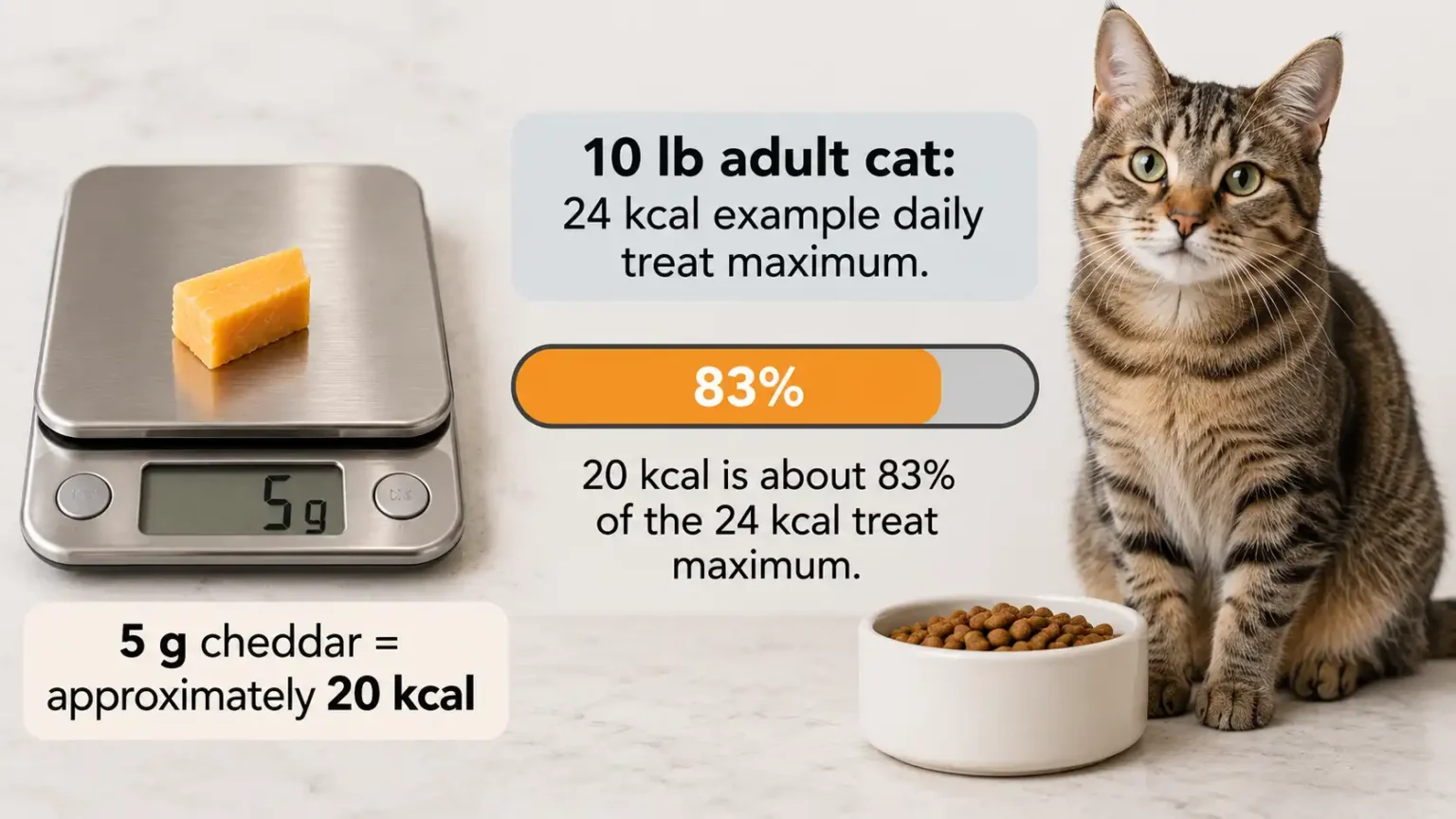
For a healthy adult cat weighing about 10 lb (4.5 kg) at ideal body condition, WSAVA’s example allows a maximum of approximately 24 kcal per day from all treats. An indoor, neutered adult cat or an active outdoor adult cat may have different individual needs.
USDA FoodData Central lists a reference cheddar cheese at approximately 403 kcal per 100 g.
Cheddar calorie example for a healthy 10 lb adult cat
5 g cheddar
20 kcal
WSAVA example treat budget
24 kcal
About 83% of the example budget 20 of 24 kcal
Calculation: 403 × 5 ÷ 100 = 20.15 kcal, rounded. This is an illustration, not a recommended cheese serving.
Sources: USDA FoodData Central and WSAVA.
This explains why an apparently small piece of cheese can use almost an entire treat allowance. The calorie limit also does not protect against lactose intolerance.
If you need to review overall portions, use the daily food calculator and adjust the plan with your veterinarian based on body condition.
Can Kittens and Senior Cats Eat Cheese?
Cheese is not a suitable snack for kittens, and senior cats do not gain any special benefit from it.
What about kittens?
Kittens naturally digest their mother’s milk during nursing. However, this does not mean cheese or cow’s milk is appropriate.
Growing kittens need a complete, balanced diet formulated for growth. Cheese can cause digestive upset and displace needed nutrition.
What about adult and senior cats?
Healthy adult cats differ in how they tolerate dairy. However, age alone does not make cheese safe.
For senior cats, digestive sensitivities, weight changes, and existing medical conditions may influence treat choices.
Ask your veterinarian before adding cheese or other extras if your cat has kidney disease, gastrointestinal problems, pancreatitis, food allergies, or a prescribed therapeutic diet.
What Should You Do If Your Cat Accidentally Eats Cheese?
If your cat eats a small amount of plain cheese and behaves normally, it is usually reasonable to monitor at home. However, the ingredients, amount, and cat’s medical history all matter.
Follow these steps:
- Identify the cheese. Check whether it was plain or contained seasonings, sauces, or other ingredients.
- Estimate the amount eaten. Record roughly how much your cat consumed and when.
- Check for toxic ingredients. Contact your veterinarian promptly if the cheese dish contained onion, garlic, chives, or related seasonings. Do not wait for symptoms.
- Watch for digestive changes. Look for vomiting, diarrhea, bloating, reduced appetite, or unusual behavior.
- Continue normal care. Provide fresh water and the cat’s usual food. Do not withhold meals, induce vomiting, or give medication without veterinary instructions.
Contact your veterinarian if your cat becomes unwell, particularly if there is an existing medical condition.
Seek same-day veterinary care if your cat stops eating, repeatedly vomits, develops breathing difficulty, or shows sudden weakness. These signs need prompt assessment regardless of whether cheese caused them.
The ASPCA Animal Poison Control Center is also available in the US at 888-426-4435. Consultation fees may apply.
If vomiting develops, consider the broader causes of vomiting in cats rather than assuming lactose intolerance is responsible.
What Can You Give Your Cat Instead of Cheese?
A complete and balanced cat food is the better foundation for everyday feeding. For rewards, choose options that do not introduce unnecessary dairy.
Practical alternatives include:
- Regular dry food: Reserve a few pieces from the cat’s measured daily ration for rewards.
- Cat-specific treats: Choose appropriately sized products and account for their calories.
- Plain cooked egg: A small amount of thoroughly cooked, unseasoned egg can be an occasional option for a healthy cat that tolerates it. Learn more about feeding cooked eggs to cats.
- Nonfood rewards: Interactive play, grooming, or attention can reward behavior without adding calories.
If you choose packaged treats, check their ingredients and intended use. The same principle applies when reading cat food labels: the nutritional adequacy statement helps identify the appropriate main diet.
Whether your cat eats kibble, canned food, or both, treats should remain separate from complete meals. The differences between wet and dry food can help you understand those feeding choices.
FAQs about Cheese Safety
Can cats eat cream cheese?
Cream cheese is best avoided because it is rich and can contain lactose that upsets digestion. Flavored cream cheese may also include garlic, onion, or other ingredients that make it more concerning for cats.
Can cats eat string cheese?
String cheese is usually made from mozzarella, and it is not a recommended cat treat. Its dairy content may cause digestive upset, while long, stretchy strands can be difficult to swallow safely.
Can cats eat cottage cheese?
Cottage cheese is best avoided because it can contain lactose and considerable sodium. Choosing low-fat cottage cheese does not eliminate lactose, so sensitive cats may still experience gas, diarrhea, or other digestive problems.
Can cats eat mac and cheese?
Mac and cheese should not be offered to cats because it contains rich dairy ingredients and often extra salt. Some recipes also include toxic onion or garlic seasonings, which warrant prompt veterinary advice after ingestion.
Can cats eat lactose-free cheese?
Lactose-free cheese may reduce one digestive concern, but it does not remove problems related to fat, salt, and calories. Plant-based cheese substitutes may also contain unsuitable ingredients, so neither is a preferred cat treat.
Is cheese good for cats because it contains protein and calcium?
Cheese supplies protein and calcium, but it does not provide complete nutrition for cats. A balanced food appropriate for the cat’s life stage supplies these nutrients alongside the essential amino acids, fats, vitamins, and minerals cats require.
Can cats eat cheese every day?
Daily cheese feeding is not recommended, even when a cat seems to tolerate small amounts. Repeated extras can displace balanced food, increase calorie intake, and potentially cause digestive problems in cats with dairy intolerance.
What Should You Remember About Feeding Cheese to Cats?
Cats can sometimes eat a small amount of plain cheese without becoming ill, but that does not make cheese a useful part of their diet.
The main concerns are lactose intolerance, excess calories, fat, salt, and potentially harmful added ingredients. Hard cheeses generally contain less lactose than many fresh varieties, but they still offer no meaningful advantage over balanced cat food.
If your cat accidentally eats a small piece of plain cheese, check the amount and watch for changes. Contact your veterinarian if symptoms develop or the food contains potentially toxic ingredients.
For everyday feeding, choose complete cat food, appropriate treats, and measured portions. Cheese is something cats can comfortably live without.