Can Cats Eat Peanut Butter? Safe Amount, Calories, and Xylitol
Peanut butter turns up on lick mats, around pills, and on fingertips held out to a curious cat. Whether cats can eat peanut butter comes down to two things. One is what is in the jar. The other is how few calories a cat’s day leaves for treats.
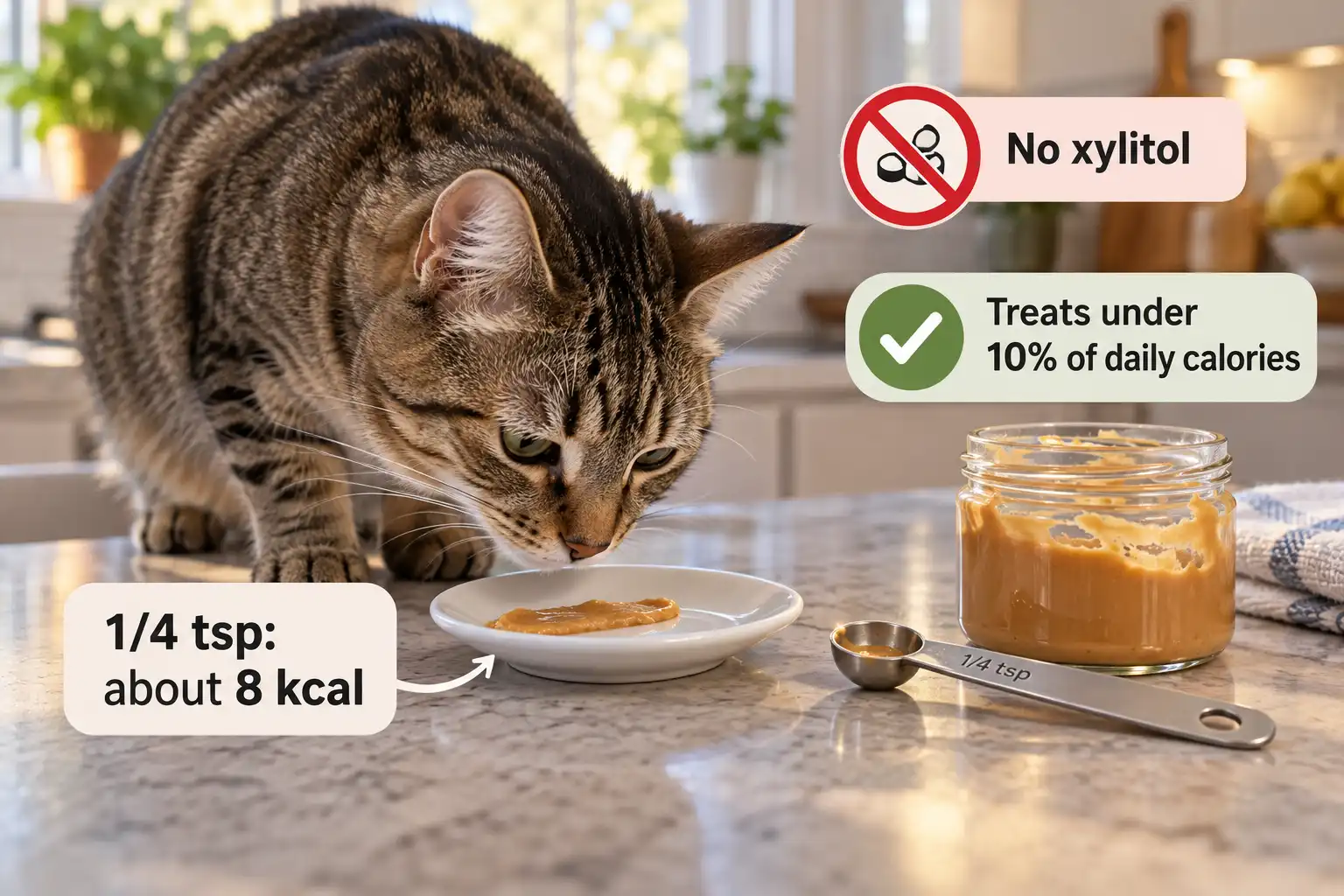
Yes, a healthy adult cat can eat a little plain peanut butter, but it adds nothing a cat needs. Keep it to about a quarter teaspoon (8 kcal), skip any jar with xylitol, and offer it only occasionally.
Is Peanut Butter Good for Cats?
No. Peanut butter is not toxic in small amounts, but it adds nothing a complete and balanced cat food lacks. Peanuts are missing from the toxic food list in WSAVA’s guide to feeding treats to cats. That list names chocolate, xylitol, onions, garlic, and grapes instead.
The bigger issue is what peanut butter is. Cornell Feline Health Center describes cats as obligate carnivores that rely on nutrients found only in animal products. Peanut butter is a plant food, so its protein does not fill that need.
It is also mostly fat. USDA FoodData Central lists 2 tablespoons of smooth, unsalted peanut butter at 188 kcal and 16 grams of fat. That fat alone supplies about three quarters of the calories.
Many jars also add sugar, salt, and oil, and the sugar does nothing for a cat.
Why Some Cats Want It Anyway
Sweetness is not the draw. A 2005 study in PLoS Genetics found that cats carry a broken gene for their sweet taste receptor. So cats most likely cannot taste sugar at all. That leaves the fat and the roasted smell as the likely pull. Still, no study has tested which one matters most.
In short, a cat licking the spoon tells you peanut butter is rich. It does not tell you the food is good for the cat.
How Much Peanut Butter Can a Cat Have?
About a quarter teaspoon, now and then, for a healthy adult cat. That amount comes from the treat budget, not from a peanut butter rule.
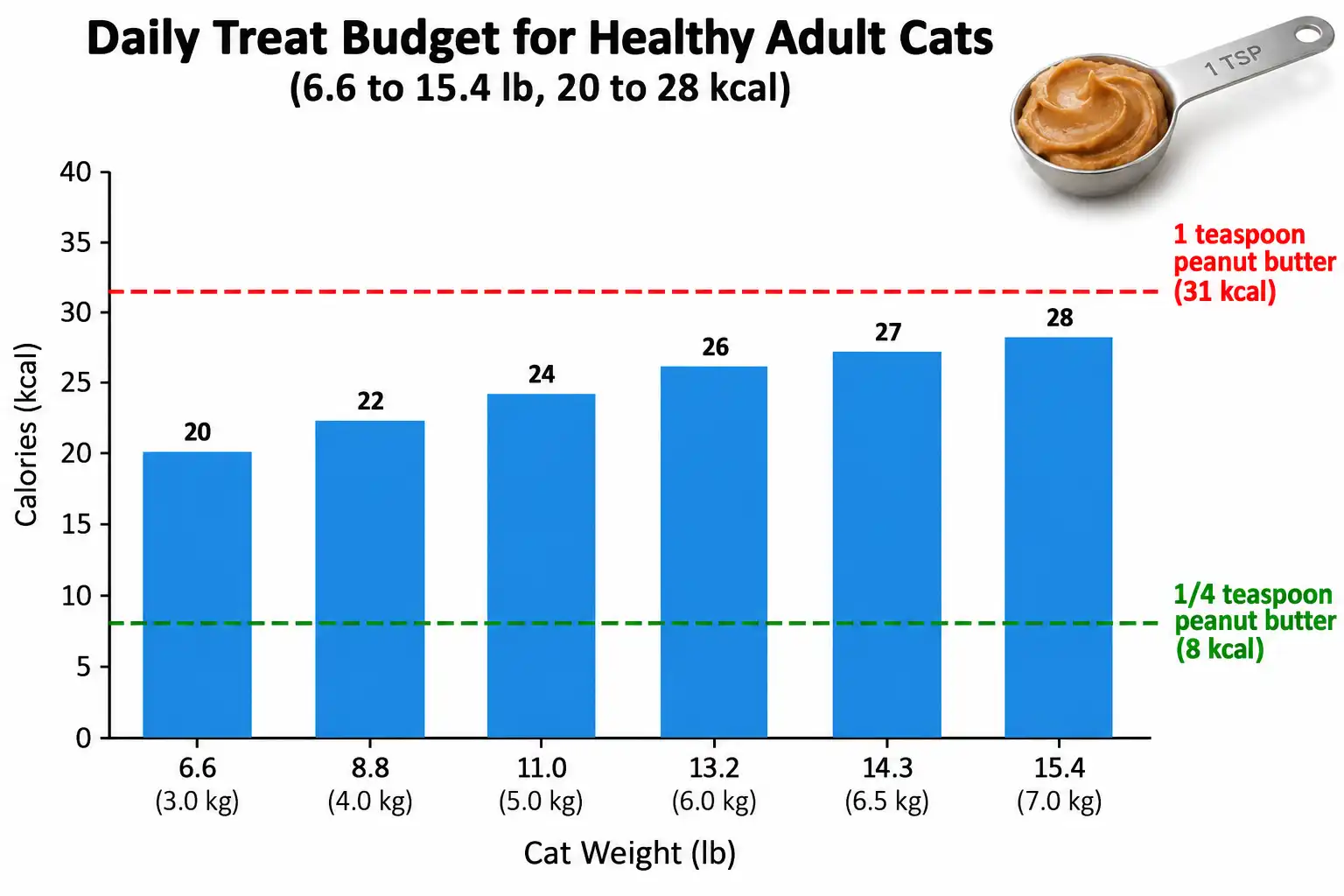
WSAVA advises keeping treats under 10 percent of a cat’s daily calories. Its treat sheet turns that into a daily budget for an average healthy adult cat in ideal body condition. For example, a healthy adult cat weighing 9.9 lb (4.5 kg) gets 24 kcal a day for treats. Meanwhile, USDA figures put a level teaspoon of smooth peanut butter at about 31 kcal. A quarter teaspoon holds about 8 kcal.
| Healthy adult cat weight | Daily treat budget (WSAVA) | 1 tsp peanut butter (31 kcal) uses | 1/4 tsp peanut butter (8 kcal) uses |
|---|---|---|---|
| 6.6 lb (3 kg) | 20 kcal | 157% | 39% |
| 8.8 lb (4 kg) | 22 kcal | 143% | 36% |
| 9.9 lb (4.5 kg) | 24 kcal | 131% | 33% |
| 11 lb (5 kg) | 25 kcal | 125% | 31% |
| 13.2 lb (6 kg) | 26 kcal | 121% | 30% |
| 15.4 lb (7 kg) | 28 kcal | 112% | 28% |
The pattern holds at every weight. A full teaspoon goes over the whole day’s treat budget for each adult cat on WSAVA’s table. A quarter teaspoon uses about a third, which still leaves room for other treats.
Also, WSAVA bases the table on an average healthy adult in ideal body condition. It asks owners to confirm their own cat’s calorie needs with the veterinary team.
What a Tablespoon Does to the Day
A tablespoon of peanut butter holds about 94 kcal. WSAVA’s 24 kcal treat budget for a 10 lb healthy adult implies about 240 kcal a day in total. So one tablespoon is close to 40 percent of a 10 lb healthy adult cat’s whole day.
On a dry food listing 400 kcal per cup, those 94 kcal equal almost a quarter cup of kibble. The calorie statement on your own bag gives the real figure for your food.
To see where treats fit, the daily food calculator works from your cat’s weight and the food’s kcal per cup. Likewise, a treat given daily needs room in your cat’s dry food portion by body weight.
Xylitol in Peanut Butter: Where the Sources Split
The sources disagree on how risky xylitol is for cats. Even so, the practical answer is the same: skip any jar that contains it.
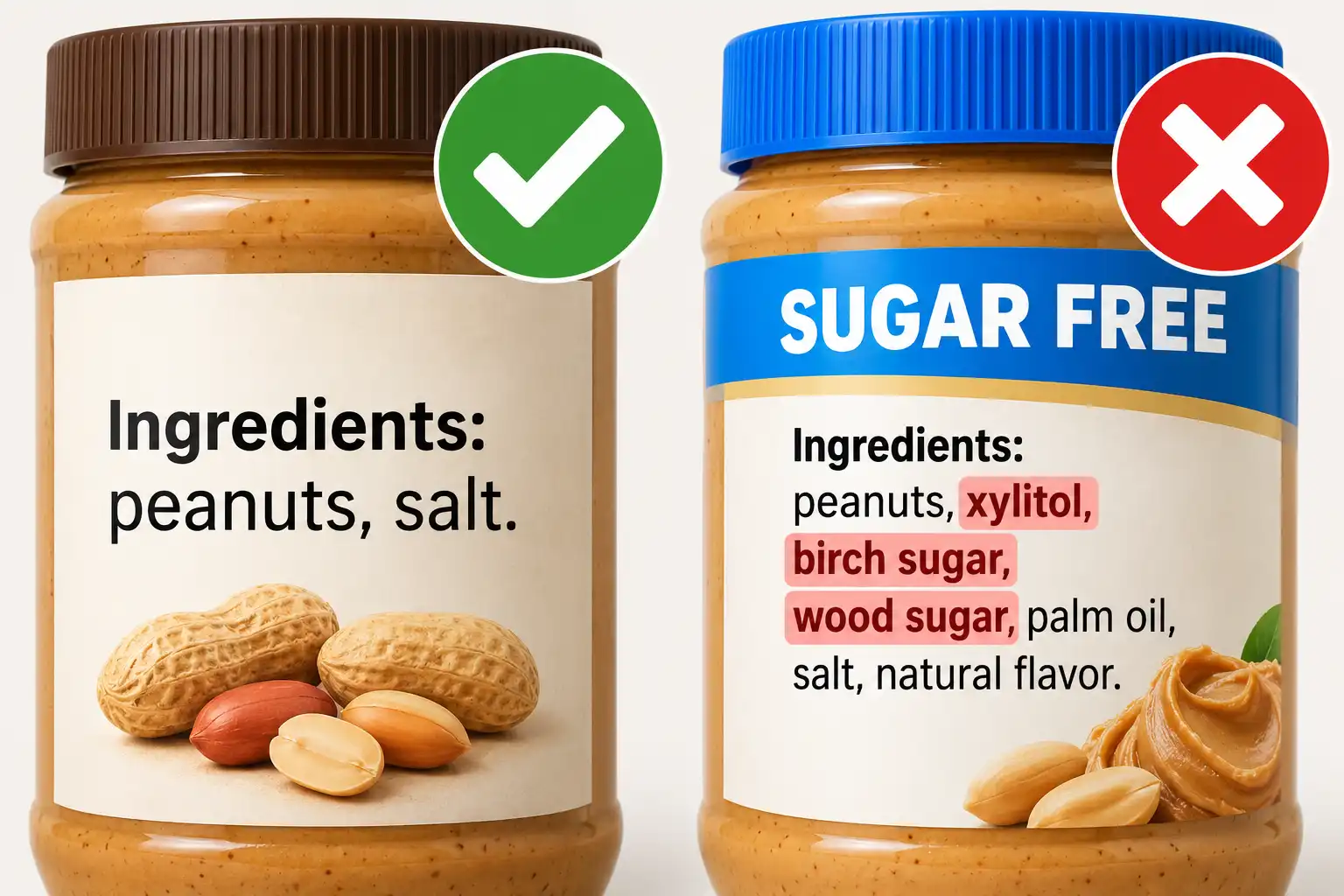
The FDA lists some peanut and nut butters among products that may contain xylitol. This sugar alcohol also goes by birch sugar or wood sugar. Its warning centers on dogs, where xylitol can cause a fast and dangerous drop in blood sugar. For cats, the FDA says xylitol seems less dangerous, partly because cats show little interest in sweets.
WSAVA takes a firmer line. Its cat treat sheet puts xylitol on the list of toxic food ingredients.
The research behind the softer view is small. A 2018 study in the Journal of Veterinary Pharmacology and Therapeutics gave xylitol to six healthy cats. It found no toxic effects. But six cats are too few to rule out a rare reaction.
So the evidence leans toward cats being far less sensitive than dogs, but it is thin. Since xylitol gives a cat no benefit at all, a quick label check costs nothing.
How to Offer Peanut Butter Safely
These steps apply to a healthy adult cat. Each one closes off a specific risk.
- Read the ingredient list. Pick a jar that lists only peanuts, or peanuts and salt. The FDA advises checking “sugar free” and “low sugar” products for xylitol. Look for xylitol, birch sugar, and wood sugar by name.
- Skip flavored spreads. Chocolate versions bring in an ingredient on WSAVA’s toxic list. Honey and maple versions add sugar a cat cannot taste.
- Measure once. Level a quarter teaspoon with a measuring spoon, so you know what 8 kcal looks like.
- Spread it thin. Smear it on a flat plate or lick mat instead of offering a lump or a loaded spoon. WSAVA advises treats sized and shaped to keep choking risk low. A sticky lump is hard for a small mouth to clear.
- Stay nearby. WSAVA recommends supervising cats with treats and chews.
- Keep it occasional. Cornell Feline Health Center says treats are not complete and balanced nutrition, so feed them only occasionally.
If your cat sniffs and walks away, let it go. There is no reason to coax a cat into a food it does not need.
Which Cats Should Skip Peanut Butter
Kittens. A growing kitten’s small stomach is better filled with food labeled for growth. WSAVA sets its treat budgets for adult cats, not kittens.
Cats with a health condition or a prescribed diet. WSAVA warns that ordinary treats may not suit a cat with a medical condition, food sensitivities, or a veterinary-prescribed diet. So ask your veterinarian before offering any.
Overweight cats. Peanut butter packs a lot of calories into a small spoon. A cat on a weight loss plan should get treats only as that plan allows. The plan itself belongs to your veterinarian.
Cats that already get treats. Every treat draws on the same budget. If your cat already eats commercial treats each day, peanut butter has to come out of what is left.
Older cats. An older cat in good health uses the same adult treat budget. However, one with a diagnosed condition follows the vet’s plan instead.
Do Cats Eat Peanuts?
Some cats will chew a peanut, but whole peanuts make a poor treat. Plain peanuts are not on WSAVA’s toxic list, yet four problems come with them.
- Size and shape. A whole peanut is hard and round. WSAVA links the wrong treat to choking, trauma, and obstruction.
- Shells. The shell is a hard, woody piece with no food value, and obstruction is one of the risks WSAVA names.
- Coatings. Salted, honey-roasted, and chocolate-covered peanuts add salt, sugar, or chocolate. Seasoned mixes may also carry garlic or onion powder, and both are on WSAVA’s toxic list.
- Calories. USDA data puts one dry-roasted, unsalted peanut at about 6 kcal. For a 10 lb healthy adult cat, that is a quarter of the day’s treat budget.
In practice, a measured, thin smear of peanut butter is easier to control than a whole nut.
Peanut Butter for Hiding Pills
Ask your veterinarian before hiding any pill in food. The vet who prescribed the medicine knows whether it can go with food and which food suits it.
Calories still count here, too. WSAVA includes foods used to give medication in its definition of treats. So hiding a daily pill in a quarter teaspoon uses a third of a 10 lb adult cat’s treat budget.
The xylitol label check applies here as well. Your veterinarian can also suggest a treat made for giving pills to cats.
What to Do If Your Cat Ate Peanut Butter
Call your veterinarian the same day if your cat vomits more than once, stops eating, or seems suddenly weak. The same goes for gagging, pawing at the mouth, or struggling to breathe. Those signs need a professional look, whatever the cause.
A lick of plain peanut butter adds about 8 kcal or less. Watch for the signs above, then feed the next meal as usual.
A cat that gets into the jar is a different case. It may have eaten a large share of its day’s calories at once, so call your veterinarian for advice. Have the jar’s ingredient list ready when you call.
If the jar lists xylitol, call your veterinarian or an animal poison control center right away. The feline research is too thin to treat it as harmless. Also, do not try to make your cat vomit at home, because that is a veterinary decision.
Vomiting has many causes beyond food, and the common reasons cats vomit are worth knowing before the next upset.
Better Treats Than Peanut Butter
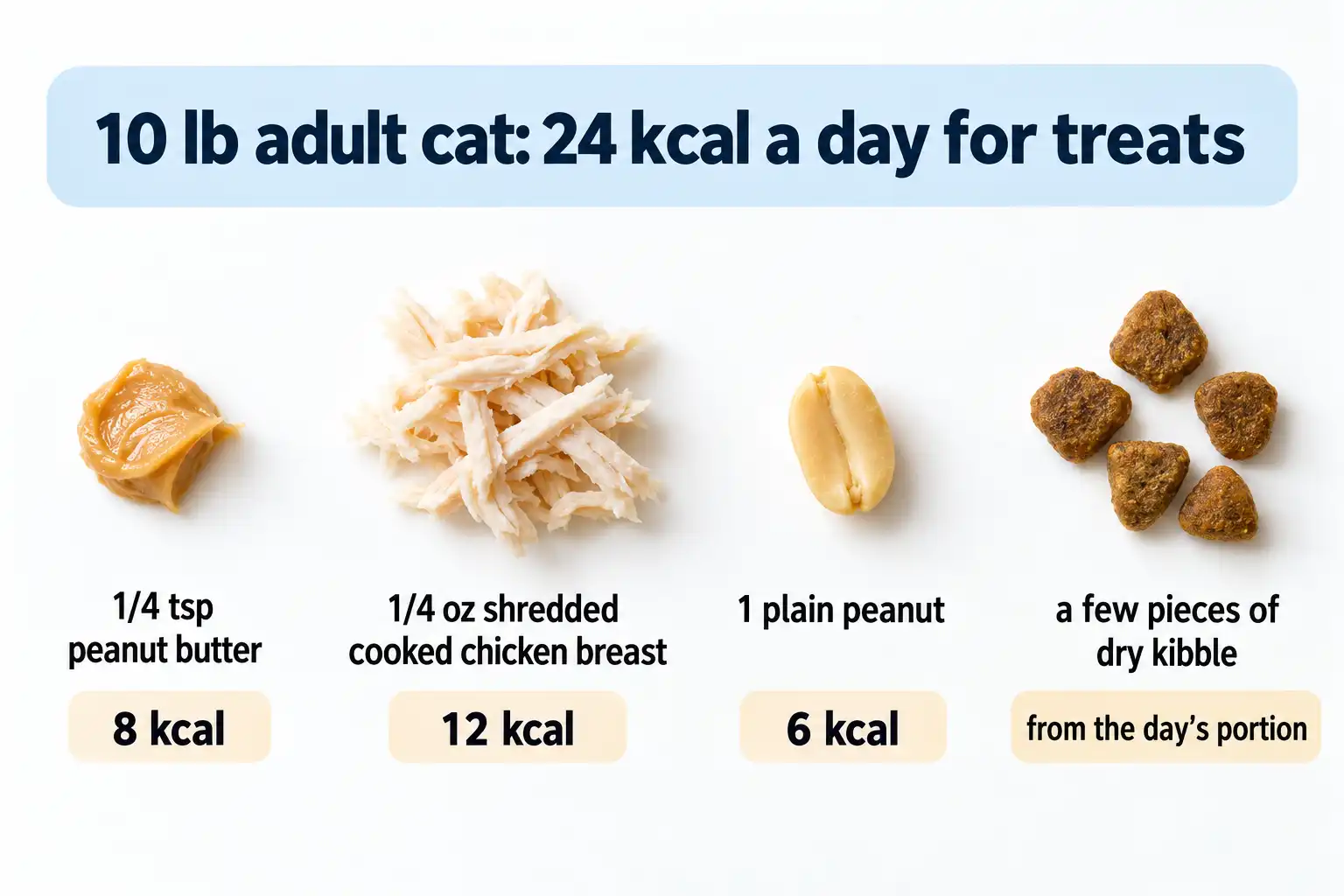
Several treats give a cat animal protein for the same calories or fewer.
Plain cooked chicken breast is the simplest choice. WSAVA lists lean cooked chicken breast at 47 kcal per ounce. So a quarter ounce holds about 12 kcal. That fits a 10 lb healthy adult cat’s 24 kcal treat budget with room left. A plain cooked egg is another animal protein option, served without salt or butter.
Pieces of the day’s measured kibble cost no extra calories at all. Set a few aside from the morning portion and hand them out later. For enrichment, fill a puzzle feeder with part of the day’s dry food instead. It keeps a cat busy without adding calories.
Commercial cat treats work too. Check the bag for a calorie figure, and WSAVA suggests contacting the maker when the label leaves it out.
Some swaps are no better. Cheese as a treat runs about 120 kcal per ounce for cheddar on WSAVA’s list. WSAVA also advises avoiding dairy, since many cats are lactose intolerant.
Frequently Asked Questions
Can kittens have peanut butter?
It is best to skip peanut butter for kittens, since they need every calorie from food made for growth. WSAVA’s treat budgets also cover adult cats only, not growing ones.
Is natural peanut butter safe for cats?
Yes, natural peanut butter with only peanuts, or peanuts and salt, is safer because it skips xylitol and added sugar. Still, it holds about 31 kcal per teaspoon, so a healthy adult cat’s limit stays near a quarter teaspoon.
Can cats eat peanut butter every day?
No, daily peanut butter is not a good habit, since Cornell Feline Health Center advises occasional treats. Even a daily quarter teaspoon uses a third of a 10 lb adult cat’s treat budget.
Can a cat with food allergies have peanut butter?
Ask your veterinarian first, because WSAVA notes that ordinary treats may not suit a cat with food sensitivities. Any extra food also makes it harder to tell which ingredient caused a reaction.
Is crunchy peanut butter worse than smooth for cats?
Smooth is the better pick, since USDA figures show both carry about the same calories. Crunchy adds hard peanut pieces, and WSAVA advises treats shaped to keep choking risk low.
Can I put peanut butter on a lick mat for my cat?
Yes, if the smear stays near a quarter teaspoon for a healthy adult cat. A coated mat can easily hold a full teaspoon, about 31 kcal, so measure the amount before you spread it.
Can cats eat peanut butter cookies or candy?
No, keep those away from cats, since they add sugar and a lot of extra fat. Some also contain chocolate or xylitol, both on WSAVA’s list of toxic food ingredients for cats.
Putting This Into Practice
Plain peanut butter is a rich extra, not a food a cat needs. Check the jar for xylitol, then measure a quarter teaspoon for a healthy adult cat. Spread it thin and keep it occasional. For kittens, cats on a prescribed diet, and cats on a weight plan, ask your veterinarian before offering any.